Bhutan’s Long-Secluded Hidden Paradise: Where Time, Nature, and Spirit Converge
Bhutan, long secluded in the heart of the Himalayas, remains one of the world’s last truly preserved destinations. From untouched landscapes and living traditions to a philosophy that values balance over growth, this hidden paradise reveals itself only to those who travel with intention.
TLDR
Bhutan is a long-secluded Himalayan kingdom that deliberately chose preservation over mass tourism. With untouched landscapes, living Buddhist traditions, and a philosophy rooted in balance and well-being, Bhutan offers thoughtful travelers a rare and deeply meaningful way to experience the world.
Bhutan’s Long-Secluded Hidden Paradise: A Kingdom That Chose Preservation Over Exposure
Tucked deep within the Eastern Himalayas, Bhutan is one of the last countries to have opened its doors to the modern world on its own terms. Until 1974, international visitors were largely prohibited, a deliberate decision that allowed the kingdom to safeguard its culture, environment, and social fabric while neighboring regions transformed rapidly.
Today, Bhutan is often described as a hidden paradise — not because it is undiscovered, but because it has been intentionally protected.
A Geography That Shapes a Nation
Bhutan’s dramatic terrain plays a defining role in its identity. The country spans elevations from subtropical lowlands at around 100 meters above sea level to Himalayan peaks exceeding 7,000 meters, including Gangkhar Puensum, the highest unclimbed mountain in the world.
Over 70% of Bhutan’s land area is forested, a figure enshrined in the nation’s constitution, which mandates that forest cover must never fall below 60%. This commitment has positioned Bhutan as one of the world’s few carbon-negative countries, absorbing more carbon dioxide than it emits.
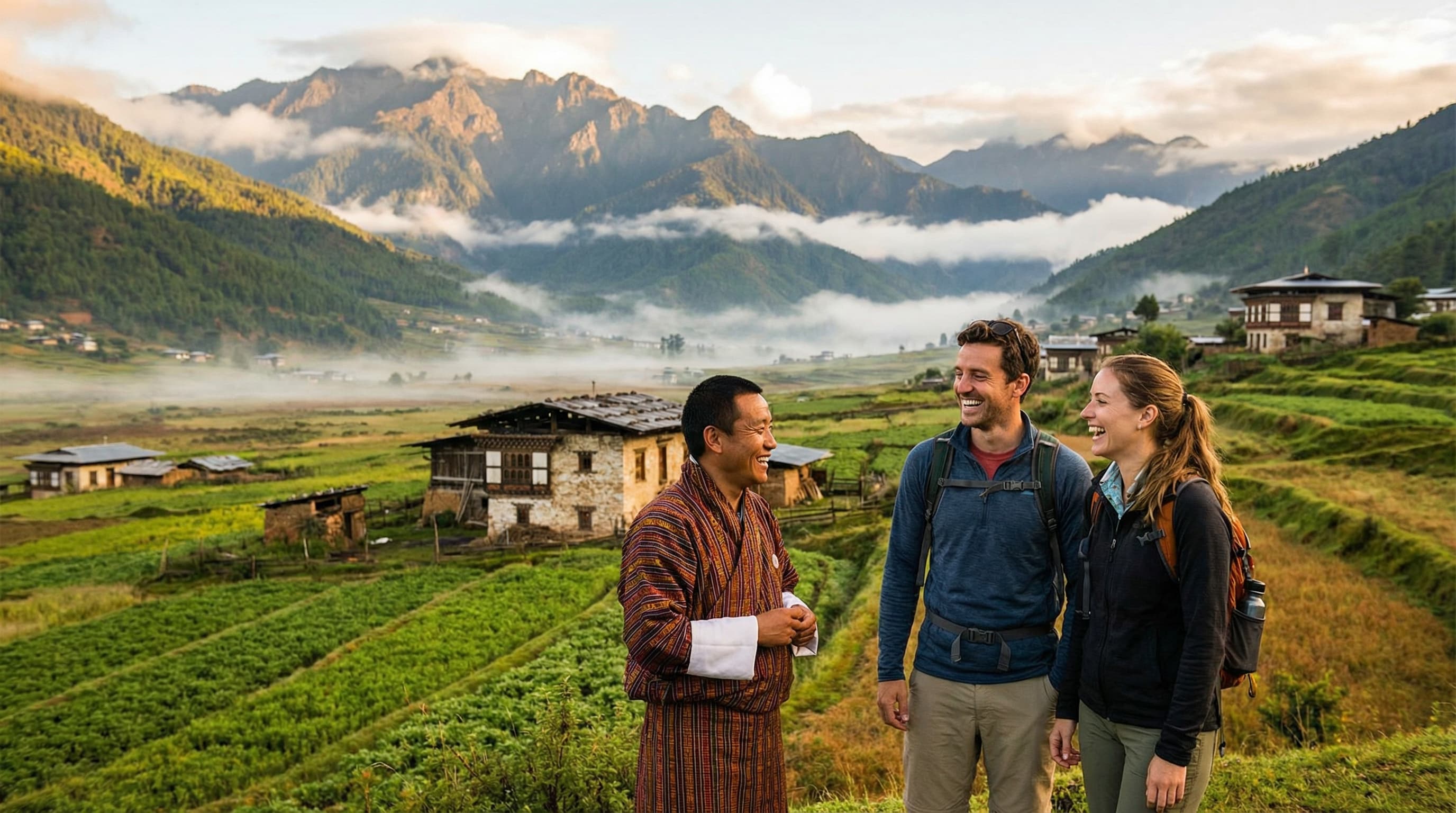
For travelers, this translates into landscapes that feel remarkably intact — dense pine forests, pristine rivers, and valleys where human settlement exists in harmony with nature rather than at its expense.
A Culture Actively Preserved, Not Recreated
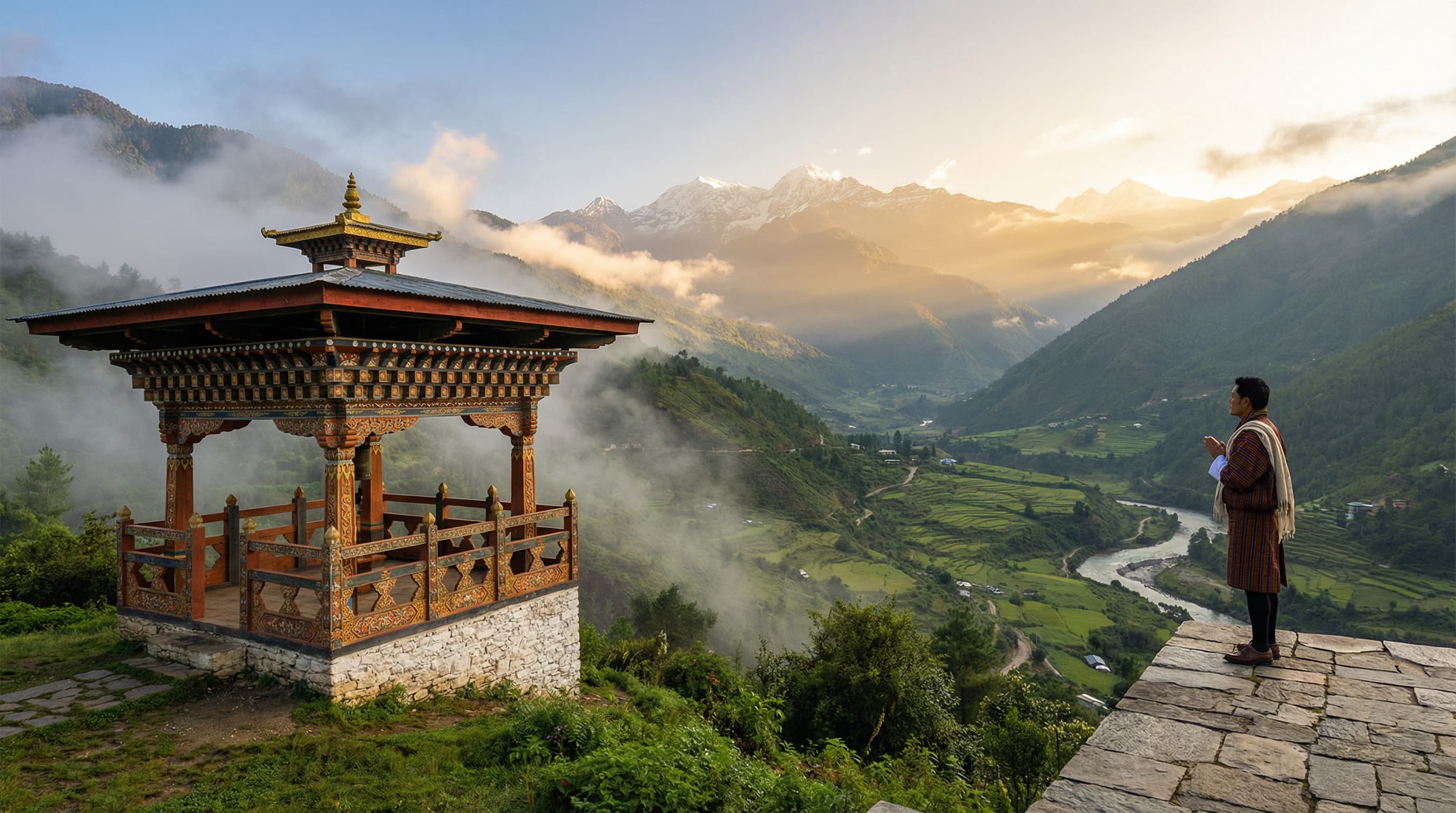
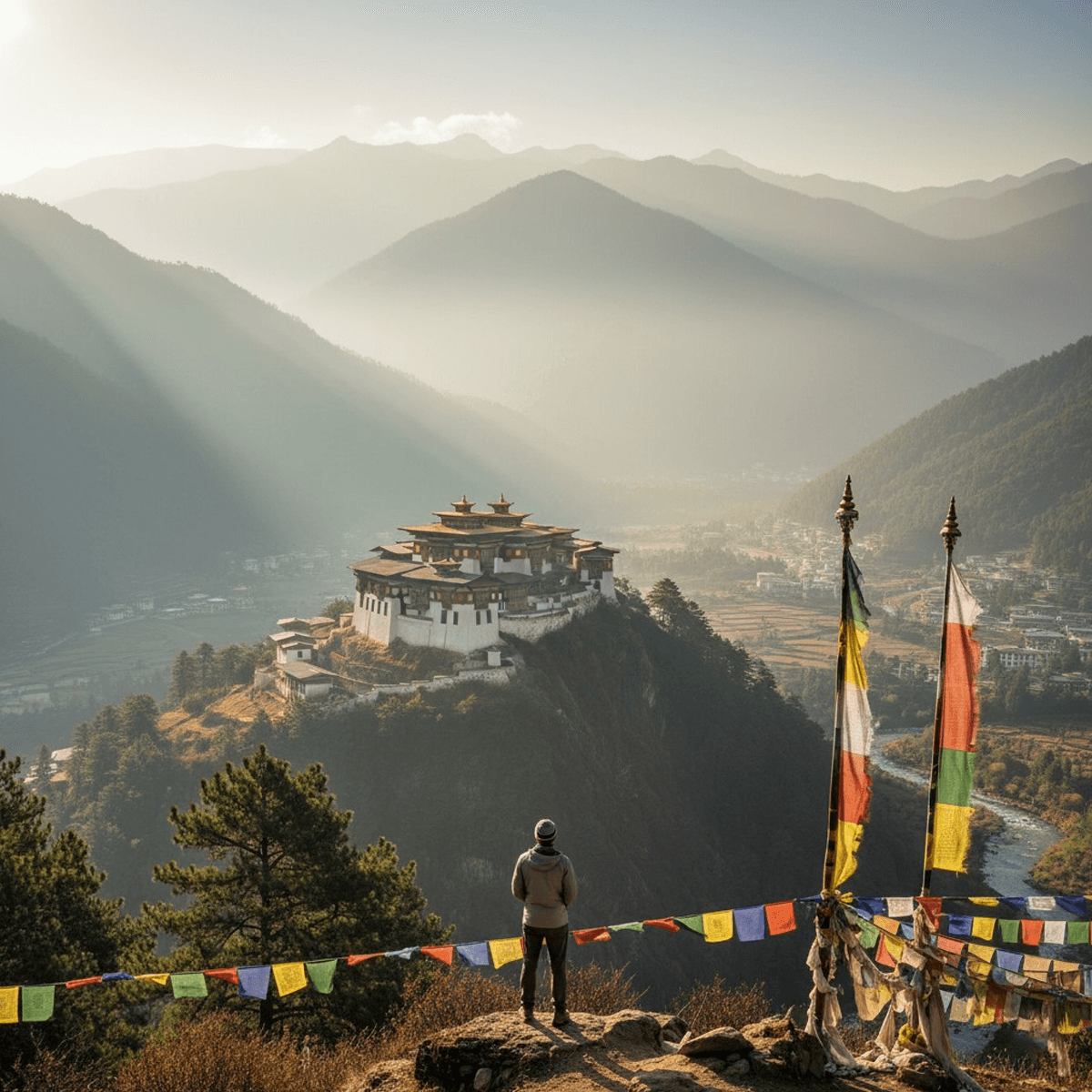
Unlike many destinations where tradition survives mainly as performance, Bhutan’s cultural practices remain embedded in daily life. Traditional dress, gho for men and kira for women, is worn in schools, government offices, and formal settings. Dzongs — fortress-monasteries dating back centuries — continue to function as both administrative and religious centers.
Annual religious festivals, or Tshechus, are held across the country, commemorating the teachings of Guru Rinpoche, who introduced Buddhism to Bhutan in the 8th century. These events are not staged for tourism calendars; they are spiritual gatherings first, with visitors welcomed as observers rather than audiences.
Gross National Happiness as National Policy
Bhutan’s global recognition stems in part from its pioneering philosophy of Gross National Happiness (GNH), formally adopted in the 1970s. Unlike traditional economic metrics, GNH measures national progress through four pillars: sustainable development, environmental conservation, cultural preservation, and good governance.
This philosophy shapes policy decisions at every level — from limits on industrial development to strict environmental protections and controlled tourism growth. For visitors, GNH is not a slogan but a lived reality, reflected in the country’s unhurried pace and deep respect for balance and well-being.
High-Value, Low-Impact Tourism
Bhutan’s tourism model is often misunderstood as exclusivity for its own sake. In reality, the “high-value, low-impact” approach is designed to prevent over-tourism while ensuring that travel contributes meaningfully to local communities and conservation efforts.
By limiting visitor numbers and prioritizing quality over volume, Bhutan avoids the pressures faced by many once-pristine destinations. The result is an experience marked by space, privacy, and depth — whether trekking remote trails, visiting sacred monasteries like Tiger’s Nest (Paro Taktsang), or engaging with rural communities far from urban centers.
Why Bhutan Remains a Hidden Paradise
In an age of instant visibility and mass exposure, Bhutan’s greatest distinction is restraint. This is a kingdom that chose preservation over popularity, depth over scale, and meaning over momentum. Its beauty is not something to be consumed quickly, but understood slowly.
At Bhutan & Co., we believe Bhutan reveals itself only to those who travel with patience, curiosity, and respect — the same values that have allowed this hidden paradise to remain timeless, protected, and profoundly intact.
Written by
Bhutan & Co. Editorial Team