Flying to Bhutan: The Drukair Experience and Seating Strategy
Transform your flight into Bhutan's first unforgettable experience. Learn the essential window-seat strategy for Himalayan views, understand the legendary Paro approach, and discover why the journey begins the moment Drukair lifts off.
TLDR
Book left-side window seats (A) on flights into Paro for Himalayan panoramas including possible Everest views. The Paro approach through mountain valleys is one of aviation's most spectacular, with only a handful of certified pilots worldwide. Online check-in two days prior secures optimal seating.
When the Journey Becomes the Destination
Most flights are mere transport—hours endured between origin and destination. The flight to Bhutan is categorically different. As Drukair or Bhutan Airlines aircraft approach Paro, passengers press faces to windows, cameras ready, experiencing what many describe as the most spectacular airport approach on Earth.
Understanding how to optimize this experience—the right seat, the right timing, the right preparation—transforms arrival from logistics into adventure.
The Airlines
Two carriers serve Bhutan:
Drukair (Royal Bhutan Airlines): The national carrier, established in 1981, operates modern Airbus A319 and A320 aircraft from Bangkok, Delhi, Kathmandu, Singapore, Kolkata, and other regional hubs. The fleet features traditional Bhutanese patterns on exteriors and interiors reflecting national heritage.
Bhutan Airlines: A private carrier launched in 2013, operating similar routes with Airbus equipment. Service and reliability match Drukair; route availability is slightly narrower.
Both airlines deliver the same essential experience: approach through the Himalayas to Paro's valley floor airport.
The Seat Strategy
This represents essential pre-trip planning:
For flights INTO Paro: Book seats on the left side of the aircraft (A seats). This positions you for the optimal view of the Himalayan range as you approach from the south.
For flights OUT OF Paro: Book seats on the right side (window seats opposite). The dramatic valley departure shows different perspectives.
Implementation:
- Check-in opens online two days before departure
- Set reminders to check in exactly at opening
- Request your operator secure seats if possible
- Arrive at airport early for last-chance seat changes
The stakes are high: passengers with middle or wrong-side seats miss one of Bhutan's defining experiences.
What You'll See
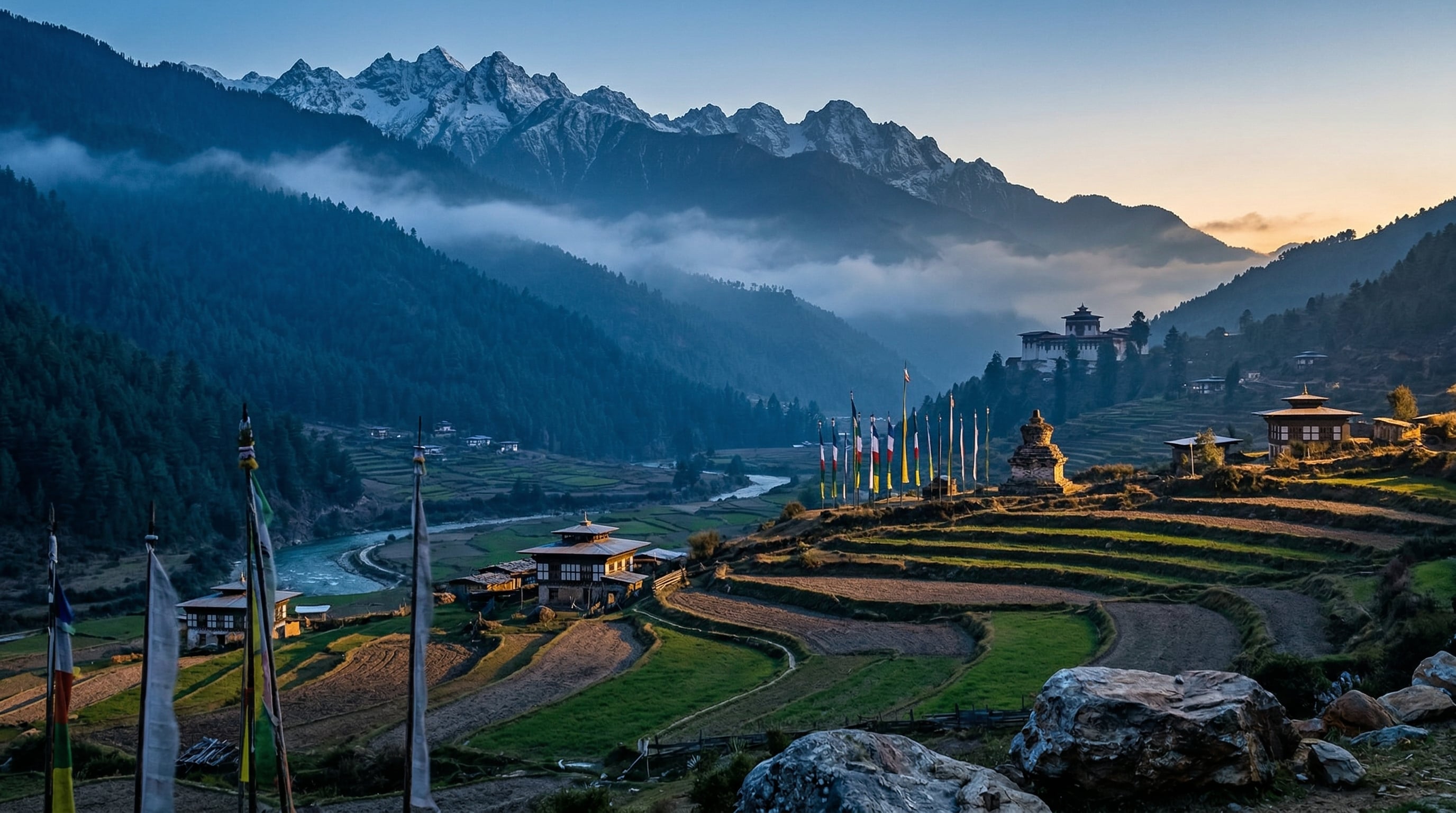
The Himalayan Range: On clear days, flights from Bangkok or Delhi pass within viewing distance of the world's highest peaks. Everest, Kanchenjunga, and countless lesser giants parade past windows, their snow caps brilliant against deep blue sky.
The Transition: As the aircraft begins descent toward Paro, forested foothills replace glaciated peaks. The scale shrinks—suddenly mountains seem passable, valleys appear between ranges.
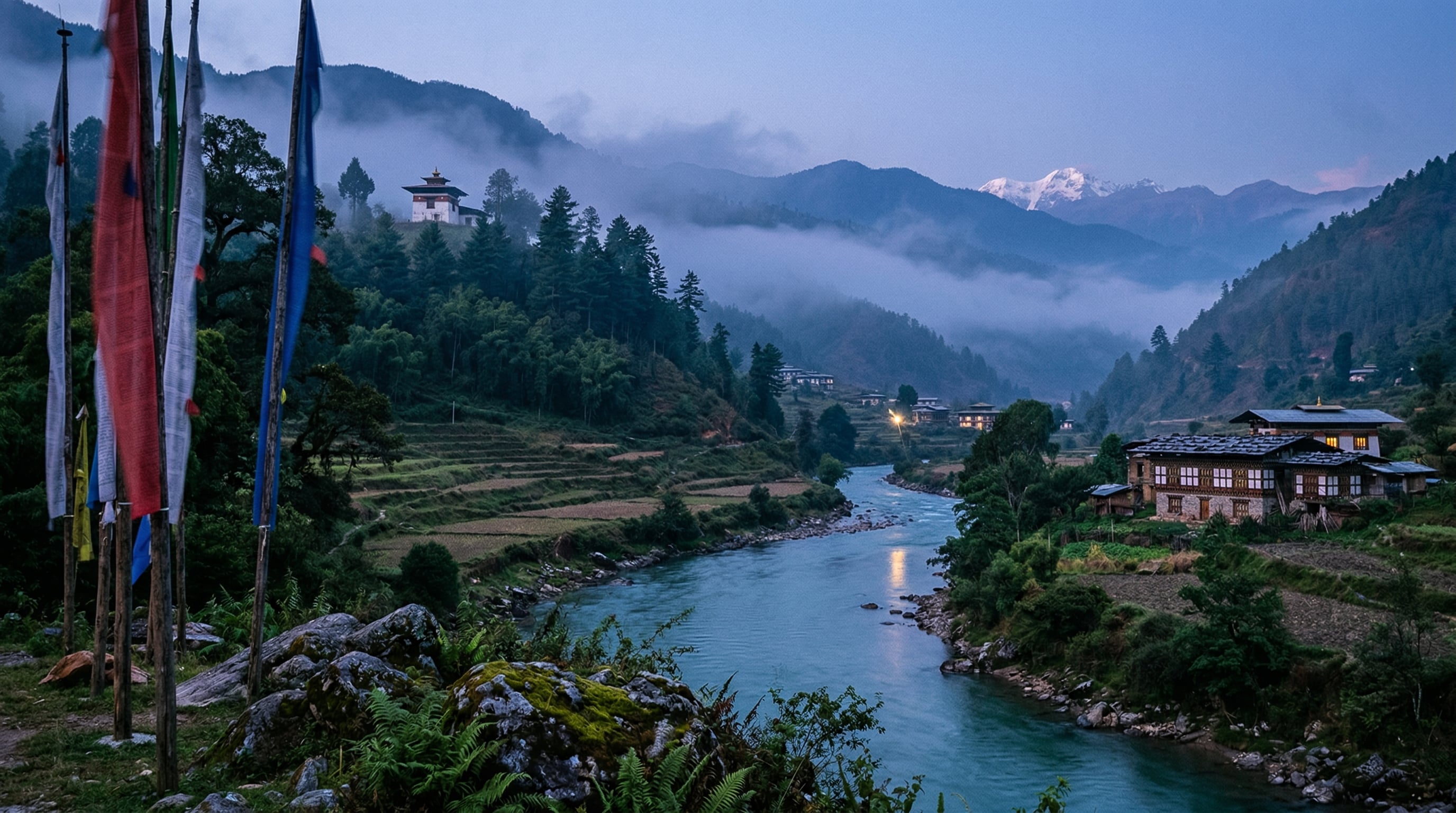
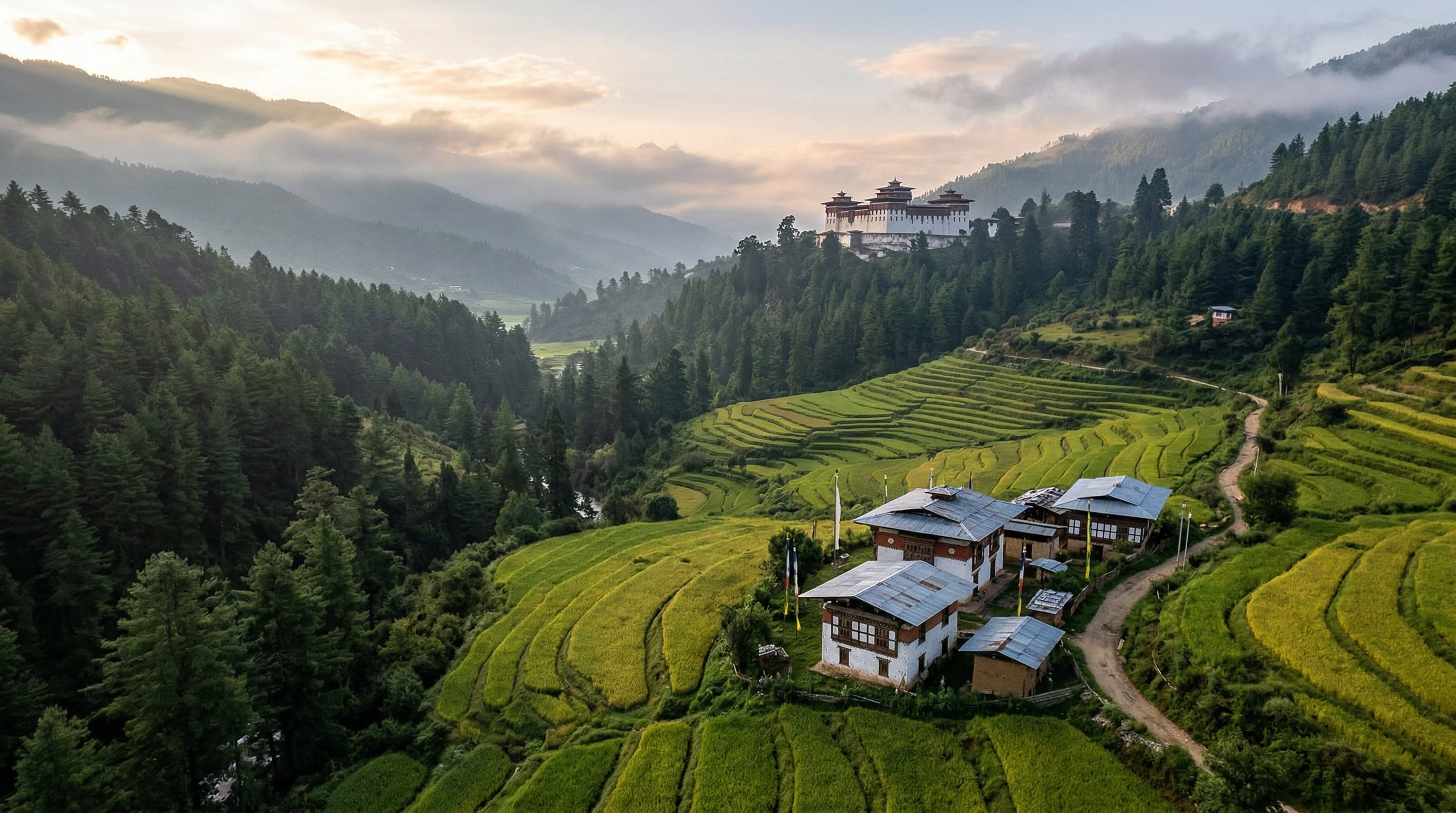
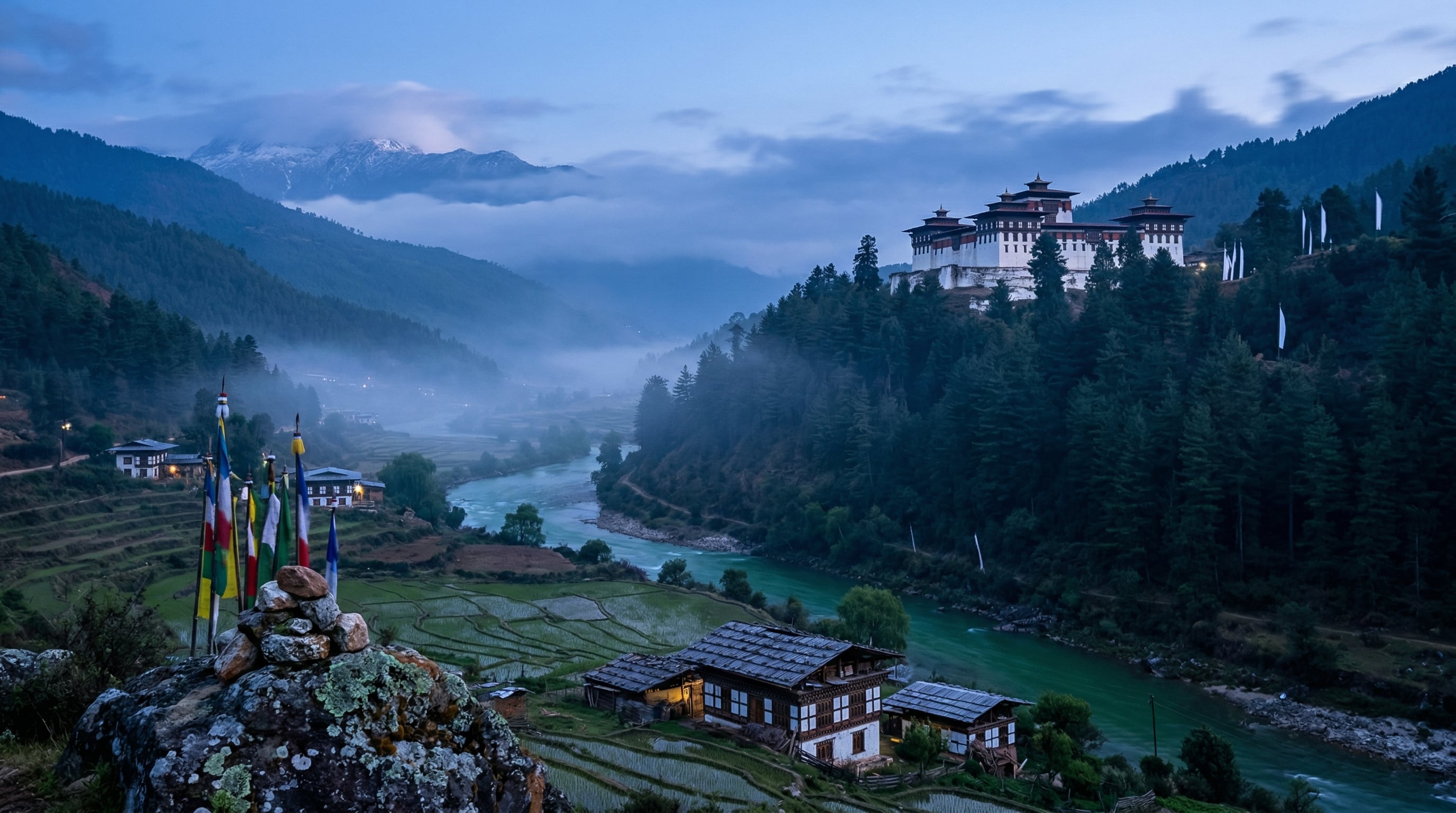
The Valley Entry: Paro airport sits at 2,235 meters in a narrow valley. The approach requires weaving between mountain ridges, banking steeply past farmhouses visible from aircraft windows. Passengers often gasp as wingtips seem to brush hillsides.
The Legendary Paro Approach
Paro International Airport operates under constraints unique in commercial aviation:
- Mountains as high as 5,500 meters surround the valley
- Visual approach only—no instrument landing systems
- Approaches require multiple turns through the valley system
- Operations limited to daylight hours only
- Only a handful of pilots worldwide are certified for the approach
This isn't marketing hyperbole—Paro genuinely ranks among the world's most challenging commercial airports. Pilots undergo specific training and must maintain recency of experience. Weather delays are common when visibility drops below minimums.
For passengers, the operational challenges translate to adventure. The final approach, banking sharply between mountains, descending rapidly toward the valley floor, seeing the runway appear suddenly ahead—this sequence remains in memory long after more conventional arrivals blur together.
Gateway Cities
Consider options when planning connections:
Bangkok (BKK)
The most common gateway, offering optimal connections from Europe, Americas, and Australasia. Bangkok's hub status provides schedule flexibility. Flight time: approximately 3.5 hours.
Additional benefit: Bangkok allows for pre-journey acclimatization to Asian time zones and last-minute luxury shopping.
Delhi (DEL)
Convenient for travelers from Europe and the Middle East, though airport experience differs significantly from Bangkok. Flight time: approximately 2.5 hours.
Kathmandu (KTM)
Excellent for combinations with Nepal—the classic Himalayan pairing. Short flight time (under one hour) but operational reliability sometimes challenging.
Singapore (SIN)
Premium gateway with exceptional airport experience. Less frequent service but premium connections for Southeast Asian travelers.
Onboard Experience
Drukair operates business and economy classes:
Business Class: Wider seats, enhanced meal service, priority boarding. On narrow-body aircraft, differs from economy in service more than space.
Economy Class: Standard international standard. Complimentary meal service, Bhutanese hospitality from cabin crew.
Both classes deliver the essential scenic experience equally—window seats matter more than class distinctions.
Practical Preparation
Camera ready: Have camera charged and accessible for landing approach. Phone cameras work well; dedicated cameras offer better results.
Window cleanliness: Aircraft windows vary—if yours is scratched or hazy, consider requesting seat change at check-in.
Lens choices: Wide-angle captures scale; telephoto isn't useful for the approach.
Battery: Ensure full charge—you'll shoot heavily at approach.
Dress comfortably: You'll want to twist in your seat for viewing angles.
Weather and Delays
Paro's visual-only approach means weather sensitivity exceeds typical airports:
- Morning fog frequently delays departures
- Afternoon clouds may delay arrivals
- Monsoon season (June-August) brings most weather challenges
- Spring and autumn offer best consistency
Build schedule flexibility—never book same-day international connections from Paro. Experienced operators know these patterns and plan accordingly.
Arrival at Paro
The airport itself extends the Bhutanese experience:
- Traditional architecture styling the terminal building
- Often the king's portrait providing first royal encounter
- Efficient immigration (visa clearance completed before boarding)
- Guides waiting with white khata scarves for ceremonial welcome
The transition from aircraft to Bhutan happens quickly—within minutes of deplaning, you're in a private vehicle heading for your first lodge, the Paro valley unfolding outside windows.
The Journey's Gift
What makes the Paro approach extraordinary isn't merely scenery but rarity. In an era when aviation homogenizes destinations into airport-hotel-attraction loops, Bhutan's approach remains genuinely unique—a literal and metaphorical gateway demanding attention, demanding presence, demanding that travelers recognize they're arriving somewhere genuinely different.
The left-side window seat strategy isn't travel hack trivia. It's the difference between entering Bhutan fully aware and missing the kingdom's first gift to its visitors.
Ready to experience Bhutan?
Our concierge team crafts private, all-inclusive journeys tailored to your interests.
Written by
Bhutan & Co. Editorial Team