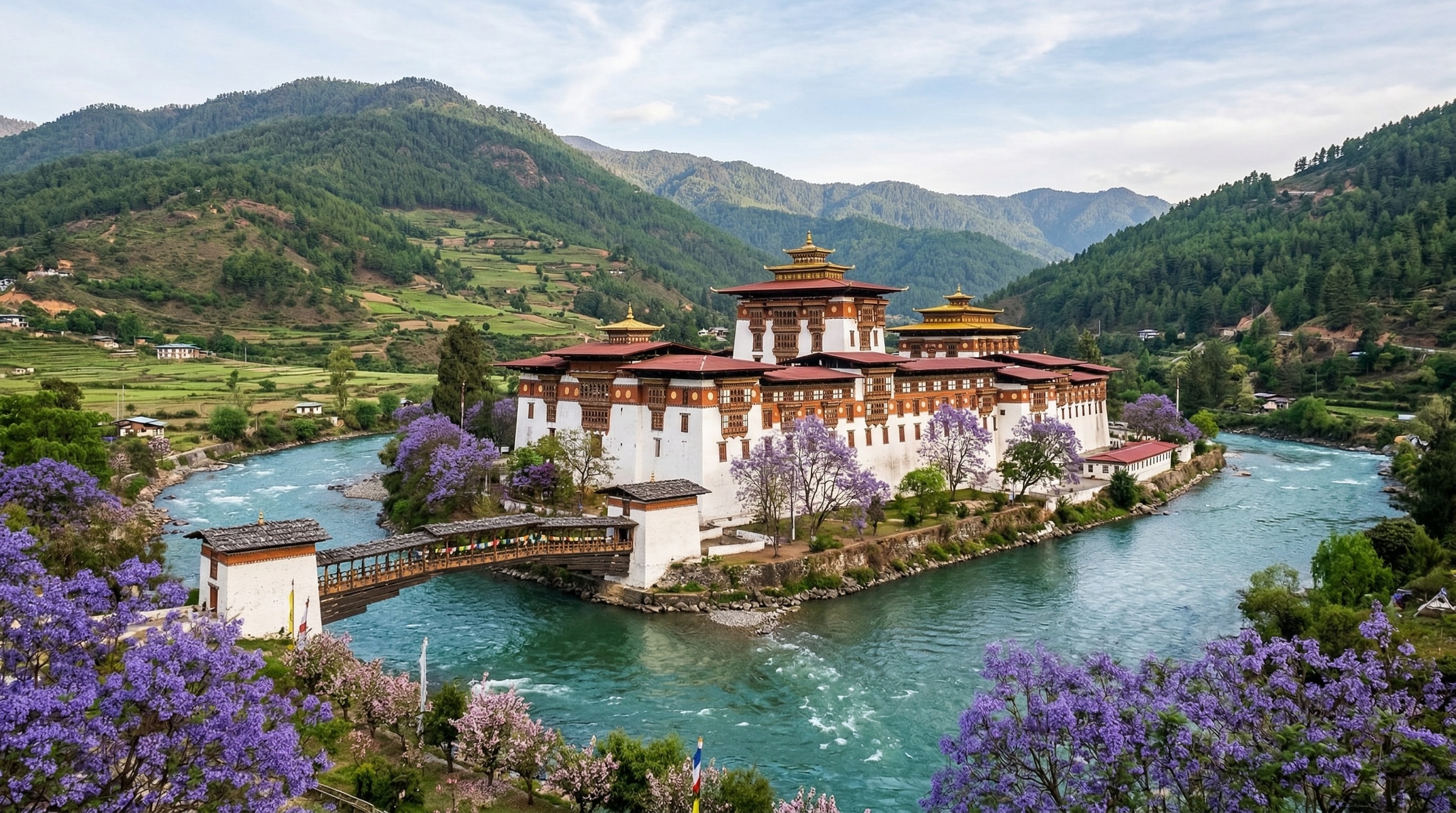
At a glance
| Location | Punakha Valley — Mo & Pho Chhu confluence |
|---|---|
| Typical visit | 2–3 hours |
| Best season | Spring jacarandas; winter ceremonies |
| Nearby stay | COMO Uma Punakha, Punakha lodges |
Punakha Dzong is the image many travelers carry home: whitewashed walls rising from two rivers, red-robed monks crossing sunlit courtyards, and the hush of timber halls built for both throne and prayer. Bhutan & Co. opens the story behind the silhouette.
A founding masterpiece
Constructed in 1637–1638 under Zhabdrung Ngawang Namgyal, the dzong anchored Bhutan's emergence as a unified Buddhist state. Its strategic position—commanding the fertile Punakha Valley—was as political as it was spiritual. Walking the approach, you still sense that dual purpose: fortress and sanctuary in one breath.
Architecture in bloom
Six ascending stories of galleries, temples, and administrative wings surround immaculate courtyards. In spring, jacarandas spill lavender clouds above the walls—a fleeting season that photographers and romantics chase. Even beyond blossom, the rhythm of stairways, arcades, and river light rewards slow looking.
Living ceremony
Punakha has hosted royal coronations and remains deeply tied to national ritual. The dzong is the winter seat of the Je Khenpo, Bhutan's chief abbot, which keeps its halls animated with practice rather than mere display. Respectful dress and calm pacing honor that continuity.
Visiting with intention
Arrive with modest shoulders and knees covered; remove shoes where custom requires. Your guide interprets iconography and timing so you avoid crush hours when possible. Extend the morning with Bhutan's longest suspension bridge—a graceful arc that frames the dzong from river level. Seasonal festivals amplify color and devotion; consider Punakha Drubchen when planning dates. Weave Punakha into a broader arc via our journeys, and pair stays with COMO Uma Punakha. Questions welcome through contact.
Luxury Bhutan packages and your itinerary
Bhutan & Co. designs private, all-inclusive luxury Bhutan packages—each built around your interests, pace, and the dates that matter (including Punakha Dzong). Explore our signature journeys for sample routes, then refine every detail with our concierge.
We coordinate Drukair as PSA, match you to Amankora, Six Senses, COMO Uma, and align festival or sightseeing time with comfortable driving days. Request a tailored quote—or read Amankora vs Six Senses when choosing a lodge circuit.
Frequently asked questions
- When is the best time to visit Punakha Dzong?
- Spring (roughly March to April) frames the compound in lavender jacaranda bloom—a beloved photographic moment. Winter and early spring also host significant religious gatherings; autumn offers crisp light. Bhutan & Co. aligns your dates with both weather and any festival interest.
- How long do I need at Punakha Dzong?
- Plan two to three hours to move through courtyards, assembly halls, and riverside approaches without rushing. Add time if you wish to combine with the Punakha suspension bridge or a gentle riverside stroll.
- What is special about Punakha Dzong?
- It unites superlative Bhutanese architecture with living governance and faith: a six-story masterpiece at the Mo Chhu and Pho Chhu confluence, historically tied to unification, royal coronations, and the winter residence of the Je Khenpo.
Experience Punakha with Bhutan & Co.
Private guiding, refined pacing, and lodge selection that honors both spectacle and serenity.
Start planning