Amankora vs Six Senses: Comparing Bhutan's Ultra-Luxury Lodges
Navigate the choice between Bhutan's two premier lodge collections. Compare Amankora's intimate suites and cultural immersion with Six Senses' wellness-focused approach across five stunning valleys—and discover which best matches your luxury travel style.
TLDR
Amankora offers intimate 8-24 suite lodges emphasizing cultural immersion and traditional design with bukhari stoves. Six Senses focuses on wellness with dedicated spas and farm-to-table dining. Both operate five properties across the same valleys; choice depends on priorities: culture vs. wellness. Taj Gangtey Resort & Spa adds a third ultra-luxury option in Phobjikha Valley.
The Two Giants of Bhutanese Hospitality
Last updated September 2026. Room counts, inclusions, and nightly rates change with season and policy—your Bhutan & Co. concierge confirms current lodge availability and pricing at booking.
When Bhutan opened to tourism in 1974, accommodation options were limited and basic. Today, the kingdom hosts two of the world's most prestigious ultra-luxury hotel brands, each operating five interconnected lodges across Bhutan's most significant valleys. The choice between Amankora and Six Senses often determines the character of an entire Bhutan experience.
This comparison aims to illuminate differences rather than declare winners—both brands deliver extraordinary experiences at corresponding price points. Understanding their distinct philosophies helps travelers choose the partner that best aligns with personal priorities.
Brand Philosophy
Amankora
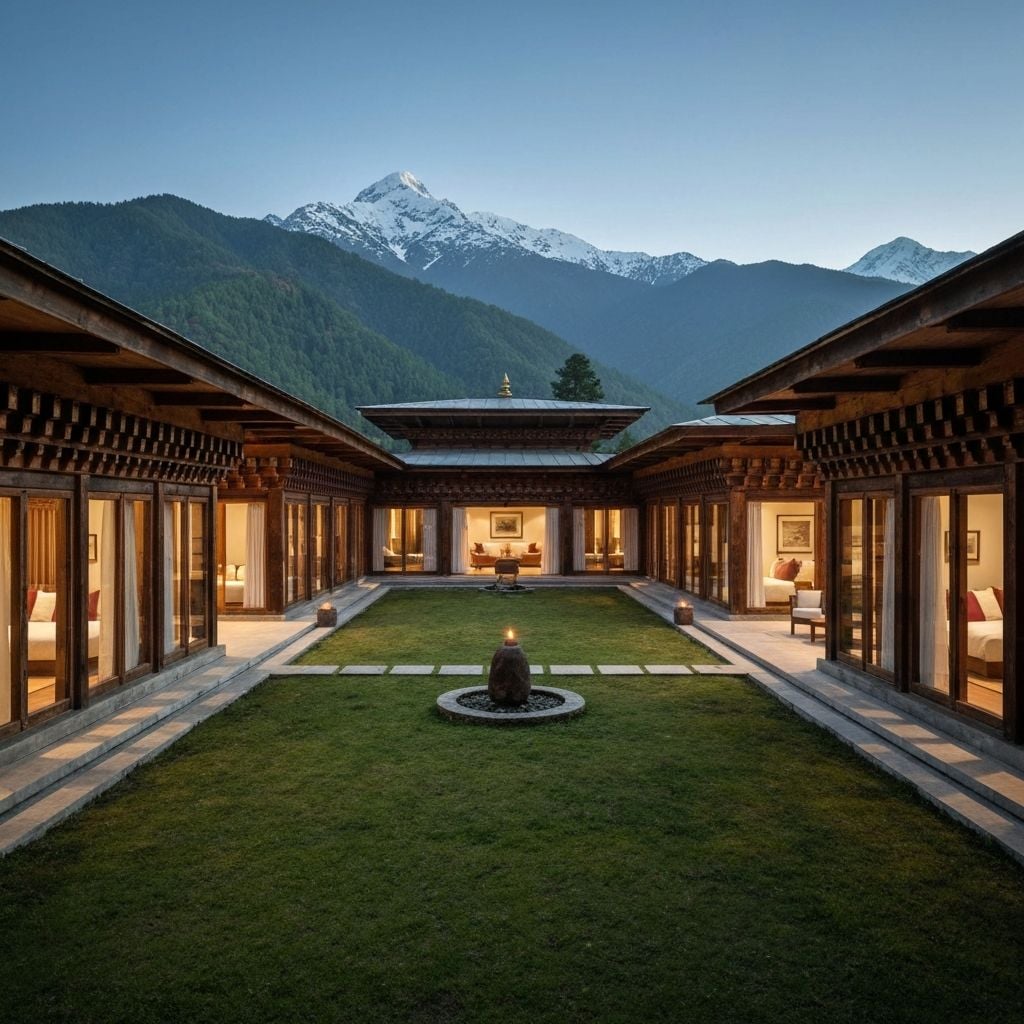
Aman resorts worldwide share a defining philosophy: refined simplicity, intuitive service, and deep connection to place. In Bhutan, this translates to lodges designed specifically for the kingdom—not international templates adapted to local conditions but properties conceived from ground up as Bhutanese spaces.
The Amankora experience emphasizes cultural immersion. Staff are trained to serve as cultural interpreters, not merely service providers. Architecture honors traditional forms while incorporating contemporary comfort. The overall effect is entering Bhutan rather than staying in a hotel that happens to be in Bhutan.
Six Senses
The Six Senses brand centers on wellness and sustainability. Their Bhutan properties incorporate this DNA with particular emphasis on holistic health programs, organic dining, and environmental consciousness. The focus is slightly more internal—personal transformation through the wellness offerings, supported by but not dominated by cultural context.
Six Senses attracts guests seeking specific health outcomes: stress reduction, sleep improvement, fitness enhancement, or spiritual development. The Bhutanese setting amplifies these programs but doesn't necessarily define them.
The Properties: Valley by Valley
Paro Valley
Amankora Paro: 24 suites in traditional farmhouse style, each featuring wood-burning bukhari stove, king bed, and views over the valley. The property's forest setting creates immediate separation from the world beyond.
Six Senses Paro: 20 rooms and villas—including 16 suites and four private villas (up to three bedrooms)—positioned above Ta Dzong, the National Museum. Comprehensive spa facilities, an indoor pool, and destination dining within the surrounding ruins make this a full-scale resort experience.
Verdict: Amankora for intimacy and traditional atmosphere; Six Senses for amenity breadth and villa options.
Thimphu
Amankora Thimphu: 16 suites overlooking the old dzong, positioned for capital exploration while maintaining Aman's characteristic seclusion. The smallest Amankora property offers the most intimate experience.
Six Senses Thimphu: The brand's most accessible property, convenient for capital activities with full spa and wellness programming. Palace suites offer exceptional space and views.
Verdict: Similar positioning; choose based on brand preference. Amankora's smaller scale suits those prioritizing personalized attention.
Punakha
Amankora Punakha: 12 suites—including 10 standard suites and two generous Mo Chhu Suites—housed in a converted 300-year-old farmhouse accessed via a suspension bridge over the Mo Chhu river. Perhaps the most traditionally beautiful Amankora setting.
Six Senses Punakha: Lodge suites and a standalone villa positioned for spectacular Punakha Dzong views. The swimming pool and spa take advantage of Punakha's warmer climate.
Verdict: Both exceptional; Amankora edges ahead for architectural integration, Six Senses for amenity range in the warmer valley.
Gangtey
Amankora Gangtey: 8 suites in the Phobjikha Valley—the smallest lodge in the entire Amankora collection. Extraordinary intimacy and superb positioning for Black-Necked Crane viewing.
Six Senses Gangtey: 12 suites with integrated spa and superior crane-viewing facilities. Hot stone baths overlooking the valley are particularly memorable.
Verdict: Amankora's eight-suite scale offers unmatched exclusivity; Six Senses provides more developed wellness infrastructure for those prioritizing treatments during crane-viewing stays.
Bumthang
Amankora Bumthang: 16 suites in Bhutan's spiritual heartland, positioned for exploration of the valley's remarkable temple concentration. Traditional design with extraordinary views.
Six Senses Bumthang: The easternmost property of both circuits, offering similar positioning with Six Senses' wellness emphasis and farm-to-table focus strongest here.
Verdict: Near-equivalent positioning for cultural exploration; dietary and wellness priorities determine preference.
Service Philosophy
Amankora
Aman service is famously anticipatory—staff seem to know what guests need before requests are made. The style tends toward discretion rather than effusion; service people appear when needed and recede when not.
Guides are employed directly by Amankora and receive intensive training on cultural interpretation. They serve as intellectual companions comfortable discussing Buddhism, Bhutanese history, and contemporary affairs.
Six Senses
Six Senses service emphasizes warmth and engagement. Staff are encouraged to developing genuine relationships with guests, creating friendly rather than formal atmosphere.
Their "Guest Experience Makers" (GEMs) coordinate activities and wellness programming, creating cohesive journeys rather than isolated experiences.
Wellness and Spa
Amankora
Aman spas are refined and effective but serve supporting rather than primary roles. Treatments draw on traditional techniques—notably the excellent hot stone bath offerings—but extensive wellness programming isn't Aman's defining strength.
The brand's wellness approach is more environmental: the properties themselves, their settings and design, are conceived as therapeutic.
Six Senses
Wellness defines Six Senses' value proposition. Full-service spas at each property offer treatment menus rivaling standalone wellness resorts. Integrated programs address specific outcomes over multi-day stays.
In-house wellness experts typically include traditional medicine practitioners (drungtsho), yoga instructors, and holistic health advisors.
Dining
Amankora
Excellent international cuisine with sophisticated Bhutanese options. Dining venues are intimate extensions of the properties' overall design. Special meals—picnic lunches at scenic locations, private dinners in dramatic settings—are particular strengths.
Six Senses
Wellness-focused menus emphasize organic, locally-sourced ingredients with clear nutritional awareness. Spa cuisine and specialized dietary programs receive particular attention. Farm-to-table approach with extensive kitchen gardens at each property.
Multi-Property Journeys
Both brands encourage "circuit" travel using multiple lodges across regions. These journeys allow luggage to travel separately while guests experience diverse valleys without the inconvenience of packing.
Amankora Circuit: Typically structured around cultural themes—perhaps starting with "gateway" properties (Paro, Thimphu), moving to "immersion" (Punakha, Gangtey), and culminating in "heartland" (Bumthang).
Six Senses Journey: Often built around wellness progressions—detox giving way to rebuilding, culminating in integration. The valley sequence supports intended health outcomes.
Pricing and Value
Both brands operate at ultra-luxury pricing—typically $2,000–4,000+ USD per night at published rates for 2027 travel dates, depending on season and room category (confirm at reservation). Packages are generally structured as inclusive of meals, beverages, activities, and guides; exact inclusions vary.
The premium above other five-star options reflects smaller scales, higher staff-to-guest ratios, premium products, and included experiences that alternatives charge separately. Value assessment depends on priorities the chosen brand addresses.
Making the Choice
Choose Amankora if:
- Cultural immersion is your primary motivation
- Intimate scale and discretion appeal more than resort amenities
- Traditional architecture and design matter deeply
- You prefer understated luxury to visible luxury
Choose Six Senses if:
- Wellness outcomes drive your journey
- Spa and treatment facilities will receive regular use
- Sustainable practices resonate with personal values
- You prefer warmer, more engaging service styles
Neither choice is wrong—both brands deliver extraordinary Bhutan experiences at the highest international standards. The distinction lies in emphasis and philosophy rather than quality.
Beyond the Two: Emerging Luxury Options
While Amankora and Six Senses dominate the ultra-luxury conversation, Bhutan's accommodation landscape continues to evolve. Notable additions include:
Taj Gangtey Resort & Spa: The Taj Hotels group brings 35 valley-facing rooms to Phobjikha Valley, adding a third ultra-luxury option for crane-season visitors. The property combines Taj's renowned Indian hospitality tradition with spa facilities, an indoor pool, and the valley's signature Black-Necked Crane viewing opportunities.
COMO Uma Paro: A 29-room boutique property featuring the acclaimed Bukhari restaurant, COMO Shambhala spa, and excellent positioning for Tiger's Nest excursions.
Gangtey Lodge: An independent 12-suite boutique property in Phobjikha Valley with a naturalist focus, offering an intimate alternative to the international brands.
For travelers planning a multi-valley journey, mixing properties across brands can create uniquely tailored experiences—though the seamless logistics of staying within a single collection remains a compelling advantage.
Ready to experience Bhutan?
Our concierge team crafts private, all-inclusive journeys tailored to your interests.
Written by
Bhutan & Co. Editorial Team