Gelephu Mindfulness City: Bhutan's Vision for the Future
Discover Bhutan's bold plan for Gelephu, a transformative 'mindfulness city' designed by BIG architects. Learn how this sustainable urban vision blends Gross National Happiness principles with cutting-edge environmental design—and what it means for travelers anticipating Bhutan's next chapter.
TLDR
Gelephu Mindfulness City, designed by BIG architects, will become a new international gateway with sustainable design, walkable districts, and GNH-informed urban planning. Targeting launch by 2025-2030, it represents Bhutan's vision for growth that maintains cultural and environmental values.
A City Designed for Happiness
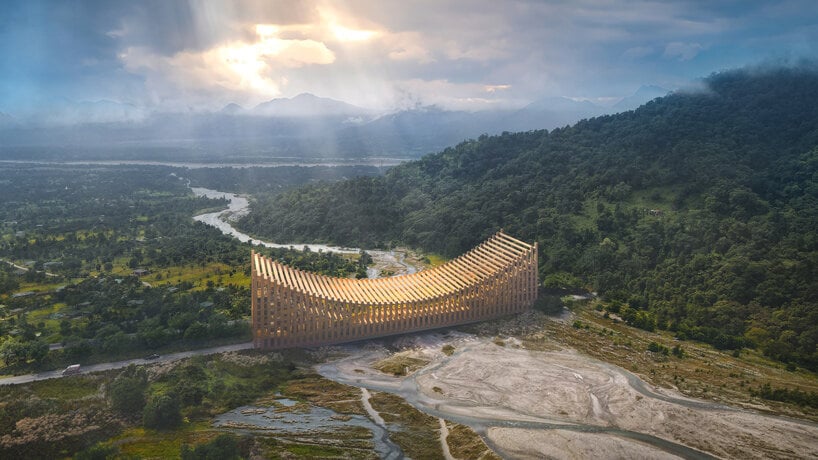
At the kingdom's southern border, where Bhutan meets India near the subtropical lowlands, an extraordinary experiment in urban design is taking shape. Gelephu Mindfulness City represents the most ambitious articulation yet of Bhutan's development philosophy: a new city designed from inception around Gross National Happiness principles, sustainable architecture, and walkable human-scale design.
For travelers watching Bhutan's evolution, Gelephu represents both promise and question. How will this small kingdom, famous for limiting visitors, navigate growth? Gelephu offers one answer—and it may be the most innovative urban planning response to climate and cultural challenges anywhere on Earth.
The Vision
Announced by His Majesty King Jigme Khesar Namgyel Wangchuck in late 2023, Gelephu Mindfulness City is conceived as:
- A new international gateway providing alternative access to Bhutan
- A Special Administrative Region with streamlined regulatory framework
- A model for development aligned with GNH and environmental principles
- A hub for sustainable industries and mindfulness tourism
The city will occupy approximately 1,000 square kilometers—roughly 2.5% of Bhutan's total area—positioning it to become the kingdom's second major urban center while maintaining the low-impact approach that defines Bhutanese development.
BIG's Design Philosophy
The city's master plan comes from Bjarke Ingels Group (BIG), the Danish architectural firm known for bold, sustainable designs, working in collaboration with Arup (engineering) and Cistri (Singapore-based planning consultancy). Their approach for Gelephu includes:
Eleven Neighborhoods Shaped by Nature
The city organizes into eleven distinct neighborhoods shaped by 35 rivers running through the site, with design drawing on the nine GNH domains: living standards, health, education, governance, ecological resilience, time use, community vitality, culture, and psychological well-being. Ribbon-like neighborhoods resemble paddy fields, forming urban terraces that cascade from highlands to lowlands. Urban design literally embeds national philosophy.
Car-Free Cores
District centers are designed for pedestrian priority, with vehicle access limited to peripheries. Residents and visitors move on foot, by bicycle, or via low-emission shared transport.
Green Corridors
River systems and forest ribbons weave through the urban fabric, maintaining biodiversity corridors, managing flooding, and providing continuous access to nature from any point in the city.
Net-Positive Energy
Building codes mandate solar integration and passive cooling appropriate to the subtropical climate, targeting a city that produces more energy than it consumes.
Vernacular Innovation
Architecture adapts traditional Bhutanese forms—multi-story rammed earth construction, deep overhangs, internal courtyards—with contemporary efficiency and materials.
The Economic Model
Gelephu Mindfulness City addresses Bhutan's development challenges:
Employment: Youth unemployment, particularly for educated young Bhutanese, creates pressure for economic expansion. Gelephu aims to generate employment in sustainable industries.
Revenue diversification: Currently dependent on hydropower exports and tourism, Bhutan seeks additional revenue streams. Gelephu's special economic zone status may attract investment in technology, wellness services, and sustainable manufacturing.
Entry alternative: A new international airport at Gelephu will reduce pressure on Paro's constrained facility and provide alternative routing for visitors.
What This Means for Travelers
Gelephu Mindfulness City creates new possibilities for Bhutan visitors:
Southern Gateway
The planned international airport offers alternative entry, particularly convenient for visitors from India or those seeking multimodal approaches (fly into Gelephu, journey north through the kingdom, fly out from Paro—or reverse).
Mindfulness Tourism
The city is designed to support wellness and mindfulness programming at urban scale. Retreat centers, meditation facilities, and wellness services integrated from urban inception rather than retrofitted.
Subtropical Experience
Gelephu's lowland location offers climate contrast with the cool high valleys. Winter visitors might combine warm Gelephu stays with mountain excursions, enjoying Bhutan's full ecological range.
Extended Itineraries
A second gateway enables itineraries impossible with Paro-only access: linear journeys traversing the kingdom rather than returning to the starting point.
Timeline and Reality
Ambitious vision meets practical constraints:
Phase 1 (2024-2026): Infrastructure groundwork, regulatory framework establishment, initial zone development
Phase 2 (2026-2030): Airport completion, first residential and commercial districts, initial tourism infrastructure
Full buildout: Decades-long process; full realization represents a generational project
Current travelers should not expect imminent Gelephu tourism. The city remains a construction site and vision, not a destination. But those visiting Bhutan in coming years may observe the project's evolution—and those returning in five or ten years may find a transformed southern region.
The GNH Development Test
Gelephu represents Bhutan's highest-stakes application of its development philosophy. The kingdom's reputation rests on maintaining cultural and environmental integrity despite economic pressures. Gelephu tests whether these values can guide actual urban construction—whether GNH can move from policy to bricks and mortar.
Critics question whether any rapid development can maintain Bhutanese values. Proponents argue that strategic growth, designed correctly, strengthens the cultural and economic base that allows Bhutan to remain Bhutan.
The debate itself demonstrates Bhutan's distinctive approach. Most countries simply build; Bhutan debates whether building serves happiness.
The Traveler's Position
For those planning Bhutan visits, Gelephu creates interesting strategic considerations:
Visit now: Experience Bhutan before significant change. Current patterns—Paro entry, valley circuit, limited access—won't disappear immediately but will evolve.
Return later: Witness transformation. Those who visit Bhutan now and return in 2030 will observe development in real time—a living case study in alternative growth.
Watch for announcements: Airport opening dates and initial tourism offerings will emerge as construction progresses. Early access may offer unique experiences.
The Larger Significance
Beyond Bhutan, Gelephu matters because alternatives matter. In a world of climate emergency and urban dysfunction, a city designed from inception around sustainability, walkability, and human well-being offers lessons regardless of scale.
Bhutan—the country that funds its social services through the Sustainable Development Fee—remains too small to affect global outcomes directly. But its influence as example—as proof that different approaches exist—extends far beyond its borders. Gelephu, if it succeeds, demonstrates that urban modernity need not replicate Western or East Asian patterns, that happiness can guide planning as effectively as economics.
For travelers who choose Bhutan precisely because it differs from everywhere else, Gelephu's evolution will determine whether that difference persists, deepens, or eventually erodes.
The kingdom that gave the world Gross National Happiness is betting it can build a city worthy of the philosophy. The construction has begun.
Ready to experience Bhutan?
Our concierge team crafts private, all-inclusive journeys tailored to your interests.
Written by
Bhutan & Co. Editorial Team