Punakha Dzong: Visiting Bhutan's Most Beautiful Fortress
Discover Punakha Dzong, Bhutan’s most beautiful fortress. Explore the architectural depth, historical significance, and the luxury logistics of visiting this valley.
TLDR
Punakha Dzong, the winter capital's 'Palace of Great Happiness,' offers a masterclass in 17th-century Bhutanese architecture and spiritual history. This guide details the fortress's three-courtyard structure, the best seasonal visiting windows, and the luxury logistics for a seamless high-end journey.
The Meridian of Bhutanese Heritage: Pungtang Dewa Chhenbi Phodrang
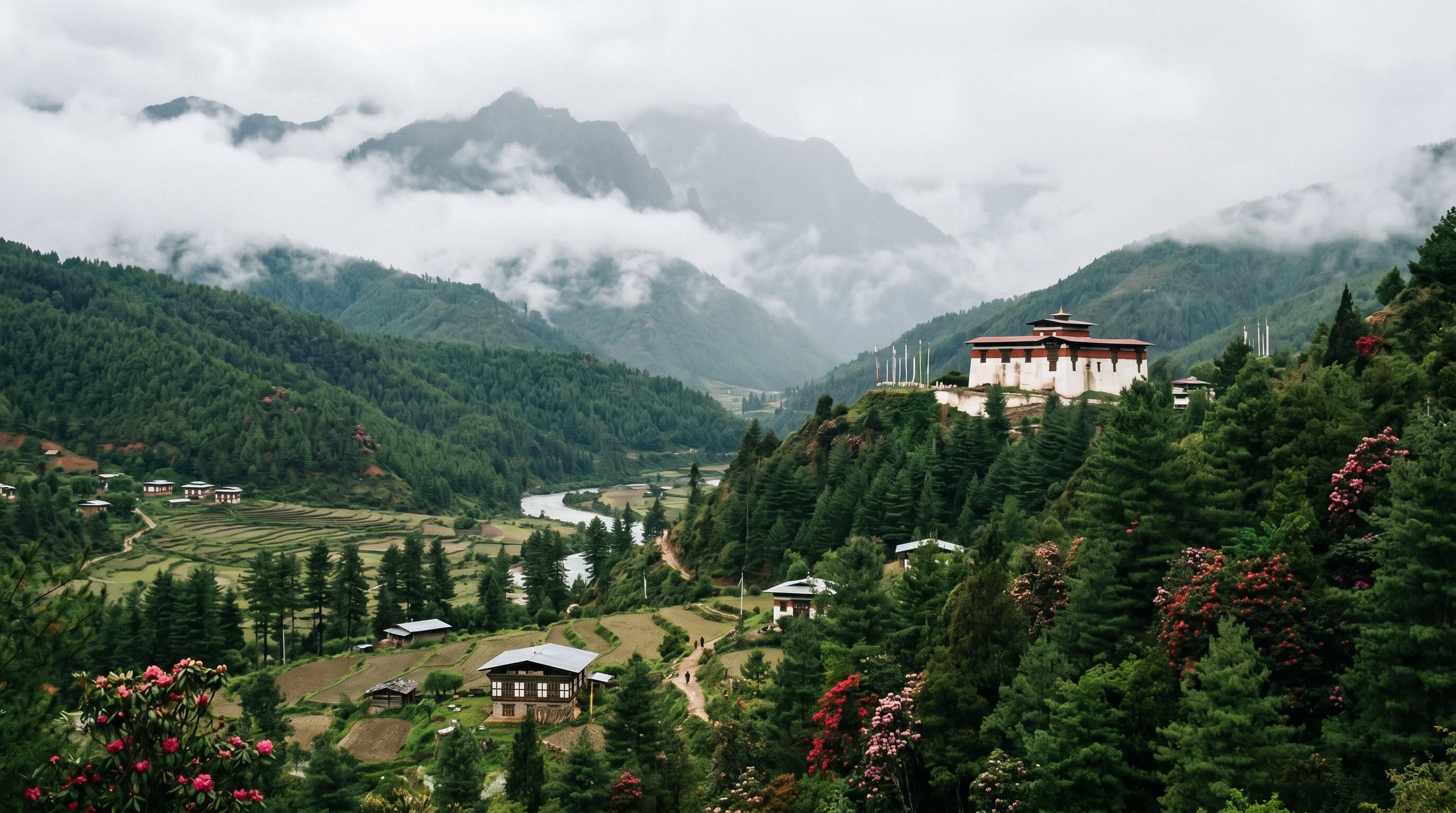
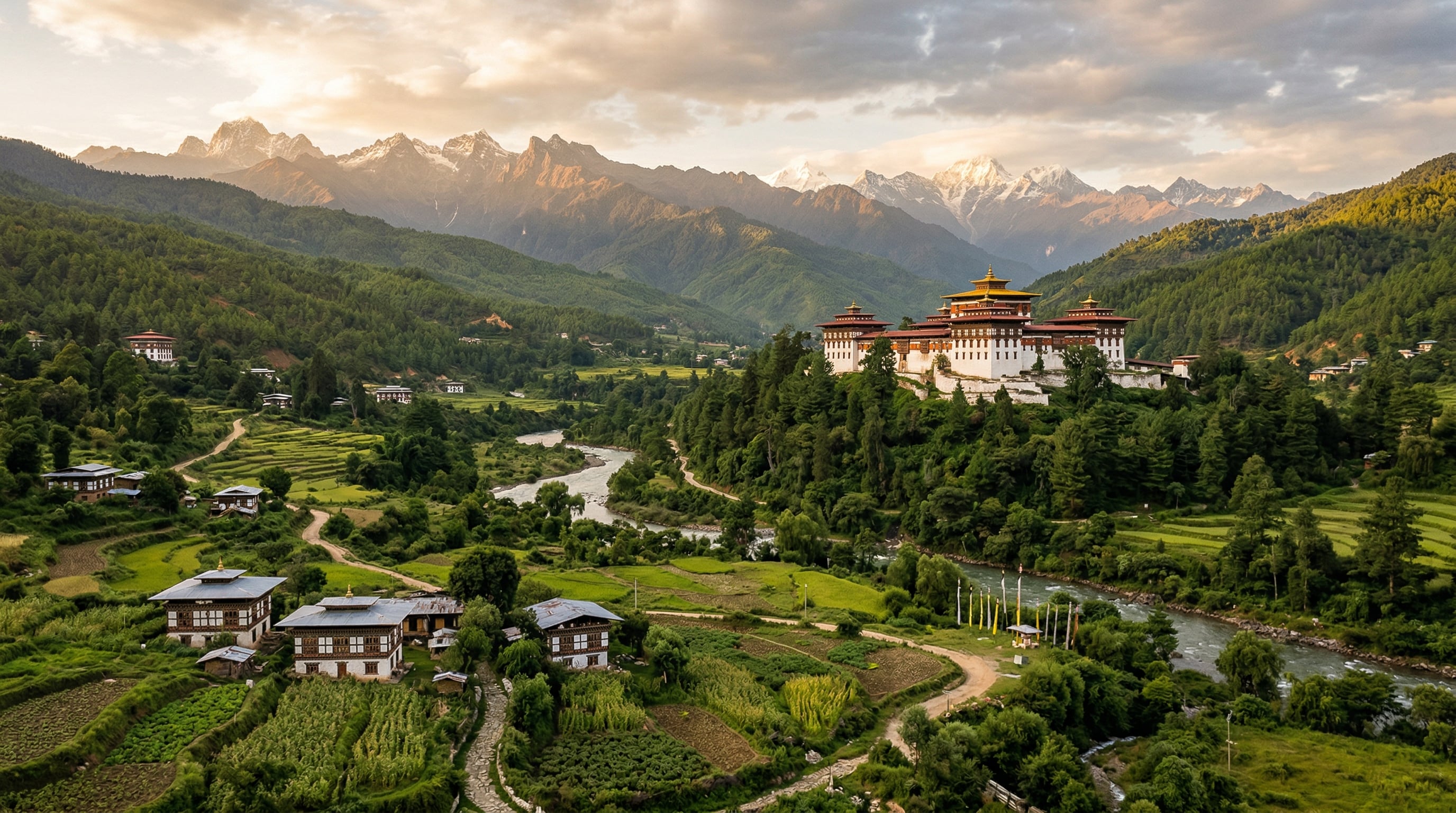
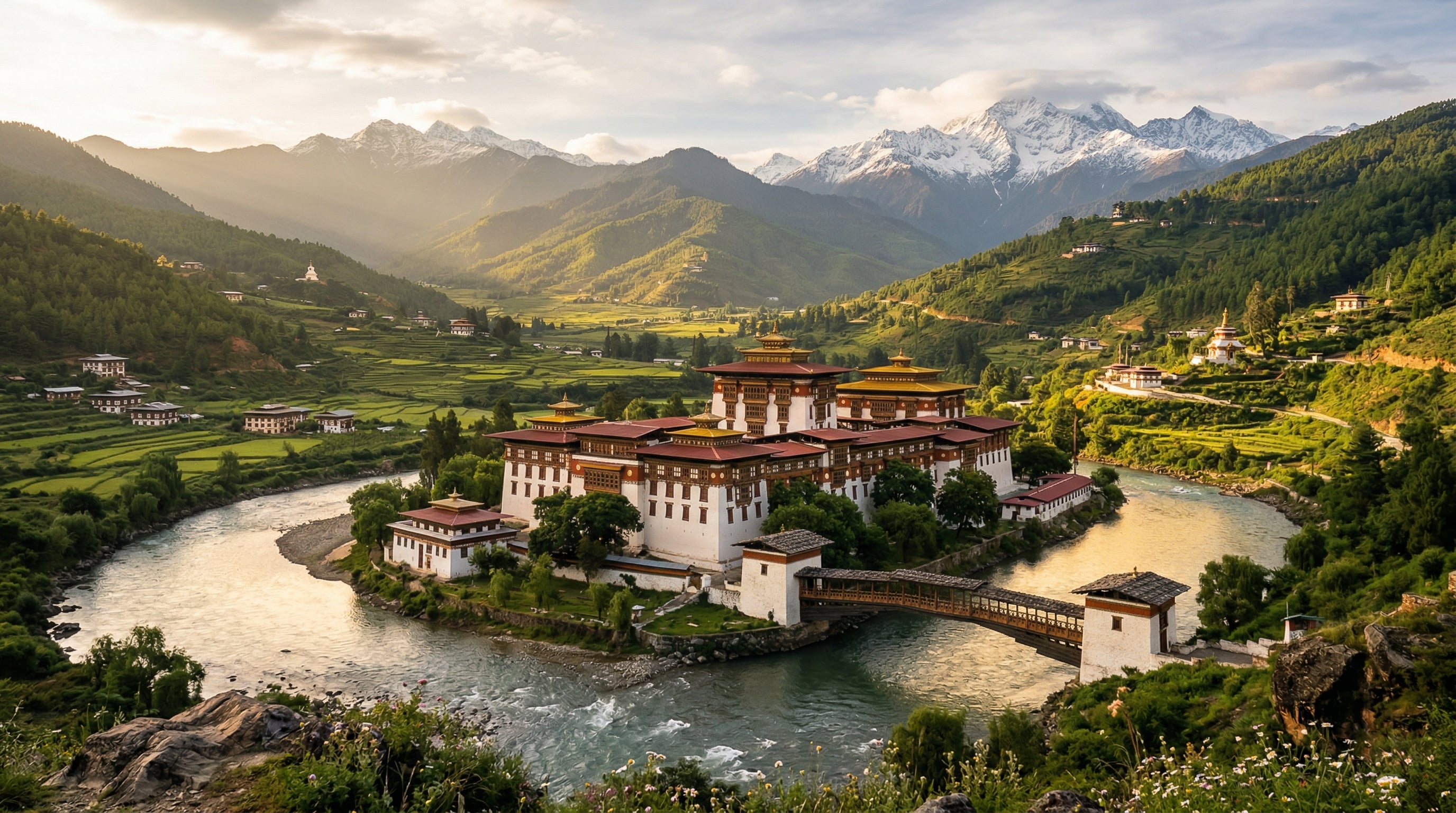
In the hierarchy of Bhutanese architecture, Punakha Dzong—officially named Pungtang Dewa Chhenbi Phodrang, or the 'Palace of Great Happiness'—occupies a singular position. It is not merely a historical monument; it is a living nexus of political history, spiritual authority, and aesthetic perfection. Situated at the confluence of the Pho Chhu (father) and Mo Chhu (mother) rivers, the dzong serves as a masterclass in the Zorig Chusum, the thirteen traditional arts of Bhutan. For the high-net-worth traveler, Punakha offers a distinct microclimate and a historical weight that differs significantly from the more frequently visited valleys of Paro and Thimphu.
As the winter capital of Bhutan, Punakha enjoys a subtropical climate that allows for lush vegetation and comfortable temperatures even in the depths of December. The journey to the valley typically begins after a seamless arrival into Paro. For our international clients, the most efficient transit remains the Bangkok-to-Paro gateway. As the official PSA for Drukair, Bhutan & Co. facilitates immediate ticketing and logistical alignment, ensuring that your transition from the urban density of Thailand to the serene elevations of the Himalayas is handled with precision.
Architectural Mastery: The Three Courtyards (Docheys)
The genius of Punakha Dzong lies in its construction. Built in 1637 by Zhabdrung Ngawang Namgyal, the unifier of Bhutan, the structure was famously erected without the use of a single iron nail. The fortress has survived fires, floods, and earthquakes, each time being restored to its original specifications, preserving the integrity of its 17th-century design. Unlike many other dzongs, Punakha features three distinct docheys (courtyards), whereas most have only two.
The First Courtyard: Administrative Authority
The first courtyard is the center of administrative functions. Here, the white-washed walls rise in stark contrast to the intricate woodwork of the windows and balconies. A massive white chorten and a sacred Bodhi tree dominate the space. This courtyard serves as a reminder of the dual system of government established by the Zhabdrung, where secular and religious administration share equal weight within the same fortress.
The Second Courtyard: The Monastic Residence
Moving inward, the second courtyard is reserved for the clergy. Punakha remains the winter residence of the Je Khenpo (the Chief Abbot) and the Central Monastic Body. During the winter months, the courtyard hums with the disciplined activity of hundreds of monks who migrate here from Thimphu to escape the high-altitude cold. This transition of the monastic body is a centuries-old tradition that underscores Punakha's status as the spiritual heart of the nation.
The Third Courtyard: The Sanctum of the Machen Lhakhang
The third and innermost courtyard is the most sacred. It houses the Machen Lhakhang, the temple where the embalmed body of Zhabdrung Ngawang Namgyal is preserved. Access to this temple is strictly limited to the King and the Chief Abbot, yet the external murals and the sheer atmosphere of the courtyard convey the profound reverence Bhutanese people hold for this site. The Grand Assembly Hall (Kuenrey) is also located here, featuring 54 massive carved pillars and murals depicting the twelve stages of the life of Buddha.
| Feature | Significance | Key Visual Element |
|---|---|---|
| First Courtyard | Administrative & Secular Power | Large Bodhi Tree & White Chorten |
| Second Courtyard | Monastic Life | Monks' Living Quarters & Prayer Halls |
| Third Courtyard | Spiritual Core | Kuenrey (Assembly Hall) & Machen Lhakhang |
The Seasonal Rhythms of the Punakha Valley
Timing a visit to Punakha is essential for travelers seeking specific atmospheric conditions. While Bhutan is a year-round destination, Punakha’s aesthetic undergoes a dramatic transformation across the seasons. The spring months, particularly March and April, are favored for the blooming of the jacaranda trees. The lilac blossoms provide a soft, ephemeral frame to the fortress’s massive white walls, a sight that has become iconic in Bhutanese photography.
Autumn, conversely, offers the clearest skies and the most temperate weather for those looking to combine their cultural exploration with active pursuits. According to the Bhutan travel trends for 2027, there is an increasing demand for 'slow travel'—spending four to five nights in Punakha rather than the traditional two-night whirlwind. This allows for a deeper immersion into the surrounding rice paddies and the hike to Khamsum Yulley Namgyal Chorten, which offers the most comprehensive view of the valley’s topography.
| Season | Experience | Climate Benefit |
|---|---|---|
| Spring (Mar–May) | Jacaranda Blooms | Warm days, vibrant flora |
| Autumn (Sep–Nov) | Harvest Season | Crystal clear Himalayan views |
| Winter (Dec–Feb) | Monastic Residence | Low crowds, pleasant sunshine |
| Summer (Jun–Aug) | Lush Greenery | Verdant landscapes, fewer travelers |
Curated Luxury and Tactical Logistics
The luxury landscape in Punakha has evolved significantly over the last decade. It is no longer a stopover, but a primary destination. Properties such as COMO Uma Punakha and Aman kora Punakha have set a global standard for secluded, high-end hospitality. These lodges are strategically positioned to provide privacy while offering immediate access to the river and the dzong. For a detailed exploration of local activities, including white-water rafting and bespoke picnics by the Mo Chhu, we recommend consulting our COMO Uma Punakha adventures guide.
Furthermore, the introduction of newer luxury concepts like Pemako has shifted the focus toward experiential stays that blend traditional Bhutanese architecture with contemporary wellness philosophies. The choice of accommodation in Punakha often dictates the rhythm of the trip; some prefer the intimate, perched views of the valley, while others opt for the heritage-rich atmosphere of properties like Pemako Punakha, which offers a more modern interpretation of Bhutanese grandeur.
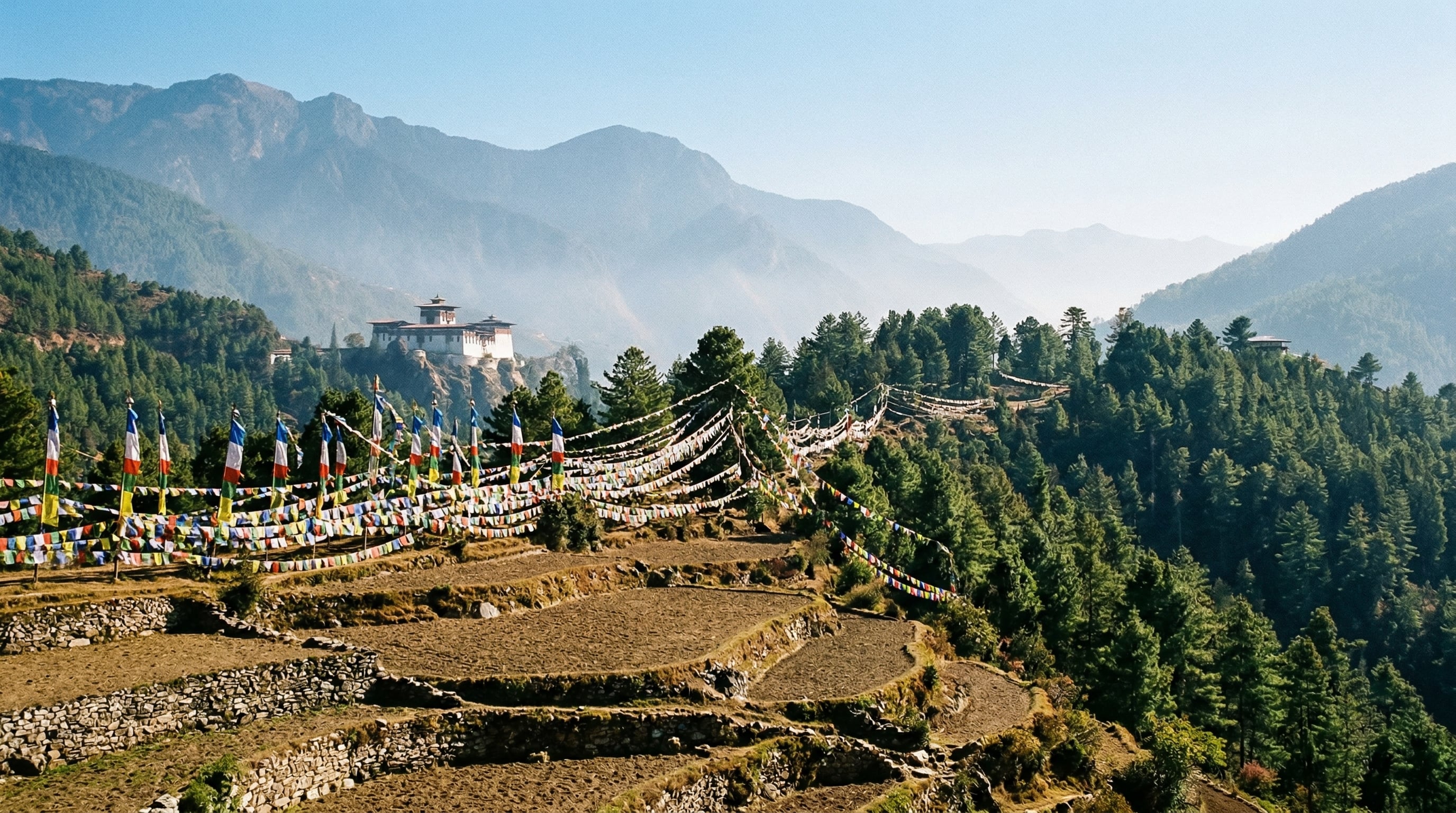
Logistically, visiting Punakha requires a permit, which is managed by your travel designer. The drive from Thimphu takes approximately three hours, crossing the Dochula Pass at 3,100 meters. The pass itself is a significant site, featuring 108 memorial chortens and, on clear days, a panoramic view of the snow-capped Eastern Himalayas. It is the literal and metaphorical threshold between the central and western valleys of the kingdom.
Conclusion: Why Punakha Remains Indispensable
Punakha Dzong is more than a photograph; it is a repository of Bhutan’s collective memory. For the discerning traveler, it represents the intersection of historical permanence and natural beauty. Whether you are witnessing the monastic processions or simply standing at the confluence of the rivers during the golden hour, the fortress demands a presence and a pace that is rare in modern travel. To visit Punakha is to understand the soul of Bhutan—disciplined, beautiful, and profoundly serene.
FAQ or Frequently Asked Questions
When is the best time to see the jacaranda trees in bloom around Punakha Dzong?
The jacaranda trees typically bloom in late April and early May. During this window, the lilac flowers create a striking contrast against the white walls of the dzong. However, this is also a peak tourist period, so we recommend booking your Drukair flights and luxury accommodations at least six months in advance.
Can international visitors enter all parts of Punakha Dzong?
Visitors are permitted in the first and second courtyards and the Grand Assembly Hall in the third courtyard. However, the Machen Lhakhang, which houses the sacred remains of the Zhabdrung, is strictly closed to everyone except the King of Bhutan and the Je Khenpo. Proper attire (collared shirts, long trousers/skirts) is mandatory for entry.
How does the altitude of Punakha compare to Paro or Thimphu?
Punakha is significantly lower, sitting at an elevation of approximately 1,200 meters (3,900 feet), compared to Thimphu’s 2,300 meters and Paro’s 2,200 meters. This makes Punakha much warmer and more humid, providing a comfortable environment for those who may be sensitive to higher altitudes.
Is Punakha Dzong accessible for travelers with limited mobility?
While the dzong is grand in scale, it does involve several flights of steep wooden stairs between the courtyards. Bhutan & Co. can arrange for private assistance and a more gradual pace; however, travelers should be prepared for some moderate physical activity to explore the interior halls fully.
Ready to experience Bhutan?
Our concierge team crafts private, all-inclusive journeys tailored to your interests.
Written by
Bhutan & Co. Editorial Team