Bhutan Through the Lens: A Photographer's Guide to COMO Uma Paro
From Tiger's Nest at golden hour to monastery interiors lit by butter lamps, COMO Uma Paro offers some of the finest photography opportunities in the Himalayas. A guide to the best spots, light conditions, and techniques — inspired by COMO's 'Bhutan Through the Lens' journey with Leica ambassador Christina Tan.
TLDR
Top spots: Tiger's Nest at golden hour, Rinpung Dzong interior, Dochula Pass 108 chortens, prayer flag printing, monastery interiors with butter lamp light, valley sunrise from the lodge, Punakha Dzong at river confluence, monks in red robes. COMO runs a dedicated 'Bhutan Through the Lens' journey (April 14–19, 2026) with Leica ambassador Christina Tan.
Bhutan as a Photographer's Canvas
Bhutan rewards the patient lens. The light shifts dramatically between valleys — cool alpine in Paro, warm and hazy in Punakha. Ancient dzongs, prayer flags, and monks in crimson robes offer compositions that feel both timeless and intimate. As a Preferred Partner of COMO Uma Bhutan, Bhutan & Co. has hosted photographers at COMO Uma Paro and COMO Uma Punakha for years. This guide draws on that experience, and on COMO's own "Bhutan Through the Lens" journey — a six-day photography immersion (April 14–19, 2026) led by Leica ambassador Christina Tan.
Tiger's Nest at Golden Hour
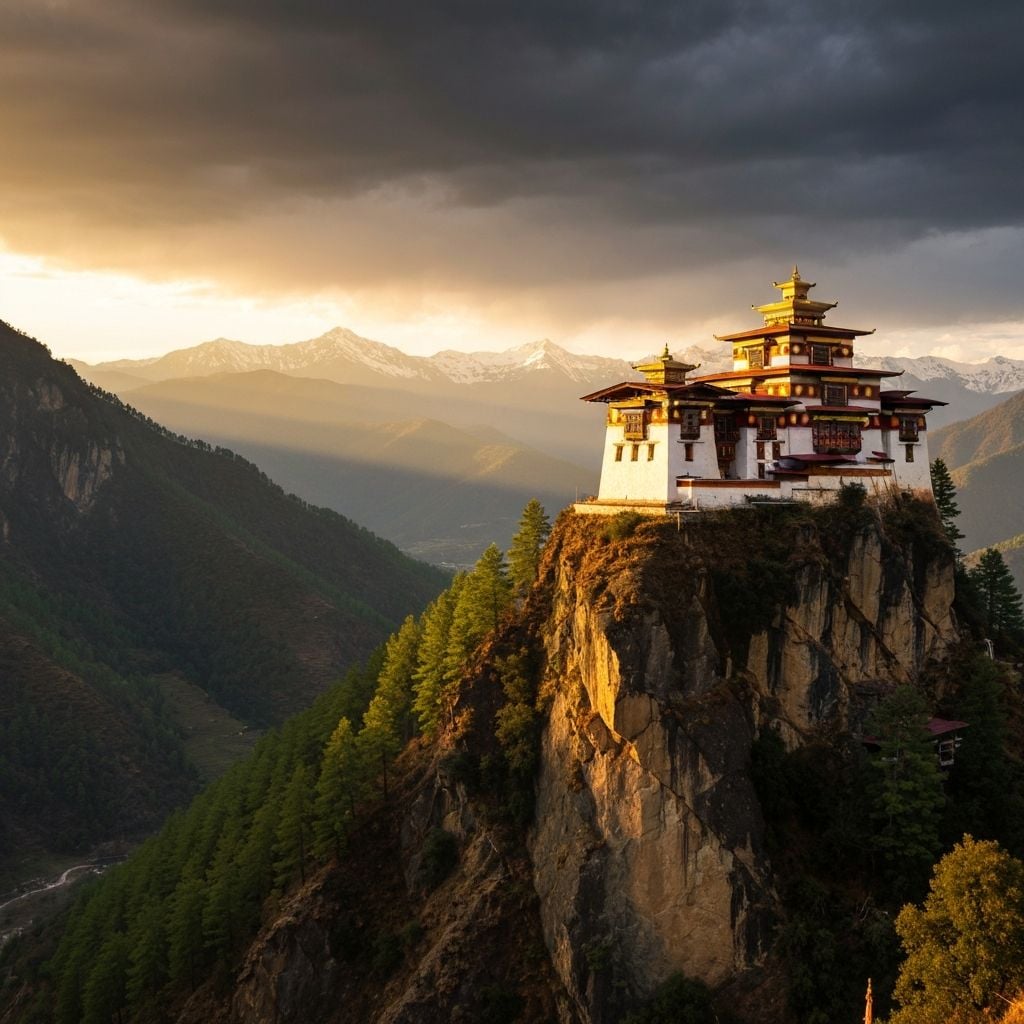
The monastery clinging to a 3,000-metre cliff face is Bhutan's most iconic subject. For the best light, start the hike early and aim to reach the viewpoint or the monastery itself by late afternoon. The western sun catches the white walls and golden roofs, and the valley below falls into shadow, creating dramatic contrast. Avoid midday — the overhead sun flattens the scene. A polarising filter helps deepen the sky and reduce haze. Wide angles capture the scale; a telephoto isolates the monastery against the cliff.
Rinpung Dzong Interior
Rinpung Dzong — the Fortress on a Heap of Jewels — houses some of Paro's most photogenic interiors. The assembly halls, prayer rooms, and courtyards are lit by natural light through wooden windows and butter lamps. Best time: morning, when soft light enters from the east. Use a fast lens (f/1.8–2.8) for low-light interiors; tripods may not be permitted in some areas, so higher ISO is often necessary. Respect signage and monk requests — photography is allowed in many spaces but not all.
Dochula Pass — 108 Chortens
The drive from Paro to Punakha crosses Dochula Pass at 3,000 metres, where 108 Buddhist chortens stand on a forested hillside. On clear days, the eastern Himalayas form the backdrop. Best conditions: early morning, before clouds build. The chortens catch the first light; prayer flags add colour and movement. Use a wide angle to include the full vista, or a medium telephoto to compress the chortens against the mountains. The pass can be windy — secure your gear and consider a lens hood to reduce flare.
Prayer Flag Printing Process
COMO can arrange visits to workshops where prayer flags are block-printed by hand. The process — wooden blocks, natural dyes, cotton fabric — is extraordinarily photogenic. Ask your guide to coordinate a session; early morning light through the workshop windows creates beautiful side-lighting. Capture the craftsman's hands, the repetition of the blocks, and the drying flags. This is one of the most distinctive cultural photography opportunities in the Paro Valley.
Monastery Interiors with Butter Lamp Light
Butter lamps — small clay vessels filled with melted yak butter — cast a warm, flickering glow in dim temple interiors. The combination of candlelight and shadow creates mood and depth. Use a fast prime lens and embrace higher ISO; the grain can add atmosphere. Avoid flash — it is often prohibited and destroys the ambience. If you join an optional butter lamp lighting ceremony (as offered on some COMO journeys), you will have privileged access to these spaces.
Valley Sunrise from the Lodge
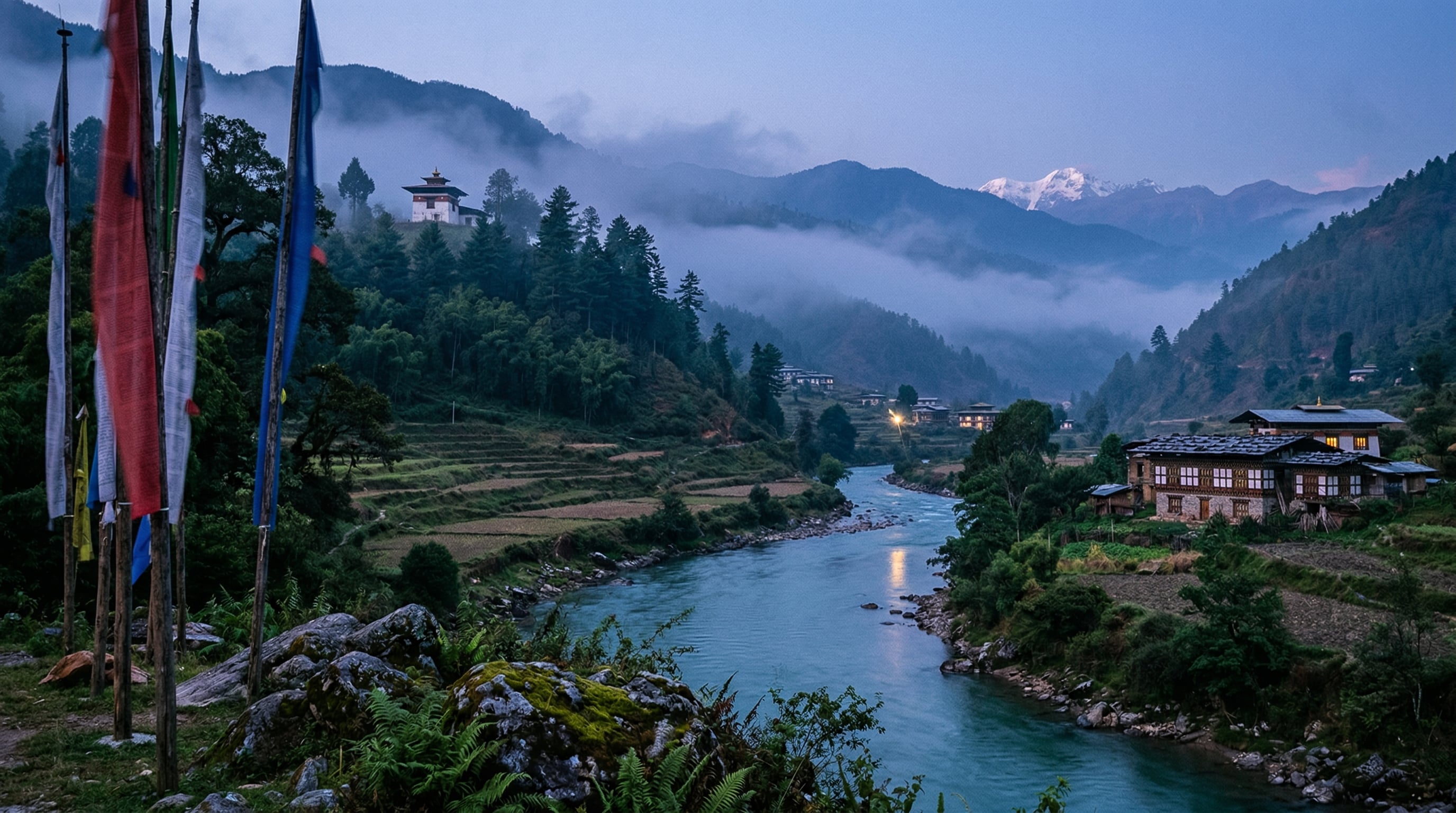
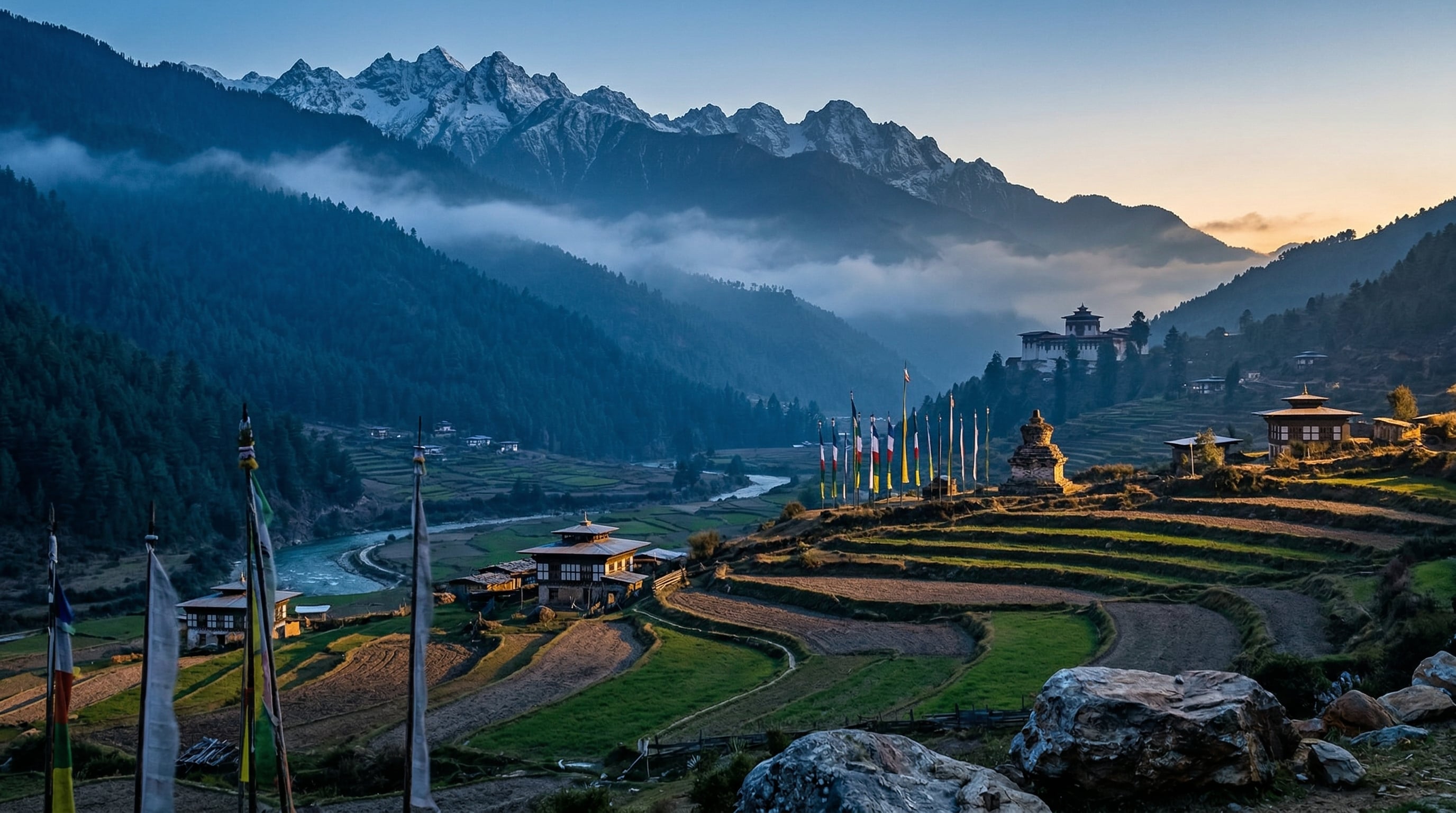
COMO Uma Paro sits on a forested hillside above the valley. At dawn, mist often fills the valley floor while the peaks catch the first light. From your villa or the main lodge, you can photograph the transition from blue hour to golden hour without leaving the property. A telephoto compresses the layers of valley, forest, and mountain; a wide angle captures the full sweep.
Punakha Dzong at River Confluence
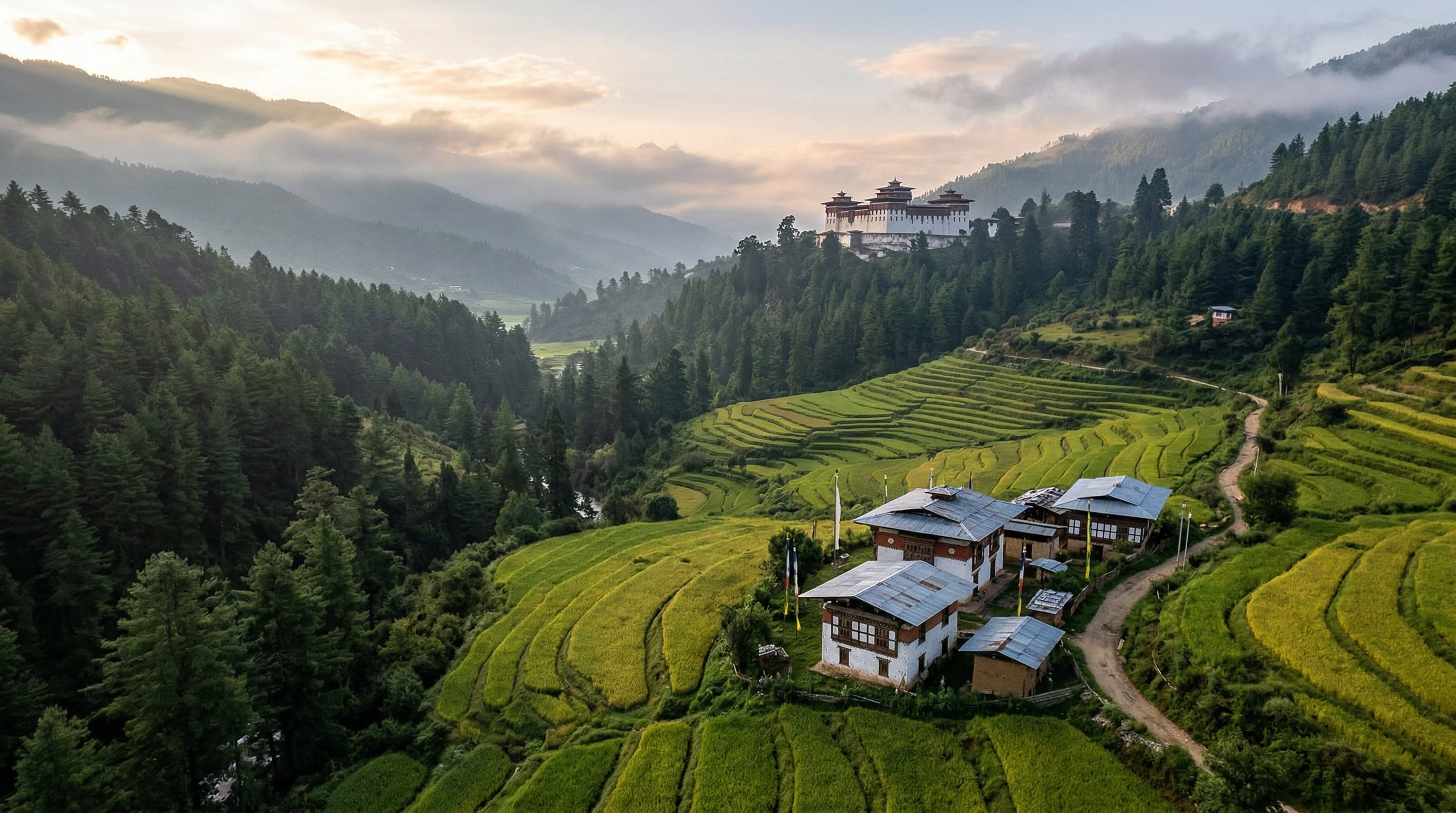
The 300-year-old Punakha Dzong sits at the confluence of the Pho Chhu and Mo Chhu rivers — one of the most striking architectural settings in the Himalayas. Best light: late afternoon, when the sun illuminates the white walls and the rivers reflect the sky. From the opposite bank, you can frame the dzong with the rivers in the foreground. A stay at COMO Uma Punakha puts you within easy reach for multiple visits at different times of day.
Monks in Red Robes
Monks in crimson robes against white walls, golden altars, or forest paths create some of Bhutan's most memorable images. Always ask permission before photographing individuals; at dzongs and monasteries, your guide can help facilitate. Candid moments — monks walking, chanting, or lighting butter lamps — often tell a stronger story than posed shots. Use a medium telephoto (85–135mm equivalent) to compress background and isolate your subject.
Bhutan Through the Lens — COMO's Photography Journey
For photographers seeking a dedicated immersion, COMO offers "Bhutan Through the Lens" — a six-day journey (April 14–19, 2026) led by Leica ambassador Christina Tan. The itinerary is designed around light, access, and instruction, combining COMO Uma Paro and Punakha with expert guidance on composition, technique, and storytelling. As COMO's Preferred Partner, Bhutan & Co. can arrange this journey or tailor a photography-focused itinerary to your dates and interests. Contact our concierge for details.
Ready to experience Bhutan?
Our concierge team crafts private, all-inclusive journeys tailored to your interests.
Written by
Bhutan & Co. Editorial Team