Bhutan vs Nepal: A Comparative Analysis for the Luxury Traveler
Discover the key differences between Bhutan and Nepal for luxury travelers, from Drukair logistics to the exclusive sanctuary of the Bhutanese SDF model.
TLDR
Nepal offers high-energy adventure and mountaineering history, while Bhutan provides an exclusive, low-density sanctuary focused on spiritual preservation and ultra-luxury hospitality. For travelers seeking seamless logistics and curated seclusion, Bhutan’s managed tourism model remains the Himalayan gold standard.
Defining the Himalayan Choice: Scale vs. Sanctuary
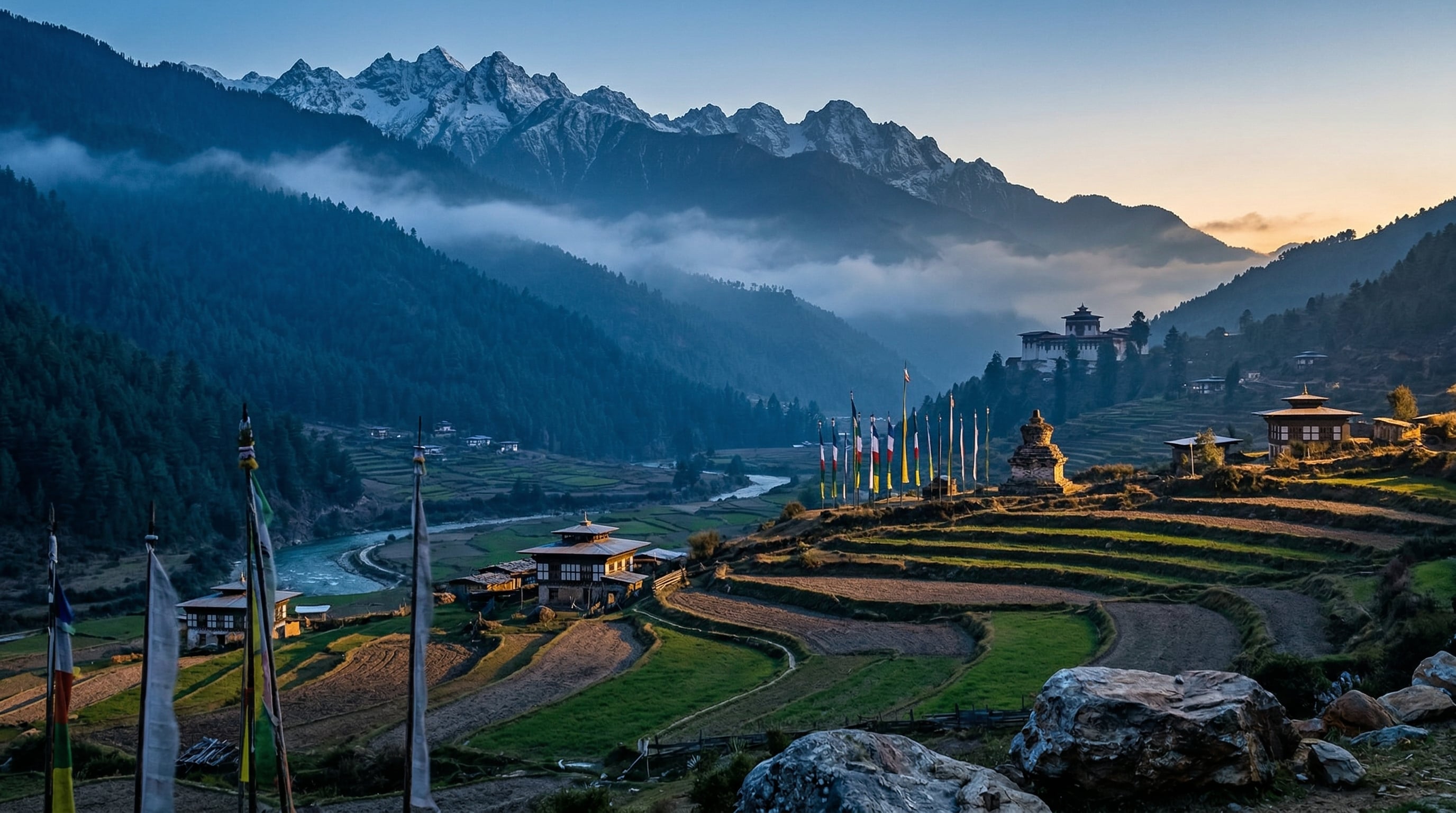
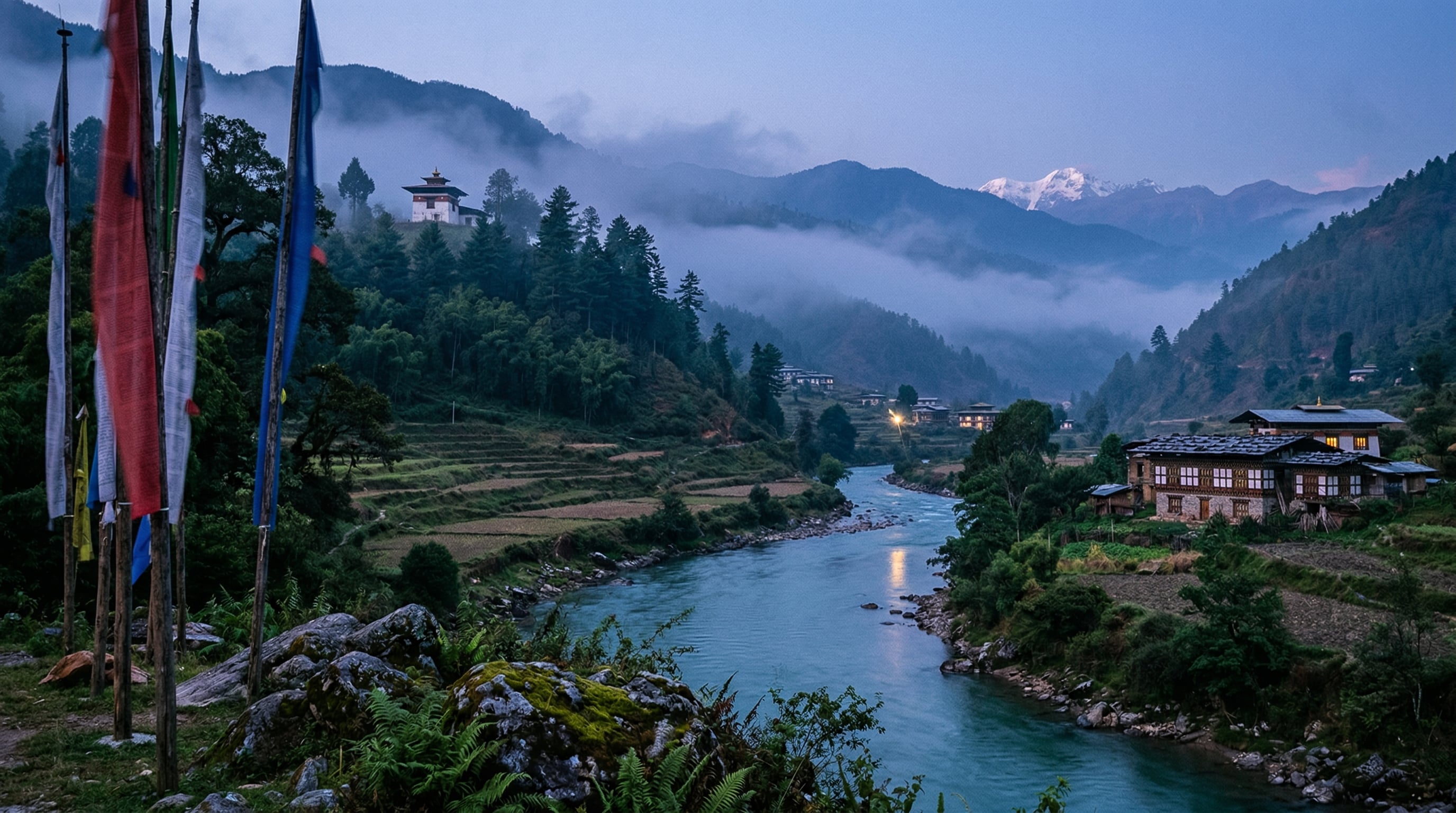
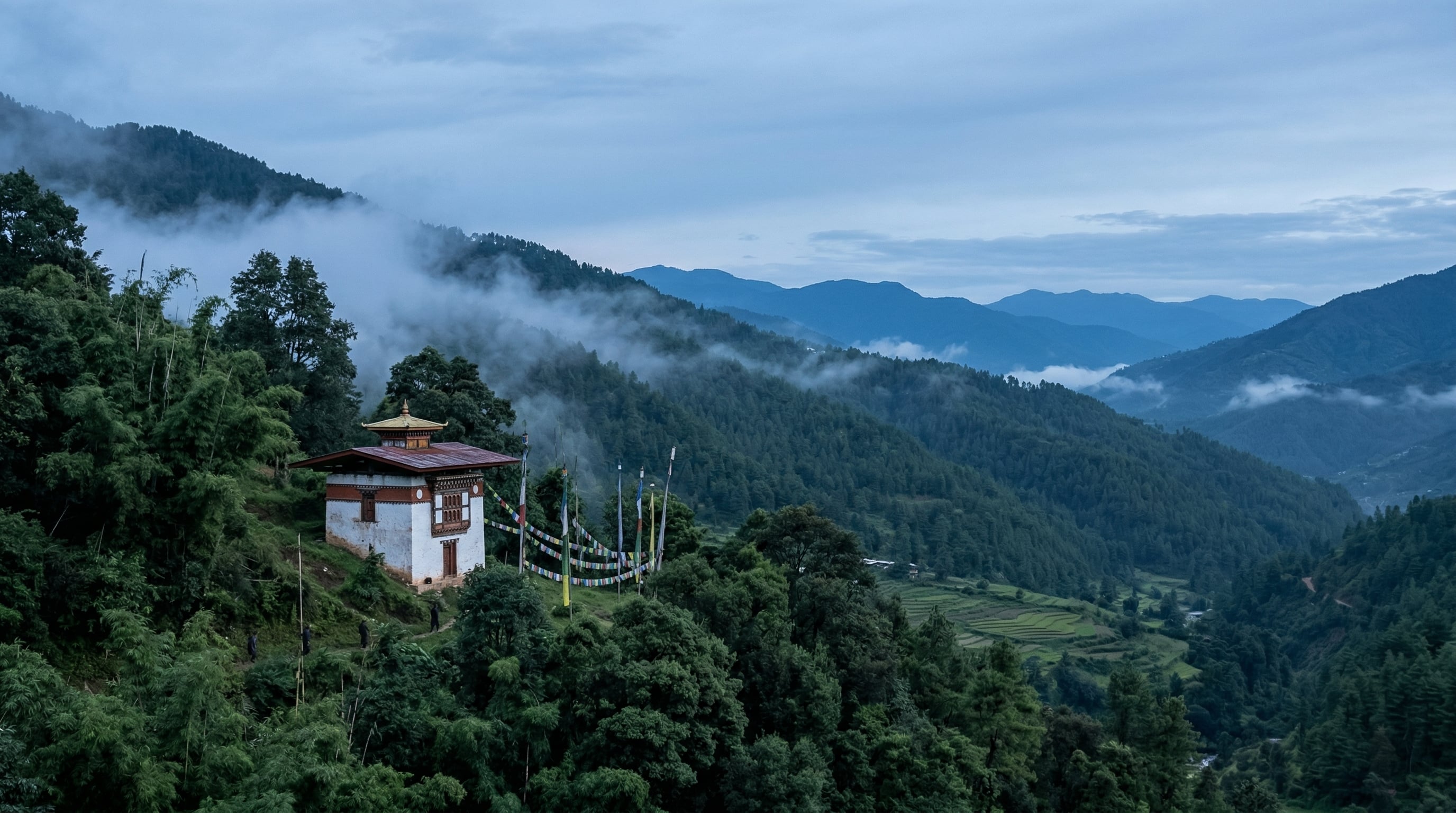
For the high-net-worth traveler, the Himalayas represent more than just a mountain range; they are a destination for spiritual recalibration and physical challenge. However, the experience of the Himalayas varies significantly between its two most prominent guardians: Nepal and Bhutan. While they share a border and a skyline of 8,000-meter peaks, the travel philosophies they employ are diametrically opposed. Nepal is a land of epic scale, mountaineering history, and vibrant, often chaotic energy. Bhutan, conversely, is a curated sanctuary—a kingdom that has traded mass tourism for a "High Value, Low Volume" model that ensures exclusivity and environmental preservation.
Choosing between them requires an understanding of what you value most in a journey. Is it the raw, unbridled energy of a global trekking hub, or the quiet, sophisticated seclusion of a kingdom where Gross National Happiness is a policy, not a slogan? At Bhutan & Co., we specialize in the latter, facilitating the transition from the bustling international hubs like Bangkok to the serene valleys of Paro via our partnership with Drukair Royal Bhutan Airlines.
Infrastructure and Accessibility: The Gateway Experience
The journey to the Himalayas begins long before you see the first snow-capped peak. For most luxury travelers, the quality of the transit determines the tone of the entire trip. Nepal’s primary gateway is Kathmandu, a city that serves as a bustling crossroads for mountaineers and spiritual seekers from around the globe. While Kathmandu offers historic charm, the logistics can be demanding, with frequent flight delays and high-density urban traffic.
Bhutan offers a more controlled and premium entry point. Most discerning travelers utilize the Bangkok-to-Paro route, a seamless connection facilitated by Drukair. As the official Passenger Sales Agent (PSA) for the airline, our team at Bhutan & Co. ensures that the Drukair experience is an extension of the luxury journey itself. The flight into Paro is one of the most exclusive in the world, offering views of Mt. Everest and Kanchenjunga before a precision landing in the heart of the kingdom.
| Feature | Bhutan | Nepal |
|---|---|---|
| Primary Access | Paro International Airport (via Bangkok, Singapore, or Delhi) | Tribhuvan International Airport (Kathmandu) |
| Travel Regulation | Managed Sustainable Development Fee (SDF) | Open visa-on-arrival system for most nations |
| Transport | Private chauffeured SUVs and helicopter transfers | Private cars, domestic flights, and high-volume bus routes |
| Flight Reliability | High (Regulated by Drukair and Bhutan Airlines) | Moderate (Subject to frequent congestion and weather) |
Philosophy of Tourism: Exclusivity and the SDF
The most significant differentiator between these two nations is their approach to tourism management. Nepal operates on a volume-based model. It is accessible, diverse, and caters to everyone from budget backpackers to luxury trekkers. This accessibility, however, means that iconic sites—such as Everest Base Camp or the streets of Thamel—can feel crowded, detracting from the sense of Himalayan solitude.
Bhutan has pioneered a different path. To protect its environment and cultural integrity, the government implements a Sustainable Development Fee (SDF). While this fee is an additional cost for visitors, it serves as a filter that guarantees a low-density experience. This is not merely a tax; it is a reinvestment into the kingdom’s carbon-neutral infrastructure and free healthcare. For the traveler, Bhutan’s SDF represents an investment in an unparalleled, authentic luxury where you are often the only guest at a remote temple or on a high-altitude trail.
This commitment to preservation is why Bhutan’s luxury ascent has been so successful. By limiting the number of visitors, the kingdom has maintained a level of quietude that is increasingly rare in the modern world.
Lodging Ecosystems: From Heritage to Modern Minimalism
In Nepal, luxury is often found in heritage properties like Dwarika’s in Kathmandu, which offers a museum-like experience of Newari architecture. In the mountains, high-end trekking lodges (such as the Yeti Mountain Home circuit) provide comfort, though they remain rooted in a rustic aesthetic necessitated by the rugged terrain.
Bhutan, however, has become the global gold standard for remote luxury hospitality. The kingdom is home to an extraordinary concentration of world-class brands, including Aman, Six Senses, and COMO. These are not merely hotels; they are multi-valley circuits designed to move guests through the kingdom in a seamless envelope of comfort. Each lodge is architecturally inspired by the local dzongs (fortresses) and focuses on holistic wellness, farm-to-table gastronomy, and deep cultural immersion.
When comparing Amankora and Six Senses Bhutan, for instance, one sees a dedication to minimalism and site-specific design that is unmatched in Nepal. In Bhutan, the lodge is as much a part of the destination as the mountains themselves, offering pre-dawn meditations, private astrology readings, and spa treatments based on Sowa Rigpa, the traditional Bhutanese medicine.
Cultural Integrity: Living Traditions vs. Historical Landmarks
Nepal’s culture is a vibrant, syncretic blend of Hinduism and Buddhism. The Kathmandu Valley is home to seven UNESCO World Heritage sites, and the artistic output—from woodcarvings to thangka paintings—is staggering. However, as Nepal has modernized, much of this culture has become concentrated in tourist districts or preserved primarily as historical artifacts.
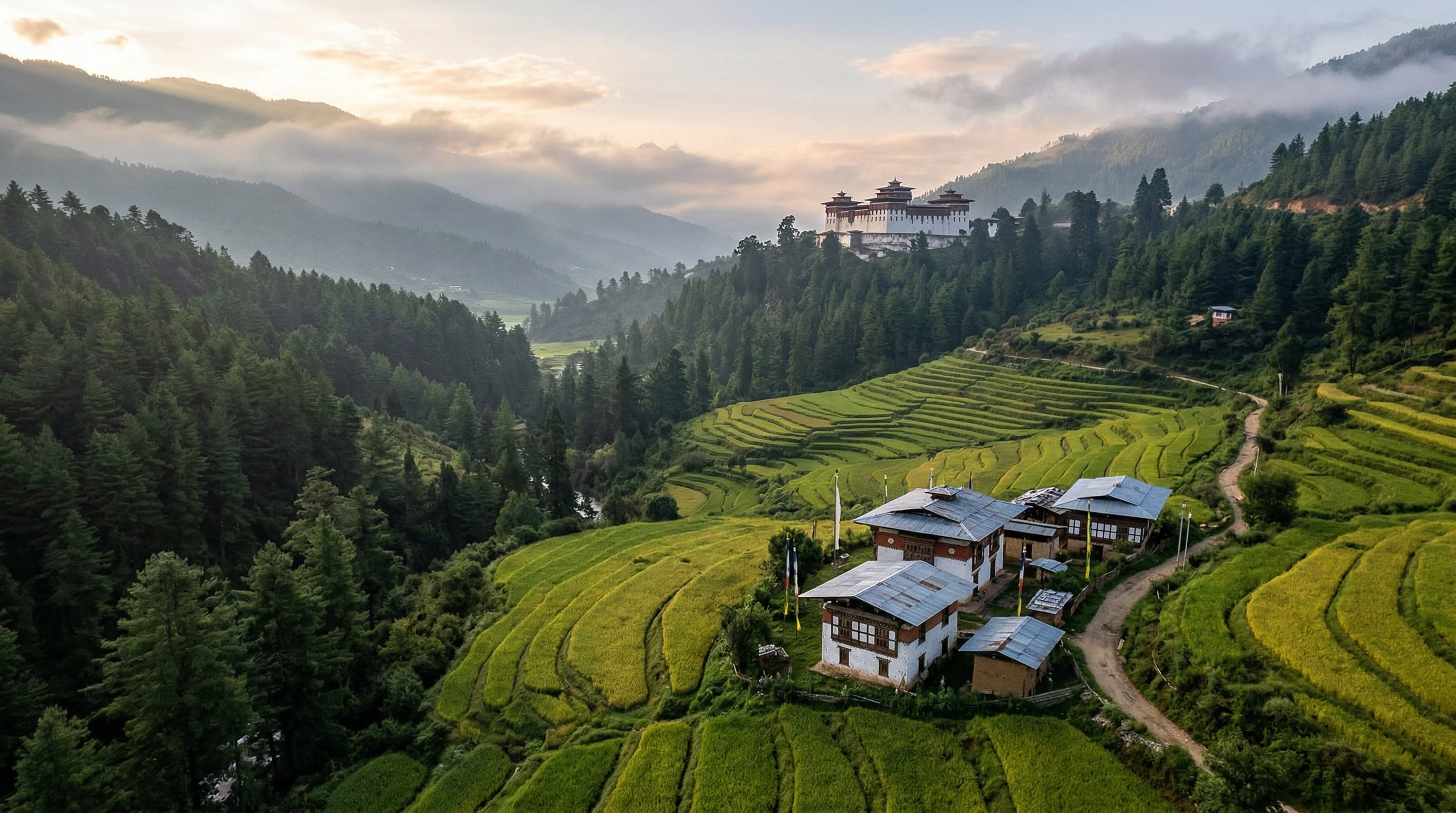
Bhutan’s culture is a living, breathing entity. Because the kingdom was never colonized and remained closed to the world until the 1970s, its traditions are remarkably intact. Men and women still wear the traditional gho and kira for work and formal occasions. The architecture remains strictly regulated, ensuring that even new structures adhere to traditional proportions. A visit to the Punakha Dzong is not a trip to a museum; it is an entry into an active administrative and religious hub where monks chant and officials conduct the business of the state in halls adorned with centuries-old murals.
Comparison of Traveler Profiles
| The Nepal Traveler | The Bhutan Traveler |
|---|---|
| Seeks the physical challenge of 8,000m peak proximity. | Seeks spiritual renewal and deep cultural immersion. |
| Enjoys the energy of bustling markets and diverse crowds. | Values privacy, silence, and exclusive access. |
| Willing to navigate logistics for the reward of iconic landmarks. | Expects seamless, end-to-end service and curated itineraries. |
| Interested in the history of mountaineering and exploration. | Interested in Gross National Happiness and carbon-neutral living. |
Conclusion: Which Kingdom Calls to You?
The choice between Bhutan and Nepal is ultimately a choice between the adrenaline of the world's highest peaks and the serenity of the world’s last Shangri-La. Nepal is for the traveler who wants to be at the center of the Himalayan story, surrounded by the legacy of Tenzing Norgay and Sir Edmund Hillary. It is a place of epic scale and raw beauty.
Bhutan is for the traveler who has seen the world and now seeks to find a corner of it that remains pure. It is for those who appreciate the logistical precision of a Drukair flight from Bangkok, the architectural mastery of a Six Senses lodge, and the quiet dignity of a kingdom that prioritizes its people’s well-being over GDP. Bhutan is not just a destination; it is a meticulously preserved experience designed for those who value time, space, and authenticity above all else.
Frequently Asked Questions
Is Bhutan significantly more expensive than Nepal?
Yes, primarily due to the Sustainable Development Fee (SDF) of $100 per adult per night. However, this fee ensures a low-density tourism experience and funds the kingdom's carbon-neutral initiatives, providing a level of exclusivity and environmental purity that Nepal’s open-access model cannot match.
Can I fly directly from Bangkok to both countries?
Yes, Bangkok is a major hub for both. However, the Bangkok-to-Paro route is uniquely served by Drukair and Bhutan Airlines. As the official PSA for Drukair, Bhutan & Co. provides seamless ticketing and logistics for this specific corridor, which is often considered the most scenic and exclusive flight in the world.
Which country is better for a luxury wellness retreat?
While Nepal has excellent wellness properties in Kathmandu and Dhulikhel, Bhutan is widely considered the superior choice for a comprehensive wellness journey. The presence of multiple lodges from Aman, Six Senses, and COMO allows for a multi-valley wellness circuit where treatments and meditations are integrated into the travel itinerary.
How do the trekking experiences compare?
Nepal is famous for its high-altitude, multi-week tea-house treks like Everest Base Camp or the Annapurna Circuit, which are social and physically demanding. Bhutan offers more secluded trekking experiences, such as the Trans-Bhutan Trail, where luxury mobile camps and private guides ensure you rarely see other groups on the trail.
Ready to experience Bhutan?
Our concierge team crafts private, all-inclusive journeys tailored to your interests.
Written by
Bhutan & Co. Editorial Team