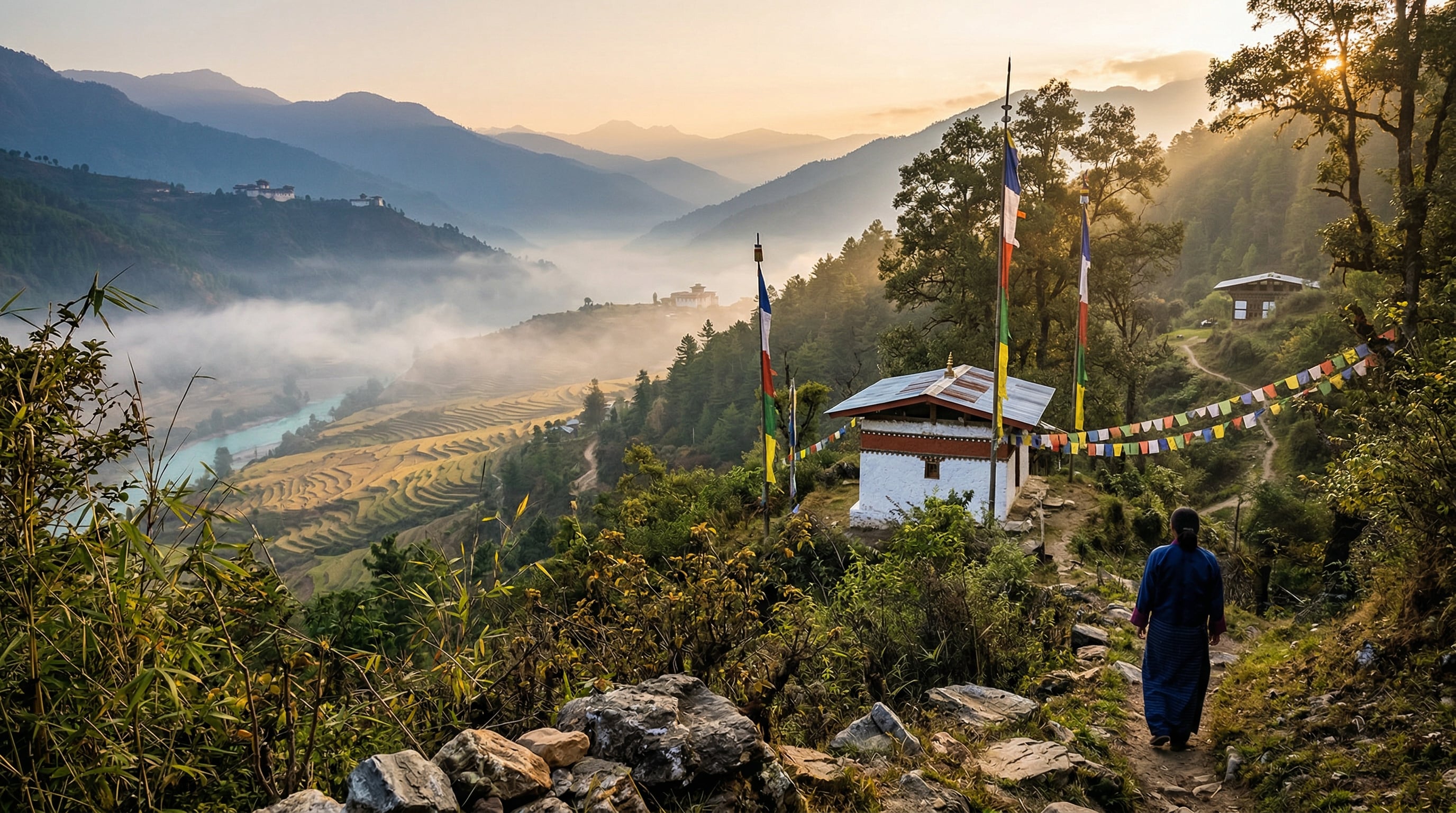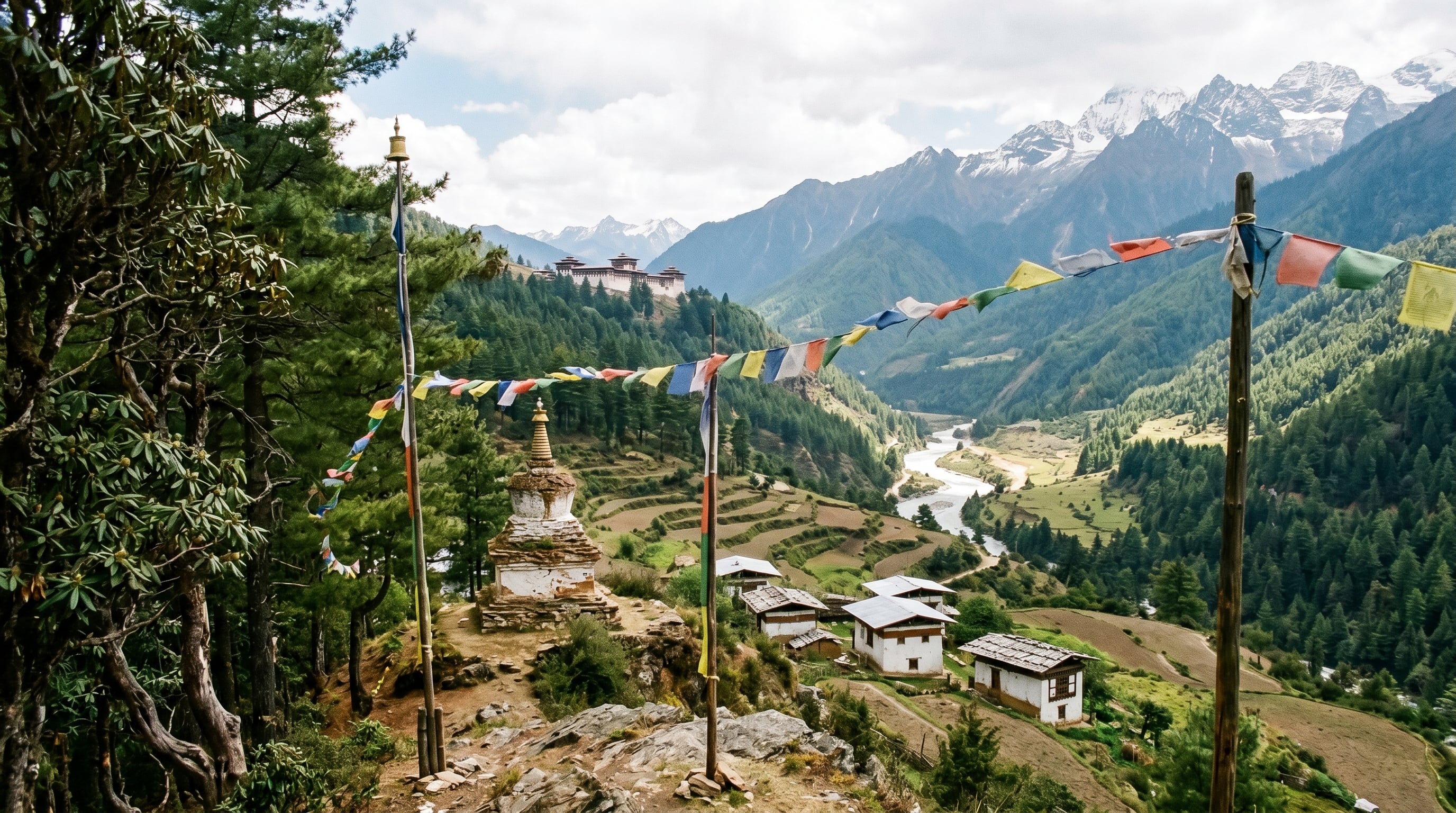
Peak-to-Peak 2026: The Nepal-Bhutan Luxury Adventure Circuit
Discover why the Nepal-Bhutan synergy is the 2026 benchmark for luxury adventure, blending high-altitude thrills with the world's most exclusive spiritual retreats.
TLDR
The Peak-to-Peak Circuit combines Nepal's monumental alpine scale with Bhutan's exclusive, high-value luxury model. This synergy is facilitated by strategic Drukair connections and a new 2026 standard for frictionless, cross-border Himalayan travel.
The Evolution of Himalayan Travel: Beyond the Single-Country Itinerary
For the modern high-net-worth traveler, the allure of the Himalayas has shifted. The era of the checklist-based ascent has given way to a more sophisticated demand for logistical fluidity and cultural depth. In 2026, the industry is witnessing the maturation of the "Peak-to-Peak Circuit," a strategic pairing of Nepal’s raw alpine grandeur with Bhutan’s hyper-exclusive, high-value tourism model. This is not merely a geographic convenience; it is a calculated synergy that balances the physical rigor of the world’s highest peaks with the profound spiritual stillness of the last Himalayan Kingdom.
At Bhutan & Co., we view this circuit as the definitive standard for luxury adventure. As the official PSA of Drukair Royal Bhutan Airlines, our role is to eliminate the friction that historically plagued multi-destination Himalayan travel. By synchronizing private jet arrivals in Kathmandu with seamless Drukair connections into Paro via our primary hub in Bangkok, we have transformed a complex expedition into a unified, high-performance journey.
The Strategic Gateway: Logistics of the 2026 Circuit
The success of a Nepal-Bhutan itinerary rests on the precision of its air corridors. While Nepal offers the scale—Mount Everest, the Annapurna Massif, and the bustling heritage of the Kathmandu Valley—Bhutan offers the sanctuary. The transition between these two states is best managed through a triangle that leverages Bangkok as a logistical anchor or through the direct Kathmandu-to-Paro flight path, which remains one of the most spectacular aerial routes in the world.
The Role of Drukair and Private Aviation
Drukair operates the most reliable link between Kathmandu (KTM) and Paro (PBH). For travelers arriving via long-haul private aviation, Bangkok serves as the premier staging ground. Our specialized ticketing services ensure that the transition from a global hub to the restricted airspace of the Paro Valley is handled with the priority status expected by our clientele. In 2026, the implementation of Bhutan’s Electronic Travel Authorization (ETA) has further streamlined this process, allowing for instantaneous verification at the boarding gate.
| Route | Typical Duration | Traveler Advantage |
|---|---|---|
| Kathmandu (KTM) to Paro (PBH) | 55 Minutes | Direct Himalayan views, including Everest and Kanchenjunga. |
| Bangkok (BKK) to Paro (PBH) | 3 Hours 15 Minutes | Standard entry for long-haul international luxury travelers. |
| Singapore (SIN) to Paro (PBH) | 5 Hours 50 Minutes | Growing direct corridor for Southeast Asian HNWIs. |
Comparing the Luxury Archetypes: Nepal vs. Bhutan
To understand the synergy of the Peak-to-Peak Circuit, one must recognize the distinct luxury identities of both nations. Nepal’s luxury landscape is defined by heritage palaces and high-altitude lodge culture. It is a place of activity, social vibrancy, and the sheer scale of the earth’s topography. Bhutan, conversely, has pioneered a "low volume, high value" philosophy that prioritizes privacy, environmental stewardship, and architectural harmony.
The Contrast in Hospitality
In Kathmandu, travelers often retreat to the Dwarika’s Hotel—a living museum of Newari craftsmanship. In Bhutan, the standard is set by intimate, design-forward retreats such as those highlighted in the 2026 guide to Bhutan’s boutique retreats. These properties, including the likes of COMO Uma and Amankora, provide a level of seclusion that is virtually unattainable elsewhere. The circuit allows a traveler to move from the vibrant chaos of a Nepalese bazaar to the monastic silence of a Bhutanese pine forest in under an hour.
| Feature | Nepal Luxury Profile | Bhutan Luxury Profile |
|---|---|---|
| Primary Focus | Heritage, scale, and high-adventure. | Wellness, spirituality, and exclusivity. |
| Pace | Dynamic and socially immersive. | Slow, contemplative, and private. |
| Dining | International fine dining and Newari feasts. | Farm-to-table, organic traditional haute cuisine. |
The Adventure Quotient: From Everest Heli-Tours to the Tiger’s Nest
The Peak-to-Peak Circuit is categorized as "Luxury Adventure" because it requires active participation. In Nepal, this often manifests as a helicopter breakfast at Kala Patthar (5,545m) with views of Everest, followed by a descent into the lush greenery of the Kathmandu Valley. However, the physical crescendo of the trip often takes place in Bhutan.
The ascent to Paro Taktsang (the Tiger’s Nest) serves as the spiritual and physical anchor of the journey. While the hike is moderately demanding, the 2026 luxury standard includes private guide support, premium equipment, and curated picnic stops that allow travelers to experience the site without the rush of commercial tourism. This progression—from the world’s highest peaks in Nepal to the kingdom’s most sacred site in Bhutan—creates a narrative arc of external achievement followed by internal reflection.
Sustainability and the 2026 Economic Model
A critical component of the Peak-to-Peak Circuit is the commitment to sustainable tourism. Bhutan’s Sustainable Development Fee (SDF) is a cornerstone of this experience. By paying the SDF, luxury travelers directly fund the carbon-neutral infrastructure, free healthcare, and education of the Bhutanese people. This "investment-grade" tourism model appeals to the conscious traveler who seeks more than just a holiday; they seek a contribution to a global benchmark of environmental and cultural preservation.
By 2026, the administrative ease of entering Bhutan has reached an all-time high. The move toward digital payments and streamlined visa processing means that the exclusivity of the destination is maintained through its pricing and policy, rather than through bureaucratic friction. This ensures that the "luxury" of the trip starts long before the traveler sets foot in Paro.
Frequently Asked Questions
Do I need separate visas for Nepal and Bhutan on this circuit?
Yes. Nepal offers a visa-on-arrival or E-visa for most nationalities. Bhutan requires a pre-cleared visa (or ETA) which is processed through a licensed tour operator like Bhutan & Co. as part of your comprehensive itinerary. We manage both to ensure your border crossings are frictionless.
What is the best time of year for the Peak-to-Peak Circuit?
The optimal windows are Spring (March to May) and Autumn (September to November). Spring offers the rhododendron blooms in both countries, while Autumn provides the clearest skies for mountain views, which is essential for the flight between Kathmandu and Paro.
How does the altitude differ between the two countries?
While Nepal’s trekking can take you significantly higher (often above 5,000m), Bhutan’s luxury valley hubs like Thimphu and Paro sit comfortably between 2,200m and 2,400m. This makes Bhutan an ideal place for a "cool down" after higher-altitude excursions in Nepal, allowing for natural recovery in a high-oxygen, forest-dense environment.
Can I fly private directly into Paro from outside the region?
Paro International Airport is one of the most technically challenging airports in the world and requires specially certified pilots. While private jets can fly into Kathmandu or Bangkok, the final leg into Paro is almost exclusively serviced by Drukair or Bhutan Airlines. As a PSA for Drukair, we facilitate these high-priority transfers with dedicated ground support.
Ready to experience Bhutan?
Our concierge team crafts private, all-inclusive journeys tailored to your interests.
Start PlanningWritten by
Bhutan & Co. Editorial Team