The Sacred Kora: A Pilgrim's Guide to Tiger's Nest
Discover the transformative experience of hiking to Paro Taktsang, Bhutan's most iconic monastery. Learn how to approach this sacred pilgrimage like a local, including the spiritual significance of the kora circumambulation and exclusive pre-dawn access strategies that transform a tourist trek into a profound journey of the spirit.
TLDR
Tiger's Nest (Taktsang) is best experienced as a spiritual pilgrimage, not just a photo opportunity. Pre-dawn access, secured through specialized operators, offers solitude and reverence impossible during regular hours. The sacred kora circle around the monastery mirrors the cranes' legendary circumambulation of Gangtey Goempa.
Beyond the Photograph: Understanding Taktsang's Sacred Purpose
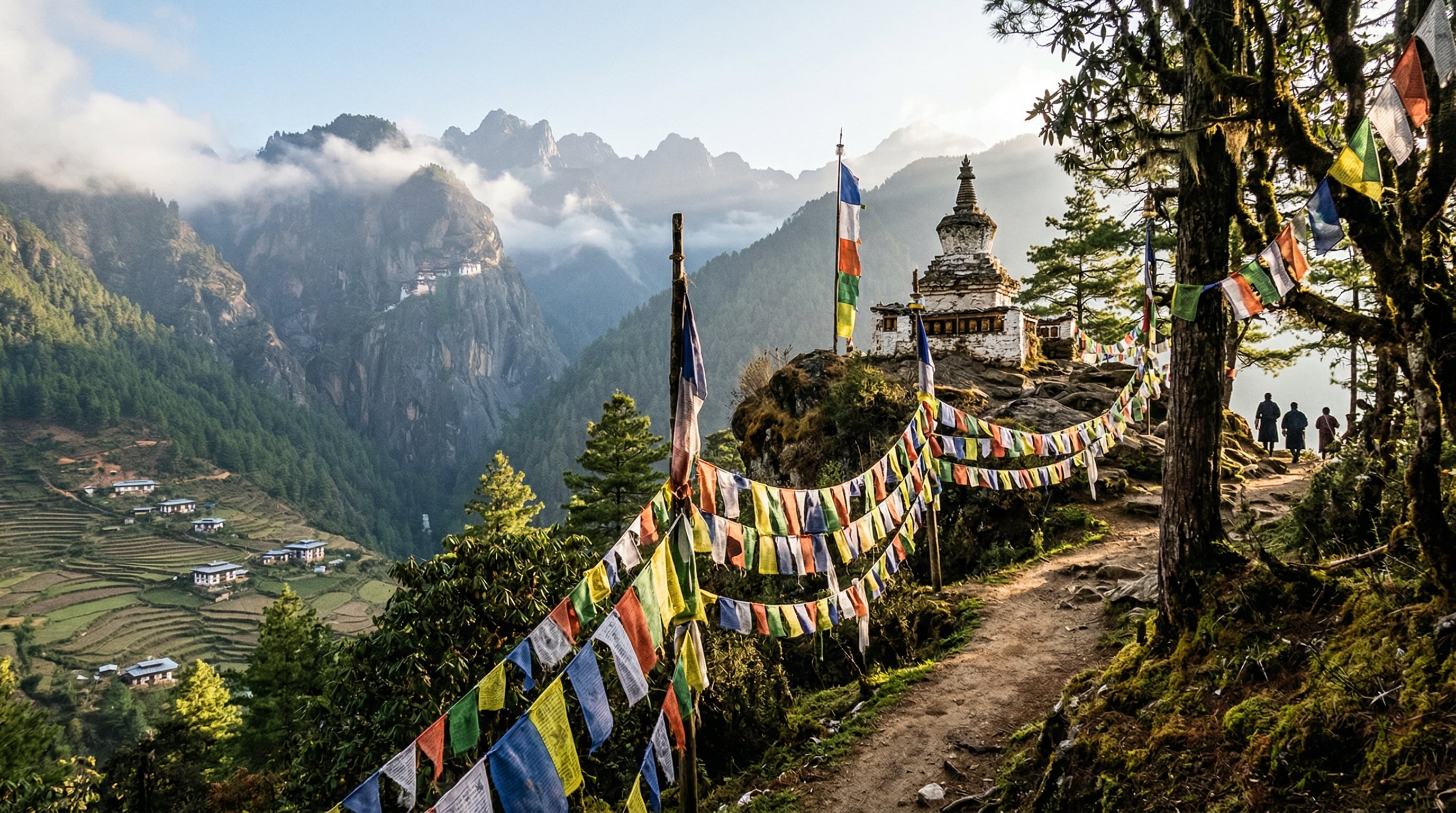
Clinging to a sheer cliff face 900 meters above the Paro Valley floor, Paro Taktsang—the Tiger's Nest—is not merely Bhutan's most photographed landmark. It is the spiritual heart of the Thunder Dragon Kingdom, a place where the veil between the mundane and the sacred grows thin.
For the discerning traveler seeking more than Instagram moments, Taktsang offers something far more precious: an authentic encounter with living Buddhist devotion. But accessing this experience requires understanding, preparation, and—most critically—timing.
The Legend That Shaped a Kingdom
In the 8th century, Guru Rinpoche—the founder of Tibetan Buddhism—is said to have flown to this cliff on the back of a tigress, transformed from his consort Yeshe Tsogyal. Here, in a cave now enshrined within the monastery complex, he meditated for three years, three months, three weeks, three days, and three hours, subduing local demons and preparing the ground for Buddhism's flourishing in Bhutan.
This founding myth is not mere legend to Bhutanese pilgrims. The monastery that rose around Guru Rinpoche's meditation cave in 1692 remains one of Buddhism's most potent pilgrimage sites, drawing devotees who understand that the journey itself is the teaching.
The Art of the Kora: Walking in Sacred Circles
The Buddhist practice of kora—circumambulating a sacred site in a clockwise direction—transforms physical movement into spiritual practice. At Taktsang, the kora takes on special significance. According to local tradition, the endangered Black-Necked Cranes that winter in Phobjikha Valley perform their own kora, circling Gangtey Goempa three times upon arrival and departure each season.
This parallel between human devotee and migratory crane speaks to a profound truth: in Bhutan, the distinction between nature and spirituality dissolves. The crane's instinctive circling and the pilgrim's deliberate circumambulation serve the same purpose—honoring the sacred through embodied presence.
The Pre-Dawn Advantage: Purchasing Solitude
Here lies the essential knowledge that separates the transformative pilgrimage from the crowded tourist experience: timing is everything.
Standard tourist access to Taktsang begins at 8:00 AM. By mid-morning, the narrow trail hosts hundreds of visitors, cameras clicking, conversation echoing off cliff faces. The monastery's inner sanctums—spaces designed for contemplation—become exercises in crowd navigation.
The alternative requires planning and connections. Pre-dawn access permits, secured through operators with established relationships with local authorities, allow departure in darkness. The four-to-five-hour ascent, undertaken by headlamp through silent pine forests, becomes a moving meditation. Arrival at the monastery coincides with the monks' own morning rituals, the rising sun painting the white walls gold.
This is not merely crowd avoidance. It is purchasing the rarest luxury available in high-demand destinations: time alone with the sacred.
The Ascent: A Pilgrim's Preparation
The trail to Taktsang gains 900 meters in elevation over approximately five kilometers. For those unaccustomed to altitude or hill walking, this presents a genuine physical challenge. Yet the difficulty is itself instructive—Buddhism teaches that spiritual attainment requires effort.
Preparation enhances rather than diminishes the experience:
- Acclimatization: Arrive in Paro at least two days before your planned ascent. The Paro Valley sits at 2,200 meters; Taktsang's entrance gate reaches 3,120 meters.
- Footwear: Sturdy walking shoes with ankle support. The trail varies from packed earth to stone steps to wooden ladders.
- Layers: Pre-dawn temperatures can approach freezing, while midday sun warms considerably. Dress for both.
- Hydration: The combination of altitude and exertion demands careful attention to water intake.
Inside the Tiger's Nest: Sacred Spaces
The monastery complex contains seven temples, each dedicated to different manifestations of Buddhist teaching. Photography is prohibited inside—a restriction that, for the mindful visitor, enhances rather than limits the experience. Without the distraction of documentation, one can simply be present.
The Guru Tsengye Lakhang enshrines eight manifestations of Guru Rinpoche. The Dubkhang, the meditation cave itself, emanates centuries of accumulated devotion. Butter lamps flicker in darkness; the low murmur of mantras provides a sonic foundation for contemplation.
Those with operator access to senior monks may receive a personal blessing—a moment of direct transmission from a lineage stretching back to Guru Rinpoche himself.
The Descent: Completing the Circle
The return journey offers different gifts. Descending as the sun rises, you'll pass pilgrims beginning their climb—a reminder that the sacred is always being approached, always being circled, always renewing itself through human devotion.
For those who began in darkness, the descent offers a celebratory conclusion. Luxury operators arrange champagne breakfasts at private viewpoints overlooking the valley, transforming physical accomplishment into sensory celebration. The contrast between spiritual effort and material comfort is itself very Bhutanese—a culture that sees no contradiction between inner development and outer enjoyment.
Practical Considerations
Entry fee: Nu. 500 for international tourists (included in most tour packages)
Best seasons: Spring (March-May) offers rhododendron blooms along the trail; Autumn (September-November) provides clearest skies and views. Winter brings fewer visitors and spiritual intimacy, though colder conditions.
Duration: Allow 4-6 hours for the complete round trip, plus time within the monastery complex.
Pre-dawn permits: Available only through licensed operators with established government relationships. Typically requires booking 2-3 months in advance during peak seasons.
The Pilgrim's Return
Those who approach Taktsang as pilgrims rather than tourists return with more than photographs. They carry an embodied understanding of why Bhutan measures success through Gross National Happiness rather than GDP—why a small Himalayan kingdom invests its resources in preserving spaces where the sacred remains accessible.
The Tiger's Nest offers no easy enlightenment. It demands effort, timing, and the humility to approach a living tradition on its own terms. For those willing to make this investment, it returns something beyond price: a direct encounter with the spiritual depths that make Bhutan unlike anywhere else on Earth.
Ready to experience Bhutan?
Our concierge team crafts private, all-inclusive journeys tailored to your interests.
Written by
Bhutan & Co. Editorial Team