Gangtey Lodge: Crane Season at Bhutan's Premier Valley Retreat
Experience the annual arrival of endangered Black-Necked Cranes in Phobjikha Valley from the comfort of Bhutan's most wildlife-focused luxury lodges. Learn optimal viewing strategies, the cranes' sacred significance, and how to time your visit perfectly.
TLDR
Black-Necked Cranes migrate to Phobjikha Valley October-February, with peak viewing November-January. Gangtey Lodge, Amankora Gangtey, and Taj Gangtey Resort & Spa offer premium viewing positions. The cranes' legendary kora around Gangtey Goempa links wildlife and spirituality uniquely.
Messengers from the Heavens
Each autumn, as cold descends on the Tibetan Plateau, several hundred Black-Necked Cranes begin their seasonal journey southward. Their destination: a handful of protected valleys in Bhutan, with Phobjikha the most significant. For Bhutanese, these elegant birds are no ordinary wildlife—they're considered sacred messengers, celestial beings gracing the earthly realm with their presence.
For luxury travelers, the crane migration creates a unique temporal opportunity. Time your visit correctly, and you witness one of the world's most remarkable wildlife spectacles from the comfort of premium valley lodges positioned precisely for this purpose.
The Black-Necked Crane
The Black-Necked Crane (Grus nigricollis) is the only crane species that breeds entirely on the Tibetan Plateau, at altitudes exceeding 4,000 meters. With a global population estimated around 15,000, they're classified as Vulnerable by international conservation standards.
Physical characteristics:
- Height: Approximately 115 centimeters
- Distinctive black neck and head with red crown
- Grey body with black wing tips
- Long, bugling call audible across valley distances
The cranes' wintering grounds include eastern Bhutan, northeastern India, and southern Tibet: a limited range making conservation critical. Bhutan's protection of Phobjikha Valley as a crane sanctuary represents national commitment to their survival.
The Sacred Connection
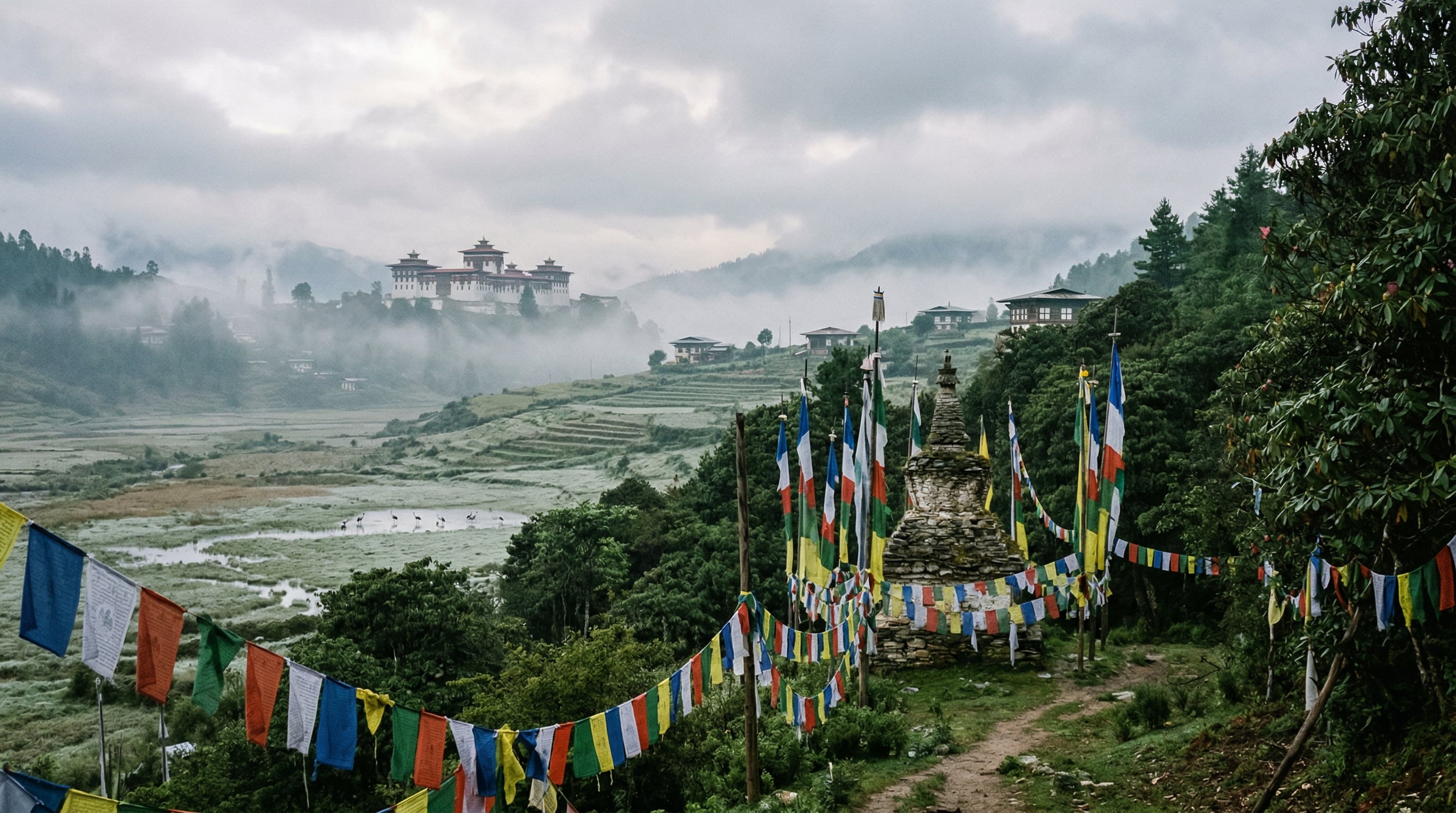
Bhutanese tradition holds that the cranes perform kora—ritual circumambulation—around Gangtey Goempa upon their arrival and departure each season. Whether literally true or poetic interpretation, this belief links the birds to the highest Buddhist practices, elevating them beyond mere wildlife to spiritual significance.
The annual Black-Necked Crane Festival, typically held in early November, celebrates this connection with cultural performances, crane-themed dances, and conservation awareness programs. The festival, organized by the Royal Society for the Protection of Nature (RSPN), draws local communities and visitors alike.
Phobjikha Valley: The Setting
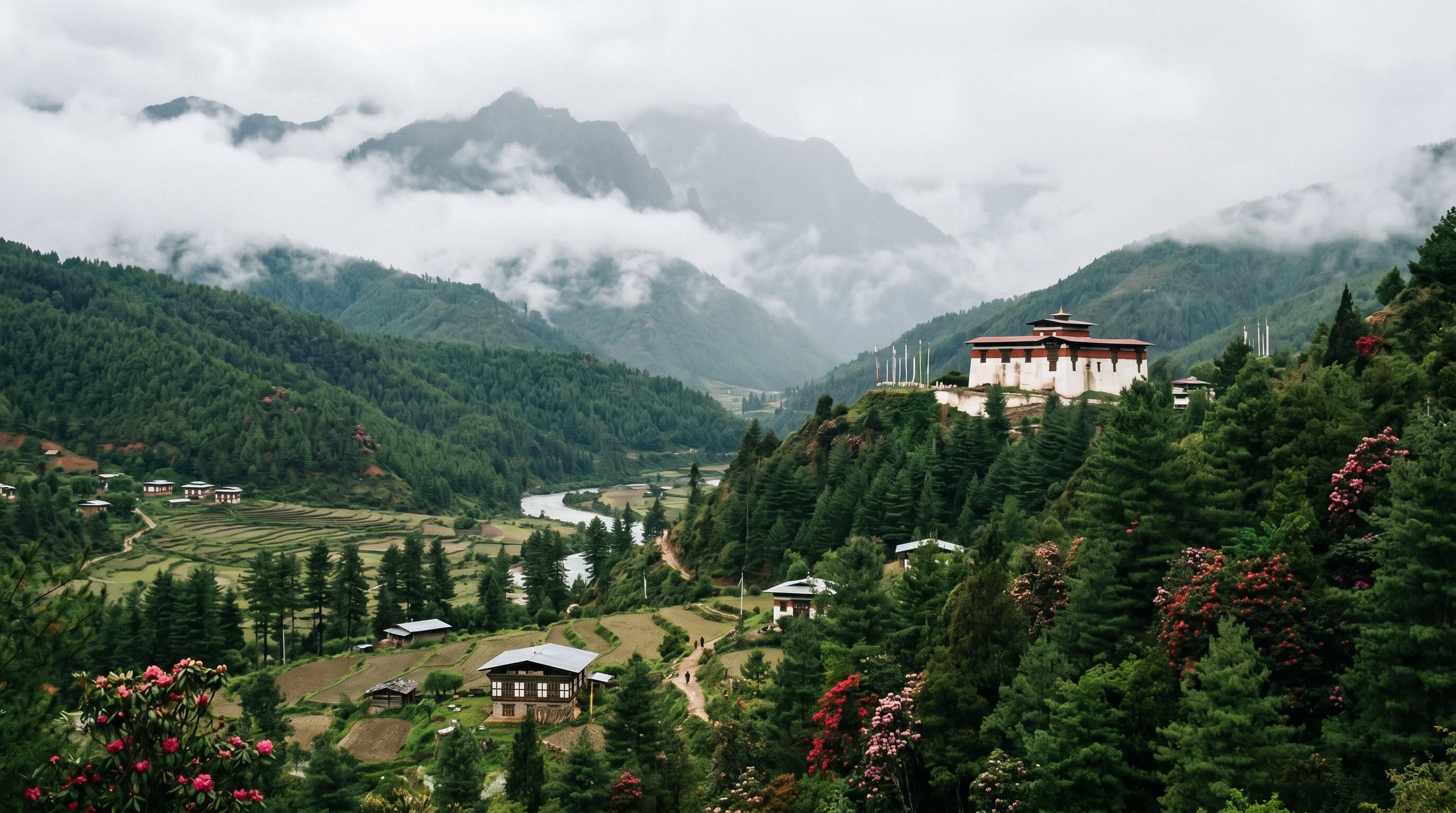
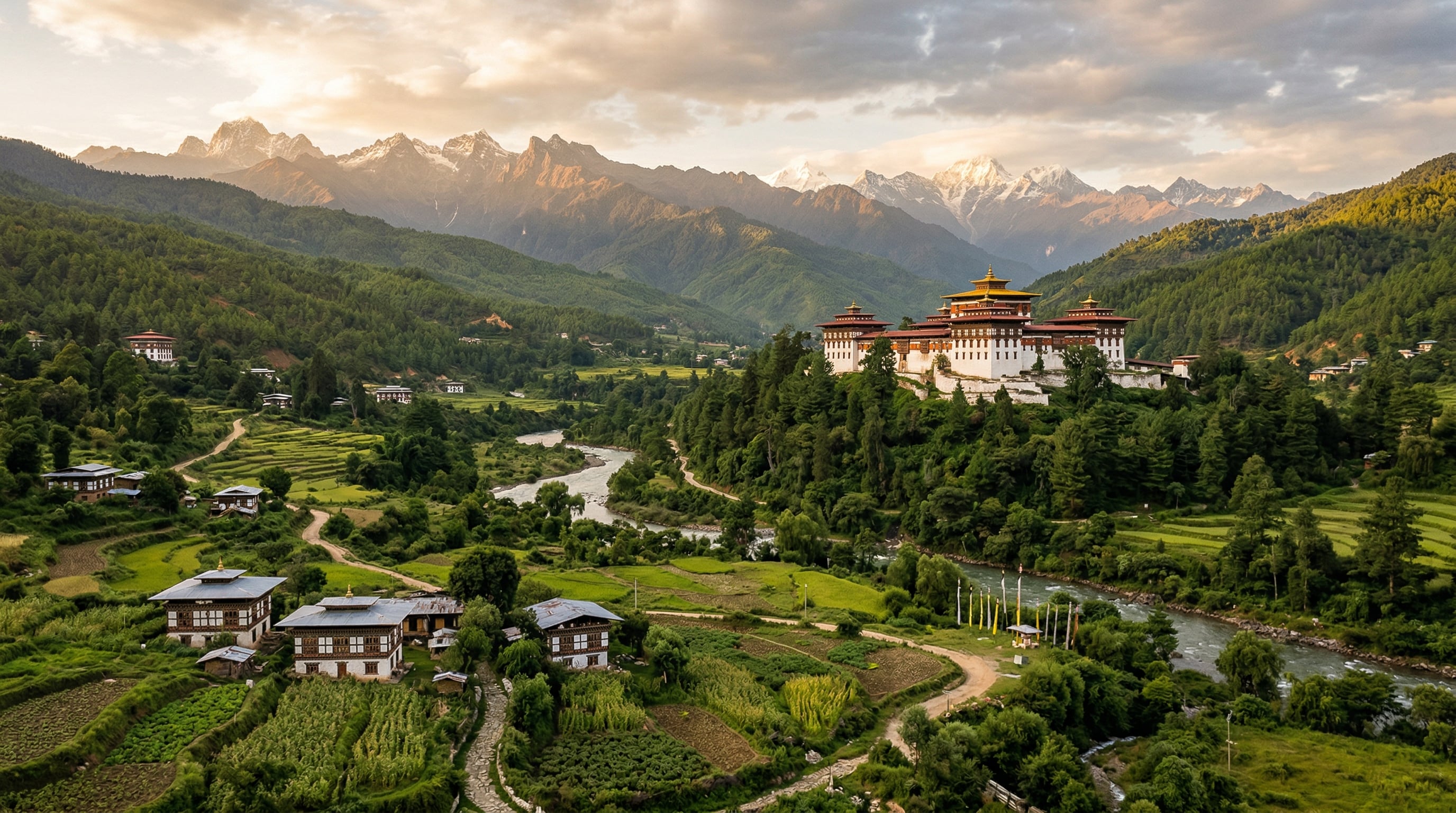
Phobjikha is a glacial valley at approximately 2,900 meters elevation, characterized by:
- Broad, flat valley floor (unusual in mountainous Bhutan)
- Protected wetland ecosystems
- Gangtey Goempa monastery crowning the valley's edge
- Traditional farming communities maintaining sustainable practices
- No overhead power lines (buried underground to protect flying cranes)
The valley's geography creates ideal crane habitat: wetlands for foraging, minimal disturbance, and elevation comfortable for birds adapted to Tibet's heights.
Premium Viewing Accommodations
Gangtey Lodge
This boutique property positions itself as Bhutan's premier wildlife-viewing accommodation:
- 12 suites with valley-facing windows
- Heated floors and bukhari stoves for winter comfort
- Observation deck with telescopes
- In-house naturalist guides
- Farm-to-table dining with valley produce
The lodge's location offers direct views across crane feeding grounds, allowing observation from dining room or suite without venturing into cold.
Amankora Gangtey
Aman's eight-suite property represents the world's most exclusive crane-viewing option:
- Smallest Aman property globally
- Every suite commands valley views
- Private naturalist guides arranged
- Hot stone bath with crane-watching potential
- Fireside dining overlooking the valley
The extreme intimacy (maximum 16 guests) ensures personalized attention impossible at larger properties.
Six Senses Gangtey
Combining wellness programming with wildlife focus:
- 12 suites with integrated spa
- Naturalist-led excursions
- Wellness treatments with valley views
- Higher capacity than Amankora but maintains luxury standards
Taj Gangtey Resort & Spa
The newest ultra-luxury entrant in Phobjikha Valley, operated by India's renowned Taj Hotels group:
- 35 valley-facing rooms and suites including Grand Suites, Luxury Rooms, and Deluxe Rooms
- Full-service spa with treatment rooms and hot stone massage
- Indoor pool and fitness center
- Designed as an intimate retreat showcasing the valley's rare crane populations
Taj Gangtey adds a compelling third option for crane-season visitors, bringing Taj's celebrated Indian hospitality tradition to the Bhutanese highlands.
Optimal Timing
Arrival: Late October through early November
Peak presence: Mid-November through mid-February
Departure: Late February through March
For guaranteed crane presence, aim for December or January. See our seasonal guide for comprehensive timing advice. Early season (November) offers arrivals against autumn colors; late season (February) captures departures with emerging spring.
The Black-Necked Crane Festival (typically November 11) provides cultural context but brings crowds. Non-festival visits offer better viewing conditions.
Viewing Strategies
Dawn and Dusk
Cranes typically roost in valley wetlands overnight, disperse to feeding grounds during the day, and return to roost at dusk. Prime viewing times:
- Dawn (6:30-8:00 AM): Cranes wake, call, prepare for flight
- Dusk (4:00-5:30 PM): Return flights, landing displays, settling behavior
From Lodge
Premium lodges position suites and dining areas for effortless observation. Telescopes and binoculars provided; simply settle in with tea and watch.
Field Excursions
Guided walks to hide positions closer to feeding grounds enable more detailed observation and photography. Naturalists explain behavior, identify family groups, share conservation information.
RSPN Information Center
The Royal Society for the Protection of Nature operates a visitor center with educational displays, viewing tower, and telescope equipment. Staff provide current sighting information.
Beyond Cranes
Phobjikha Valley merits extended stays beyond crane viewing:
- Gangtey Goempa: This important Nyingma monastery offers panoramic views and accessible spiritual encounter
- Nature trails: The valley hosts protected wetland walks and gentle hiking
- Traditional farming: Communities maintain sustainable agriculture visible from valley walks
- Hot stone baths: Valley lodges offer exceptional Dotsho experiences
Conservation Context
Crane viewing in Phobjikha directly supports conservation:
- SDF funds enforcement of protection regulations
- Lodge revenues support local employment over environmentally harmful alternatives
- Tourism attention maintains political will for conservation investment
- RSPN programs depend partly on visitor interest
Visiting the cranes isn't merely observation but participation in their survival. The luxury experience exists because protection succeeded.
Practical Considerations
Weather: Winter in Phobjikha means cold—daytime highs around 10°C, nighttime lows well below freezing. Layer warmly; lodges provide heated rooms and hot water bottles.
Altitude: At 2,900 meters, altitude effects may persist. Allow acclimatization time before arrival.
Transportation: The drive from Punakha crosses Lawala Pass (3,360m). Winter snow occasionally closes the road; operators monitor conditions.
Booking: Premier lodges book months ahead for peak crane season. Reserve early.
The Gift of Time
Crane watching rewards patience. The dramatic takeoffs and landings happen briefly; the long hours between offer subtler pleasures—watching family groups forage, hearing distant calls carry across the valley, observing the dance of wings against mountain skies.
For travelers escaping accelerated lives, Phobjikha's enforced slowness is itself therapeutic. The cranes set the pace. There's nothing to do but watch, wait, and receive what the valley offers.
Each winter, the messengers return. Each winter, those who wait are rewarded with living proof that some things remain worth protecting.
Ready to experience Bhutan?
Our concierge team crafts private, all-inclusive journeys tailored to your interests.
Written by
Bhutan & Co. Editorial Team