Farm-to-Table in the Himalayas: Bhutan's Evolving Gastronomy
Experience Bhutan's culinary evolution from rustic spice to refined innovation. Discover how luxury lodges transform organic local ingredients—Ema Datshi, red rice, aged cheese—into gourmet experiences, from private cooking classes to dramatic dining in 15th-century dzongs.
TLDR
Bhutanese cuisine centers on organic ingredients: red rice, chilies (Ema Datshi), local cheese, and foraged vegetables. Luxury lodges like Six Senses and COMO Uma offer farm-to-table dining, private cooking classes, and extraordinary venues including feudal dinners in ancient dzongs.
Beyond Chili and Cheese: A Culinary Awakening
Bhutanese cuisine has long suffered from simplistic characterization: everything is spicy, everything contains cheese, everything repeats. Like many culinary prejudices, this view contains kernels of truth but misses the larger reality. Bhutan's food culture—shaped by Buddhist dietary ethics, Himalayan agriculture, and recent innovation—offers far more than stereotypes suggest.
For the luxury traveler, Bhutan's culinary scene has transformed dramatically in recent years. World-class lodges now employ chefs trained in international kitchens who approach local ingredients with sophisticated techniques. The result: farm-to-table dining programs rivaling any destination, set against Himalayan panoramas impossible to replicate.
The Foundational Elements
Ema Datshi: The National Dish
Chilies (ema) cooked with local cheese (datshi) creates Bhutan's defining dish. But understanding ema datshi requires nuance:
- Heat levels vary: From mild to explosive, depending on chili variety and preparation
- Cheese character: Fresh farmer's cheese differs from aged varieties; each creates distinct dishes
- Regional variations: Bumthang's yak-milk datshi differs texturally from cow-milk versions
- Luxury iterations: High-end kitchens deconstruct and refine the dish, maintaining essence while adding complexity
Related datshi dishes multiply variety: Kewa Datshi (potato), Shamu Datshi (mushroom), Gondo Datshi (egg)—each taking the cheese sauce in different directions.
Bhutanese Red Rice
The distinctive red rice grown in Paro Valley provides the staple grain. Its slightly nutty flavor, chewy texture, and appealing color distinguish every meal. Luxury kitchens have embraced red rice in creative applications: risotto-style preparations, breakfast porridges, and innovative desserts.
Protein Sources
Buddhist influences limit slaughter, but meat eating continues:
- Yak: High-altitude favorite; dried yak meat (shakam) appears in stews and stir-fries
- Beef and pork: Commonly served; often prepared with chilies
- Chicken: Increasingly popular in urban areas
- Trout: Introduced species now farmed in mountain streams
Foraged and Farmed Vegetables
Bhutan's diverse ecosystems support abundant vegetable production:
- Fern fronds (nakey): Foraged spring delicacy
- Mushrooms: Matsutake, chanterelles, and numerous varieties foraged seasonally
- Leafy greens: Mustard, radish tops, and local varieties
- Asparagus: Wild asparagus appears in spring
The Luxury Lodge Revolution
High-end properties have transformed Bhutanese dining:
Six Senses Bhutan
The brand's "Eat with Six Senses" philosophy manifests fully here:
- Extensive kitchen gardens at each property growing herbs, vegetables, and microgreens
- Relationships with local farmers ensuring seasonal availability
- Wellness-focused menus addressing specific dietary needs
- Private dining experiences in dramatic settings
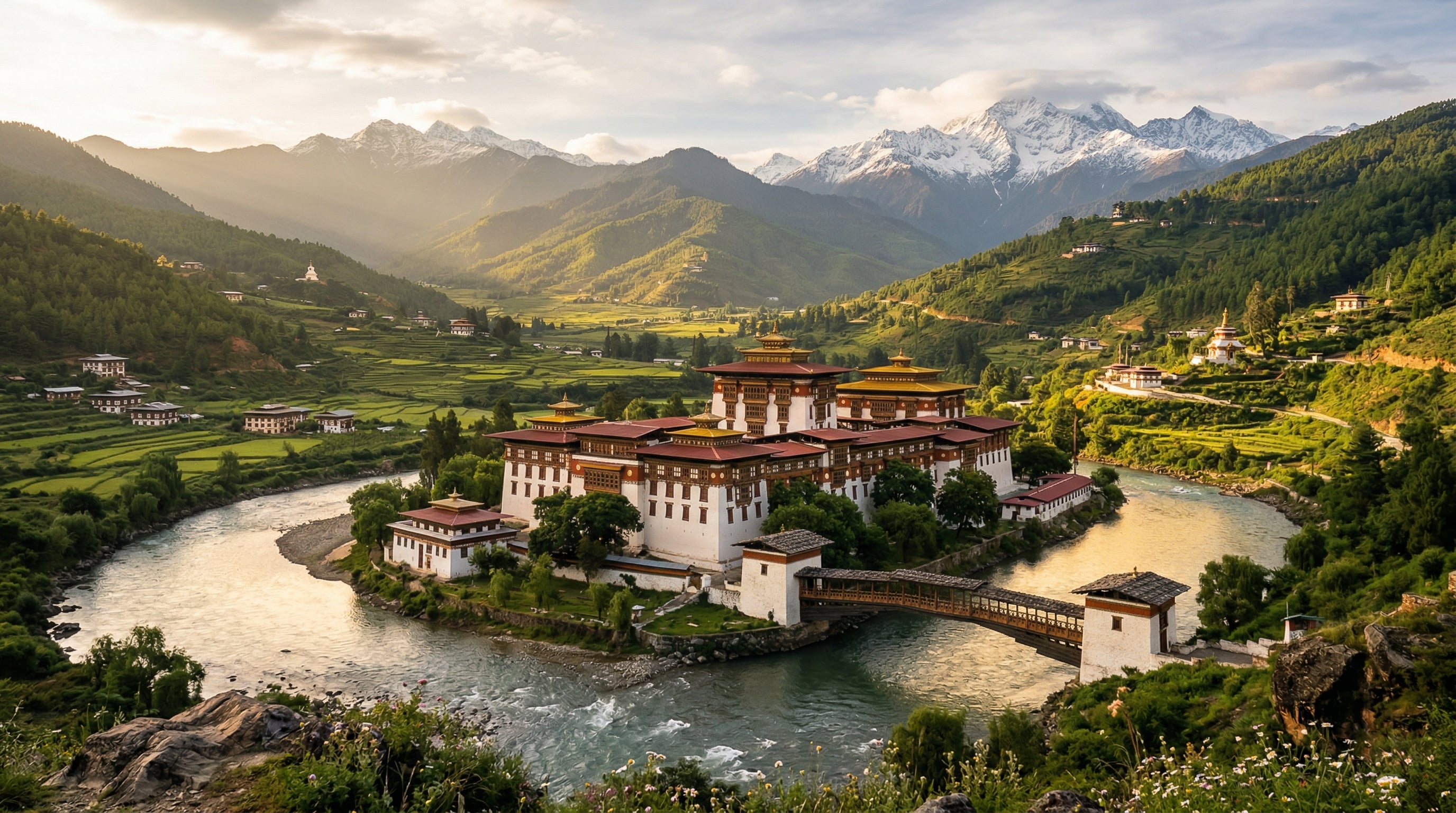
Their signature "feudal dinner"—set within a 15th-century dzong, featuring whole roasted lamb and historical performances—represents destination dining at its most theatrical.
COMO Uma Paro: Bukhari Restaurant
Named for the traditional wood-burning stove, Bukhari combines local ingredients with COMO's sophisticated culinary approach:
- Inventive reinterpretation of Bhutanese classics
- Tasting menus showcasing seasonal ingredients
- International techniques applied to local products
- Exceptional breakfast programs featuring both Eastern and Western preparations
Amankora Properties
Aman's approach emphasizes refined simplicity:
- Seasonal menus adapted to each valley's elevation and climate
- Private dining arrangements in spectacular settings
- Picnic lunches at carefully chosen scenic locations
- Traditional dishes prepared with exceptional ingredient quality
Unique Dining Experiences
Cooking Classes
Luxury lodges offer hands-on culinary instruction:
- Market visits to source local ingredients
- Traditional technique demonstration
- Personal preparation of national dishes
- Consumption of self-prepared meals with valley views
These sessions provide both experiential depth and transferable skills—guests often recreate Bhutanese dishes at home.
Farmhouse Dinners
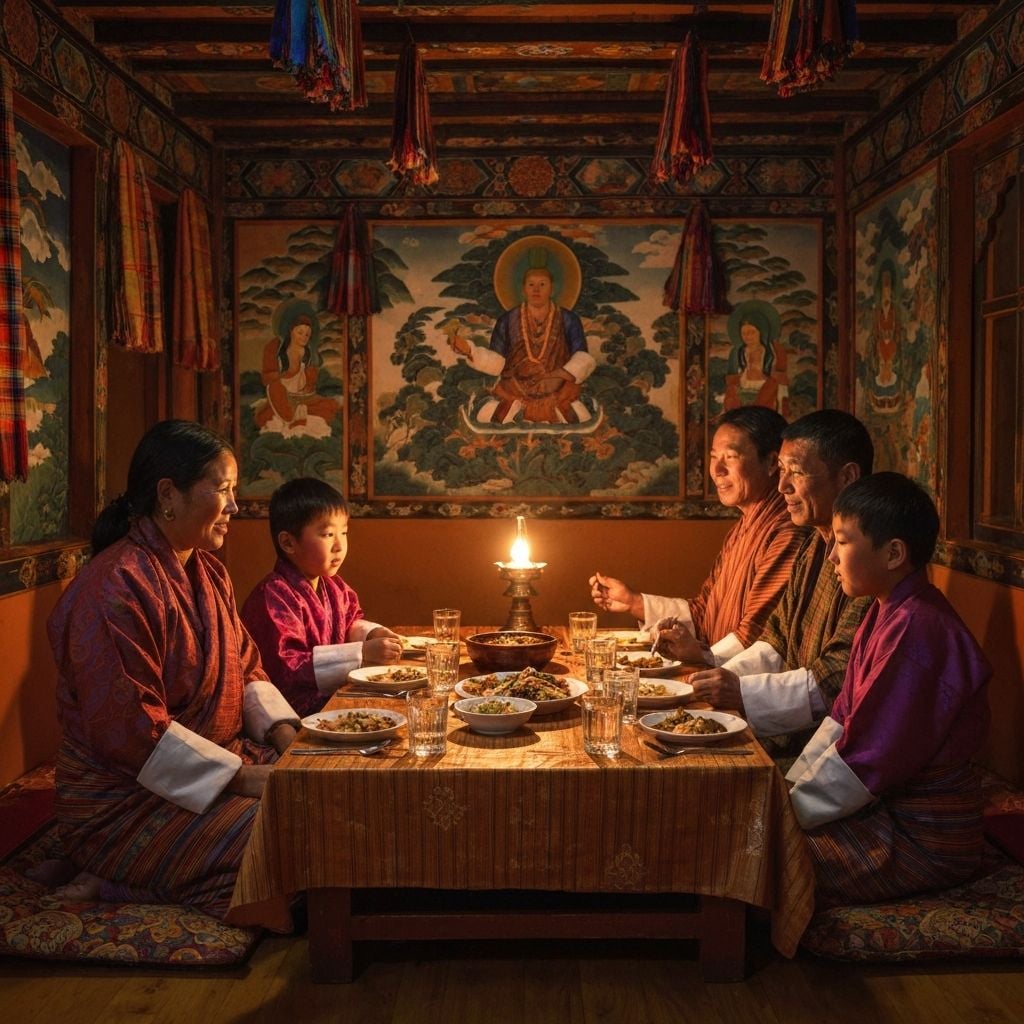
Arranged visits to traditional homes include meal preparation and shared consumption:
- Observe multi-generational cooking practices
- Participate in preparation as desired
- Dine with host family discussion
- Experience authentic hospitality impossible in restaurants
Picnic Excellence
Bhutan's landscapes invite outdoor dining. Luxury operators excel at elaborate picnics:
- Scenic location selection—viewpoints, riverside meadows, temple grounds
- Full service with linens, crystal, proper seating
- Multi-course meals transported and served hot
- Post-Tiger's Nest champagne breakfasts as reward for early-morning effort
Beverage Culture
Bhutanese beverages extend beyond butter tea:
Ara: Traditional distilled spirit from rice or wheat; ranges from rough village production to refined commercial versions.
Butter tea (suja): Salt butter tea remains common, particularly at altitude where calories and salt restore depleted hikers.
Sweet milk tea: Indian-influenced chai serves as the more common daily beverage.
Wine: Limited domestic production; international wines available at quality lodges.
Spirits: Imported options available; local whisky production has improved significantly.
The Organic Advantage
Bhutan's limited chemical agriculture creates unintentional organic production:
- Most produce grows without synthetic inputs
- Small-scale farming maintains traditional practices
- Government increasingly formalizes organic certification
- Luxury lodges prioritize certified or verifiably clean-grown ingredients
Vegetables simply taste better when grown in Himalayan terraces by families who've farmed the same plots for generations.
Dietary Considerations
Luxury properties accommodate various restrictions:
- Vegetarian: Buddhist influences ease meat-free accommodation; dairy features prominently
- Vegan: Possible with advance notice; traditional cuisine relies on dairy
- Gluten-free: Red rice and buckwheat provide natural alternatives to wheat
- Spice modification: Heat levels adjust to guest preference
Bumthang Specialties
This central valley maintains distinctive food traditions:
- Buckwheat pancakes (kule): Simple griddle cakes served with butter and chili
- Swiss cheese: Introduced by Swiss development worker Fritz Maurer, who arrived in the late 1960s and established two cheese factories producing Emmental, Gouda, and Gruyere—now a beloved regional specialty
- Honey: Mountain apiary production creates exceptional quality
- Apple products: Bumthang's temperate climate supports apple orchards; brandy particularly notable
The Culinary Journey
For travelers who consider food essential to cultural understanding, Bhutan delivers depth matching its landscapes. The progression from traditional farm cuisine through lodge reinterpretation to innovative high-end dining describes not mere options but an evolution—a culinary conversation between preservation and innovation.
The best Bhutan food experiences honor both poles: the farmhouse hearth where grandmother's recipe continues unchanged and the five-star kitchen where trained chefs apply global techniques to hyper-local ingredients. Between them stretches the full range of Himalayan gastronomy.
The chilies still burn. The cheese still melts. But now they do so in contexts ranging from rustic authenticity to considered artistry—proving that tradition and innovation need not compete but can combine in dishes worth traveling thousands of miles to taste.
Ready to experience Bhutan?
Our concierge team crafts private, all-inclusive journeys tailored to your interests.
Written by
Bhutan & Co. Editorial Team