Green Season Bhutan: Why Luxury Travelers Are Choosing June to August
Why smart luxury travelers are visiting Bhutan in June-August: fewer crowds, lower prices, lush landscapes, and exclusive monsoon-season festivals.
TLDR
Bhutan's monsoon months (June-August) offer 20-35% lower prices, virtually zero crowds, extraordinary green landscapes, and exclusive festivals. The trade-off — occasional afternoon rain and fewer mountain views — is well worth it for travelers who prioritize authenticity and value over picture-perfect weather.
The Secret That Seasoned Bhutan Travelers Know
Ask any luxury travel advisor when to visit Bhutan and you'll hear the same answer: spring (March-May) or autumn (September-November). And they're not wrong — those months offer textbook-perfect weather and the kingdom's most famous festivals.
But here's what they rarely mention: some of the most memorable Bhutan experiences happen during the so-called "off season" — the monsoon months of June, July, and August, locally known as the green season. And a growing number of discerning travelers are choosing these months deliberately.
Why? Fewer tourists, lower prices, explosively lush landscapes, unique festivals unavailable at other times, and an intimacy with the kingdom that peak-season visitors simply cannot access. If you've been to Bhutan before and want to experience it differently — or if you value solitude over sunshine — the green season deserves serious consideration.
Month-by-Month: What to Expect
| Month | Rainfall | Temperature (Valleys) | Landscape | Best For |
|---|---|---|---|---|
| June | Moderate; rain builds gradually | 20-28°C (68-82°F) | Rice paddies being planted; wildflower meadows | Early green season before heavy rain; Nimalung Tshechu festival |
| July | Heaviest rainfall; afternoon showers | 20-29°C (68-84°F) | Peak green intensity; waterfalls at maximum flow | Haa Summer Festival; mushroom foraging; dramatic photography |
| August | Heavy but easing toward month-end | 19-27°C (66-81°F) | Lush and verdant; rivers running strong | Lowest tourist numbers; most authentic local interactions |
Important note: Bhutan's monsoon is not a constant downpour. Mornings are typically clear and bright, with rain arriving in afternoon showers that rarely last more than a few hours. Most activities proceed normally — you simply carry a rain jacket and adapt your timing.
The Case for Green Season: 6 Reasons to Go
1. Dramatically Fewer Tourists
Peak months see 15,000-20,000 visitors. Green season months see a fraction of that. The practical effect is transformative: Tiger's Nest without queues, dzong courtyards with only monks for company, and restaurants where you're the only guests. For travelers who define luxury as exclusivity, this alone justifies the trip.
2. Significant Cost Savings
While the Sustainable Development Fee ($100/day) remains fixed year-round, accommodation and flight costs drop substantially during green season:
| Cost Component | Peak Season (Oct/Apr) | Green Season (Jun-Aug) | Savings |
|---|---|---|---|
| Luxury lodge (per night) | $800-$2,000+ | $500-$1,400+ | 20-35% lower |
| Drukair flights (BKK-Paro return) | $900-$1,200 | $600-$800 | 25-35% lower |
| Guide & vehicle (per day) | $180-$250 | $150-$200 | 15-20% lower |
| 7-day luxury trip (per person) | $8,000-$12,000+ | $6,000-$9,000+ | $2,000-$3,000 saved |
For a couple, that's $4,000-$6,000 in savings — enough to upgrade from a standard suite to a villa, extend the trip by several days, or add a wellness retreat component.
3. A Landscape Transformed
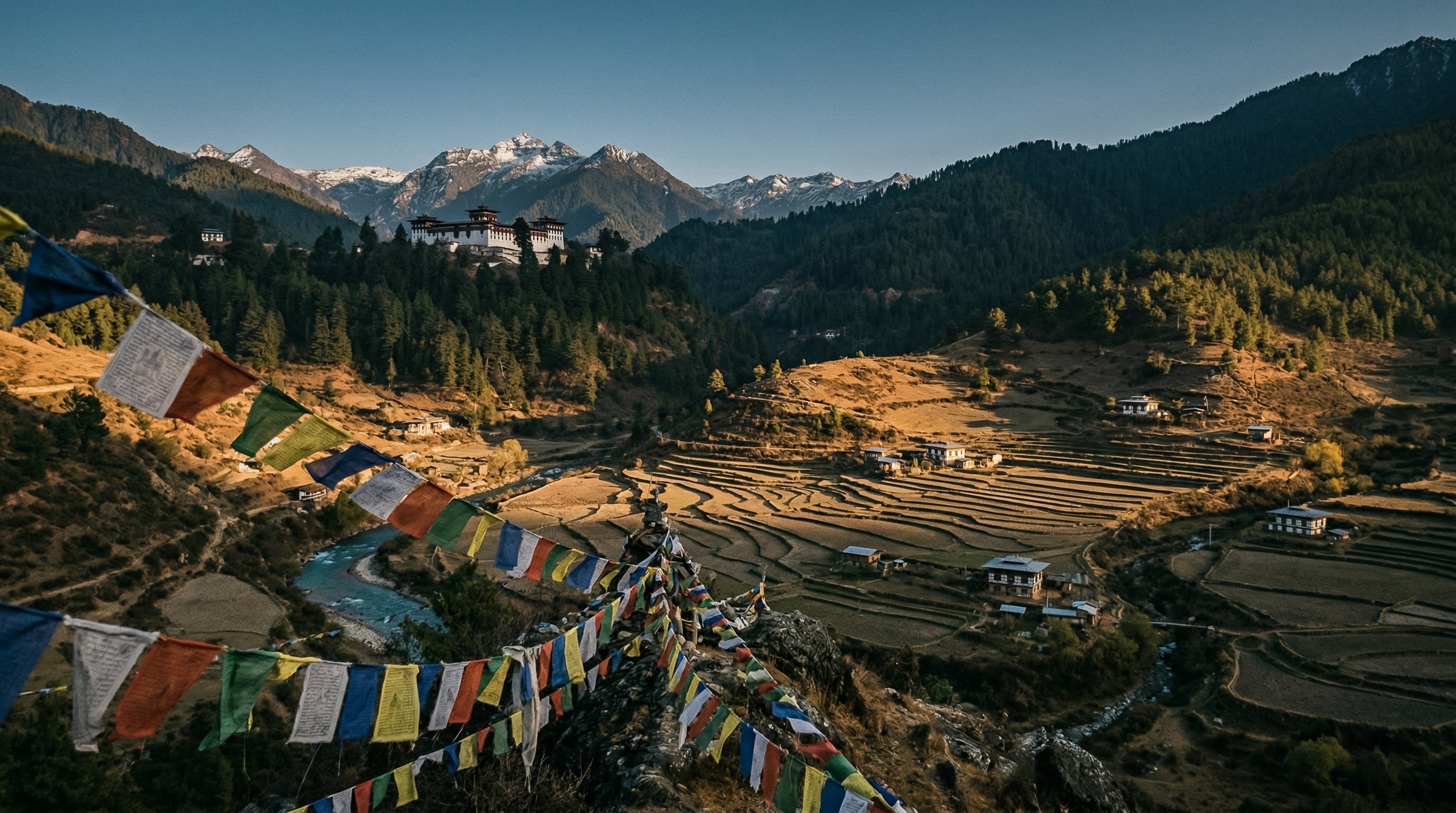
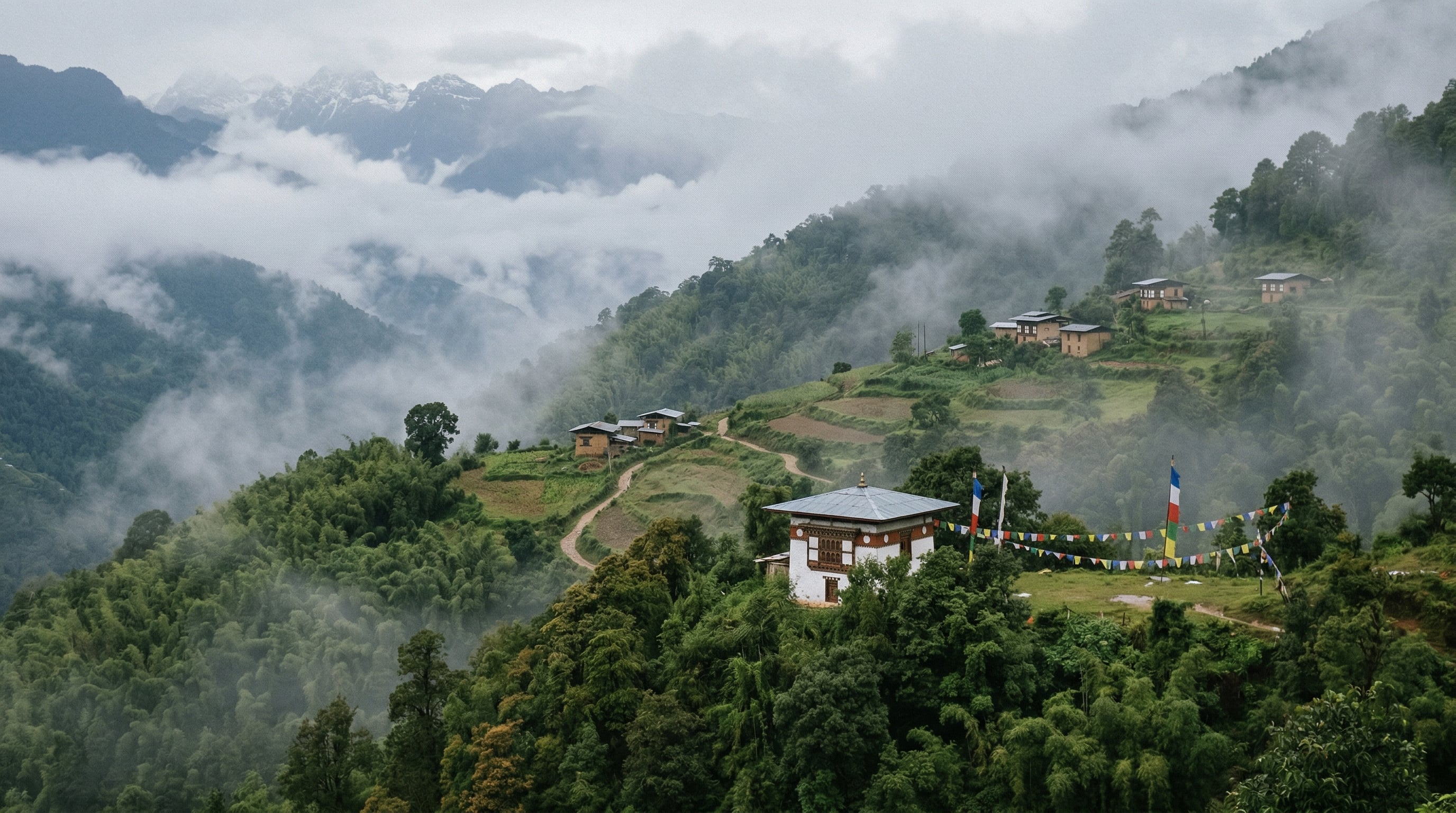
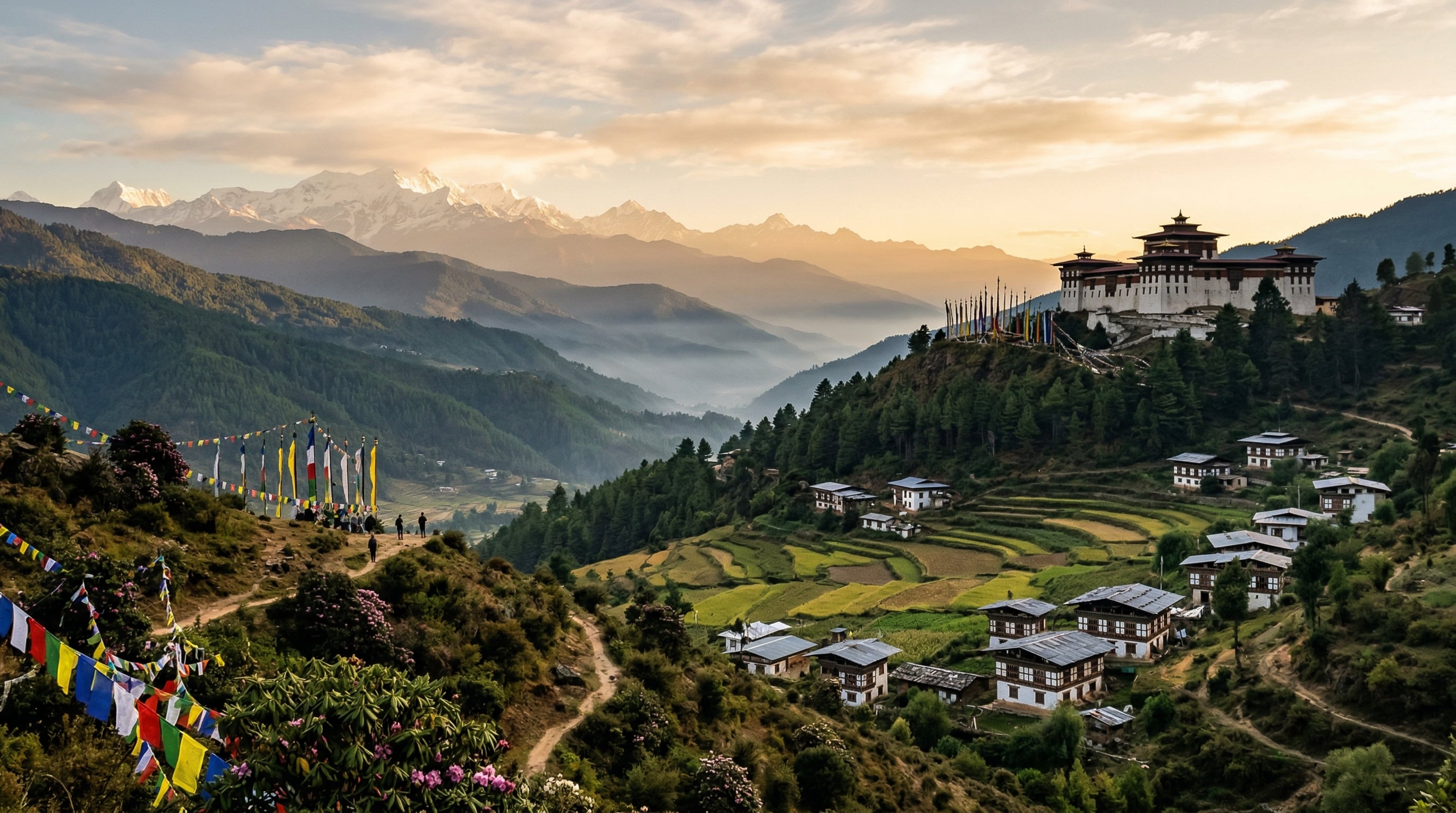
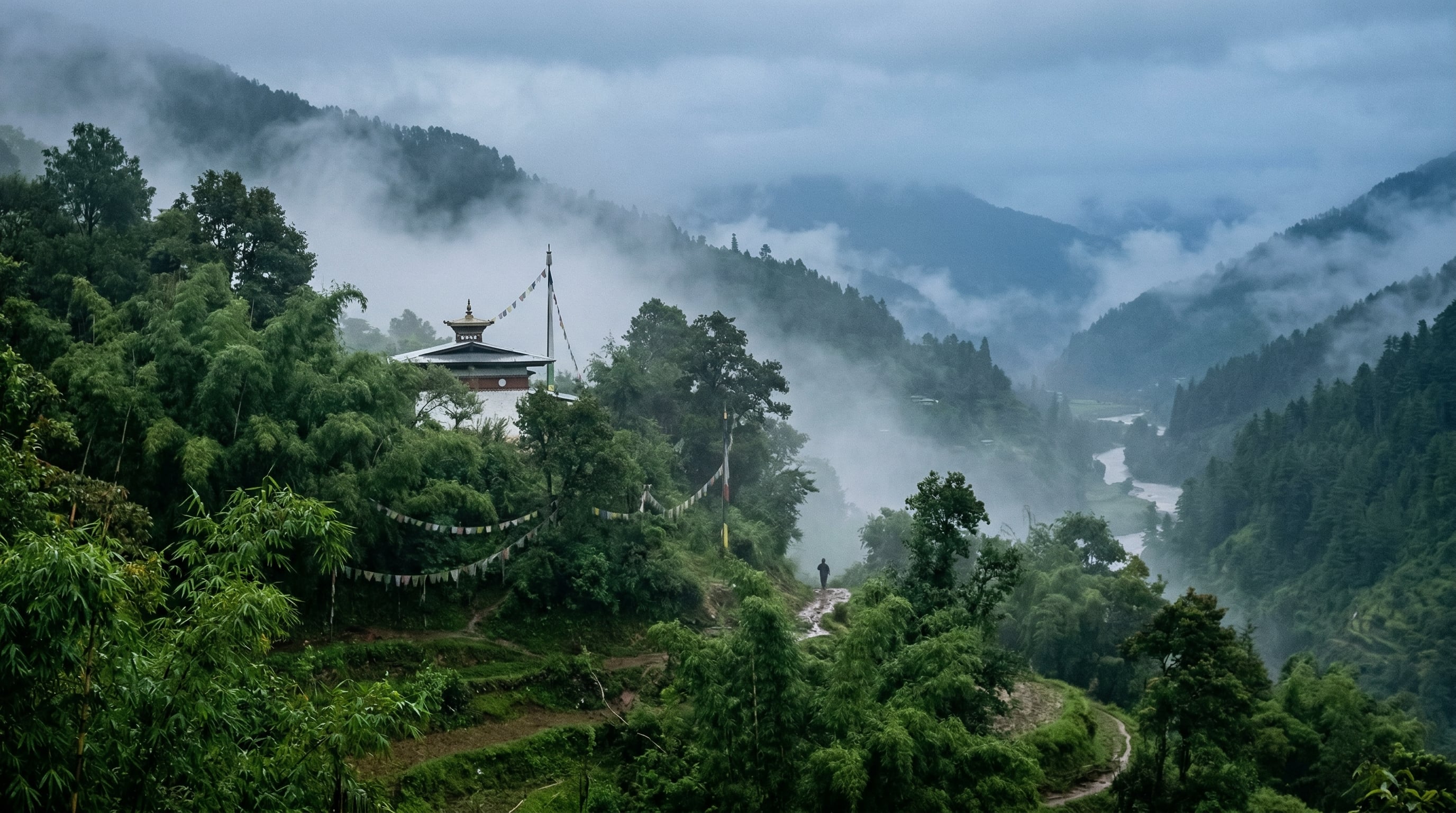
The monsoon turns Bhutan from beautiful to breathtaking. Rice paddies become mirrors reflecting clouds and mountains. Waterfalls that trickle in autumn become thundering cascades. Forests deepen to an almost tropical intensity of green. Punakha Valley — already Bhutan's warmest and most fertile — becomes extraordinarily lush, with subtropical vegetation in full bloom.
For photographers, the green season offers dramatic cloud formations, moody mist rolling through valleys, and the kind of atmospheric conditions that produce award-winning images.
4. Exclusive Festivals
Several festivals take place only during green season:
- Nimalung Tshechu (June) — A traditional festival in Bumthang attended almost exclusively by locals
- Haa Summer Festival (July) — A celebration of living culture in the remote Haa Valley, featuring traditional sports, nomadic food, and textile demonstrations
- Kurjey Tshechu (June) — Held at one of Bumthang's most sacred temples
These smaller festivals offer a more intimate and authentic cultural experience than the larger events of spring and autumn. You won't be competing with hundreds of other international visitors for viewing space.
5. Mushroom Season
For the food-obsessed traveler, monsoon season brings Bhutan's prized wild mushrooms — including the highly sought-after matsutake (sangay shamu). Luxury lodges create special green-season menus featuring foraged mushrooms, wild greens, and seasonal ingredients unavailable at other times. For more on Bhutan's evolving culinary scene, see our gastronomy guide.
6. Warmer Temperatures
Green season is actually Bhutan's warmest period, with valley temperatures reaching a pleasant 20-29°C. Compared to the near-freezing mornings of November and the brisk spring temperatures, June-August offers the most comfortable outdoor conditions — you just need to dress for occasional rain rather than cold.
What to Watch Out For
Honest disclosure — green season has genuine trade-offs:
- Mountain views: Himalayan peaks are frequently hidden by cloud cover. If crystal-clear views of Chomolhari and Gangkar Punsum are a priority, choose autumn instead.
- High-altitude trekking: The Druk Path and other high-altitude routes become muddy and less pleasant. Valley-level walks and cultural visits work better.
- Road conditions: Occasional landslides can affect mountain roads, particularly to eastern Bhutan. Flexible itineraries help.
- Leeches: Yes, they exist in the forests during monsoon. Long pants and leech socks solve the problem — your guide will brief you.
None of these are dealbreakers for a well-planned luxury trip focused on the western valleys (Paro, Thimphu, Punakha), which receive less rainfall than eastern Bhutan and have the most reliable road access.
The Ideal Green Season Itinerary
A 7-day green season journey through the western valleys:
- Days 1-2: Paro — Tiger's Nest hike (morning, before clouds), Drukair arrival, Rinpung Dzong, National Museum
- Days 3-4: Thimphu — Buddha Dordenma, weekend market, textile museum, cultural experiences
- Days 5-6: Punakha — Punakha Dzong (stunning in the rain), Chimi Lhakhang fertility temple, river valley walks, wellness treatments
- Day 7: Return to Paro, departure
Add the Haa Valley (July festival) or Bumthang (June festivals) for a 10-12 day extended journey.
Getting There in Green Season
Drukair operates year-round flights to Paro, though green season schedules may have slightly fewer frequencies. Weather-related delays are more common — build buffer days into your itinerary, particularly at the start and end.
As the travel brand of OMG Experience Co., Ltd. — the official Passenger Sales Agent of Drukair Royal Bhutan Airlines — Bhutan & Co. monitors schedules in real time and manages rebookings proactively if weather affects your flights. Read our Bangkok gateway guide for transit planning.
Frequently Asked Questions
Is it worth visiting Bhutan during monsoon season?
Absolutely — if you value privacy, lower costs, lush landscapes, and authentic cultural encounters over guaranteed mountain views. The western valleys (Paro, Thimphu, Punakha) receive moderate rainfall and remain highly enjoyable. It's not worth it if Himalayan panoramas are your primary motivation.
Does it rain all day during Bhutan's monsoon?
No. Mornings are typically clear and bright, with rain arriving in afternoon showers lasting 1-3 hours. Most sightseeing and activities are scheduled for mornings. Evenings are often clear again.
Are luxury lodges open during green season?
Yes, all major properties including Amankora, Six Senses, and Pemako operate year-round. Many offer green-season promotions and special wellness packages. See our lodge comparison for details.
How much cheaper is green season compared to peak?
Expect savings of 20-35% on accommodation and flights. The SDF ($100/day) is fixed year-round. A luxury 7-day trip for two could save $4,000-$6,000 compared to peak October pricing. See our full cost guide for detailed breakdowns.
Ready to Discover Green Season Bhutan?
The green season is Bhutan's best-kept secret — and we'd like to keep it that way. Our team designs intimate, weather-smart itineraries that maximize the unique advantages of June-August travel while minimizing the trade-offs.
Contact our concierge to plan your green season journey, or explore our curated private journeys that can be adapted for any time of year.
Ready to experience Bhutan?
Our concierge team crafts private, all-inclusive journeys tailored to your interests.
Written by
Bhutan & Co. Editorial