Meditation Retreats in the Himalayas: Finding Stillness in Bhutan
Discover how Bhutan's monastery retreats, mountain hermitages, and luxury wellness lodges offer authentic meditation experiences. From guided sessions with Buddhist teachers to silent retreat programs, find the stillness that modern life rarely permits.
TLDR
Bhutan offers meditation retreats ranging from monastery stays with ordained teachers to luxury lodge programs with guided sessions. Best locations include Paro Valley monasteries, Bumthang temples, and wellness resorts like Bhutan Spirit Sanctuary—all set against spectacular Himalayan backdrops.
Landscape as Teacher
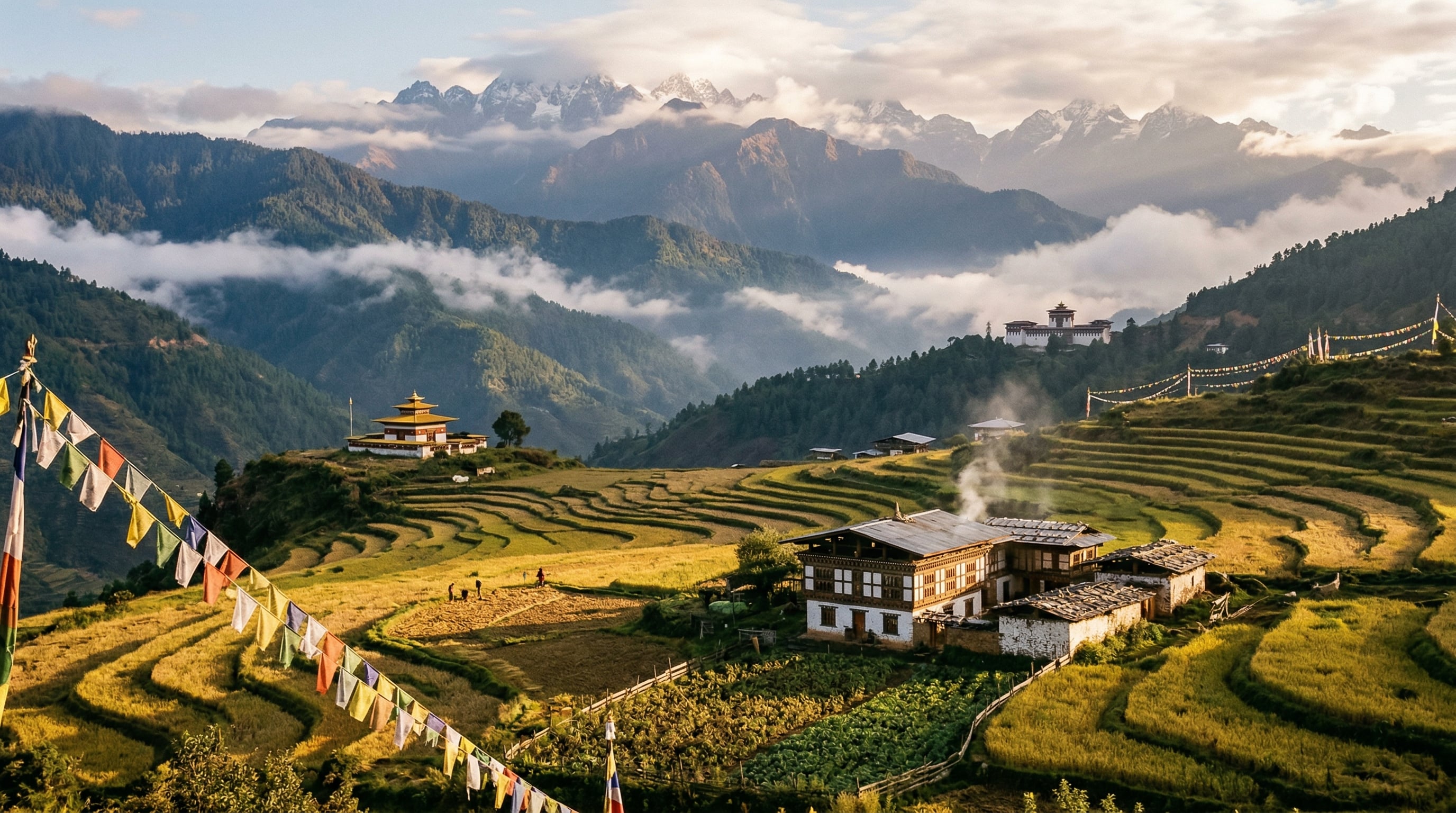
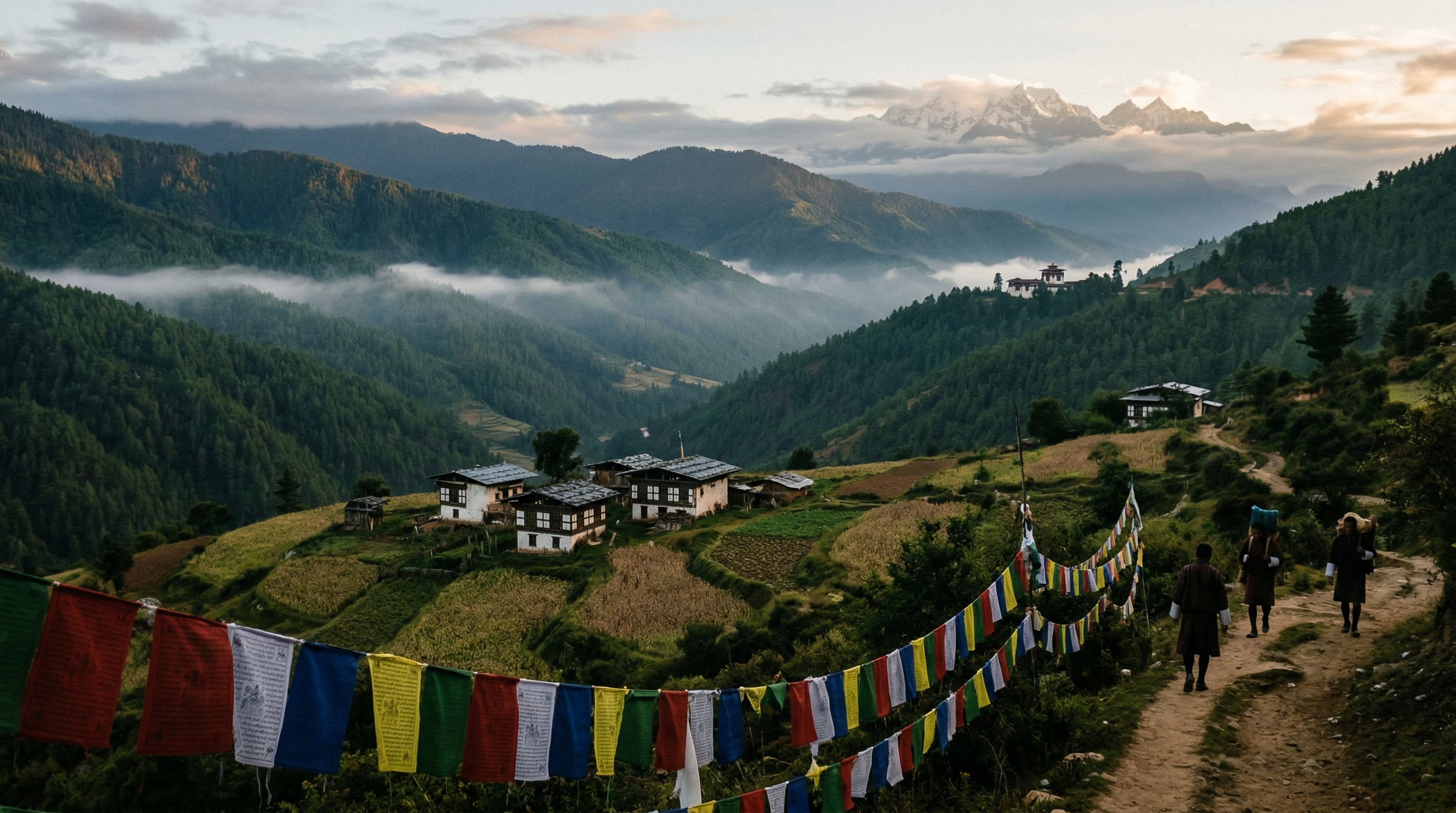
Meditation requires nothing beyond one's own mind—yet environment profoundly shapes the practice. Bhutan's Himalayan setting offers conditions that aspirants have sought for millennia: altitude that naturally slows mental chatter, monasteries positioned for maximum separation from distraction, and a culture that considers contemplative practice not eccentricity but the highest human endeavor.
For travelers seeking genuine meditation experience rather than spa-packaged "mindfulness," Bhutan presents multiple pathways—from structured retreat programs to spontaneous moments of practice in extraordinary settings. If your interest runs toward brief but deep ceremonial participation (blessings, audiences, butter lamps) rather than multi-day silent sits, start with our guide to private monastery blessings—the logistical and cultural context overlaps more than many travellers expect.
The Tradition: Buddhist Meditation in Bhutan
Bhutanese meditation practice derives primarily from the Drukpa Kagyu and Nyingma schools of Vajrayana Buddhism. These traditions emphasize:
- Shamatha (Calm Abiding): Stabilizing attention through focus on breath, objects, or mental phenomena
- Vipassana (Insight): Investigating the nature of experience itself
- Visualization: Complex practices involving enlightened imagery
- Mantra recitation: Repetition of sacred syllables as focus and purification
- Dzogchen/Mahamudra: Advanced practices pointing directly to mind's nature
While advanced practices require specific initiation and long-term commitment, foundational techniques suit any sincere beginner. This accessibility makes Bhutan's meditation traditions valuable for retreatants at any level.
Structured Retreat Programs
Bhutan Spirit Sanctuary
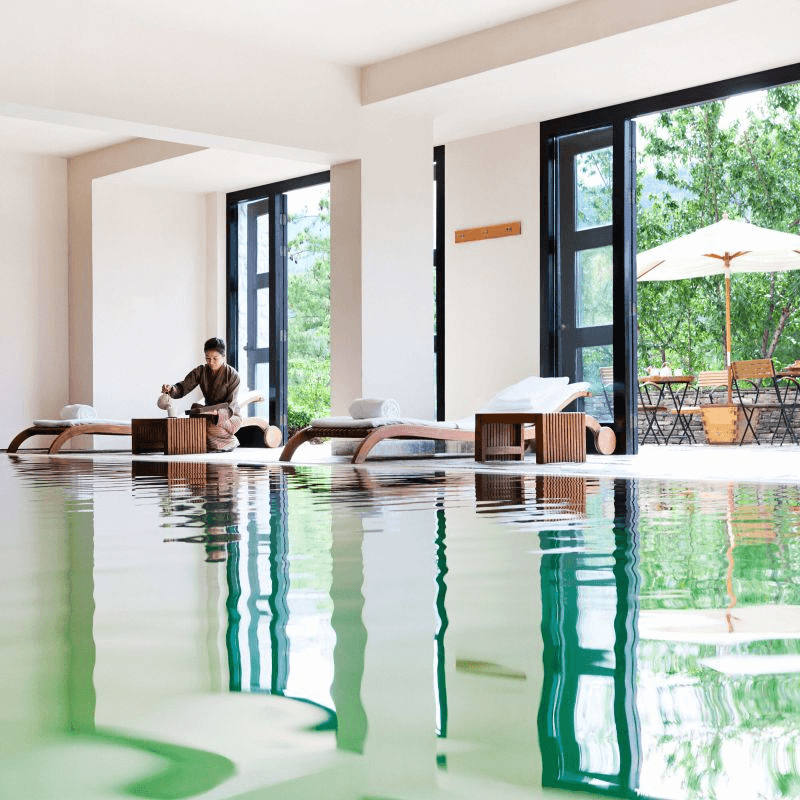
This purpose-designed wellness retreat near Paro offers dedicated meditation programming:
- Daily guided meditation sessions with trained facilitators
- Silent retreat options of three to seven days
- Integration with traditional medicine and yoga
- Individual practice rooms overlooking valley views
- Luxury accommodation maintaining contemplative atmosphere
The Sanctuary's approach balances authenticity with accessibility—guests need not adopt Buddhist beliefs to benefit from Buddhist-derived techniques.
Six Senses Lodges
Their "Mindfulness and Sleep" program incorporates meditation within broader wellness journeys:
- Morning meditation as dawn breaks over mountain valleys
- Integration with spa treatments and healthy cuisine
- Portable practices for continued use beyond Bhutan
- Multi-property experiences maintaining contemplative thread
Monastery Stays
For those seeking deeper immersion, arranged stays at smaller monasteries offer:
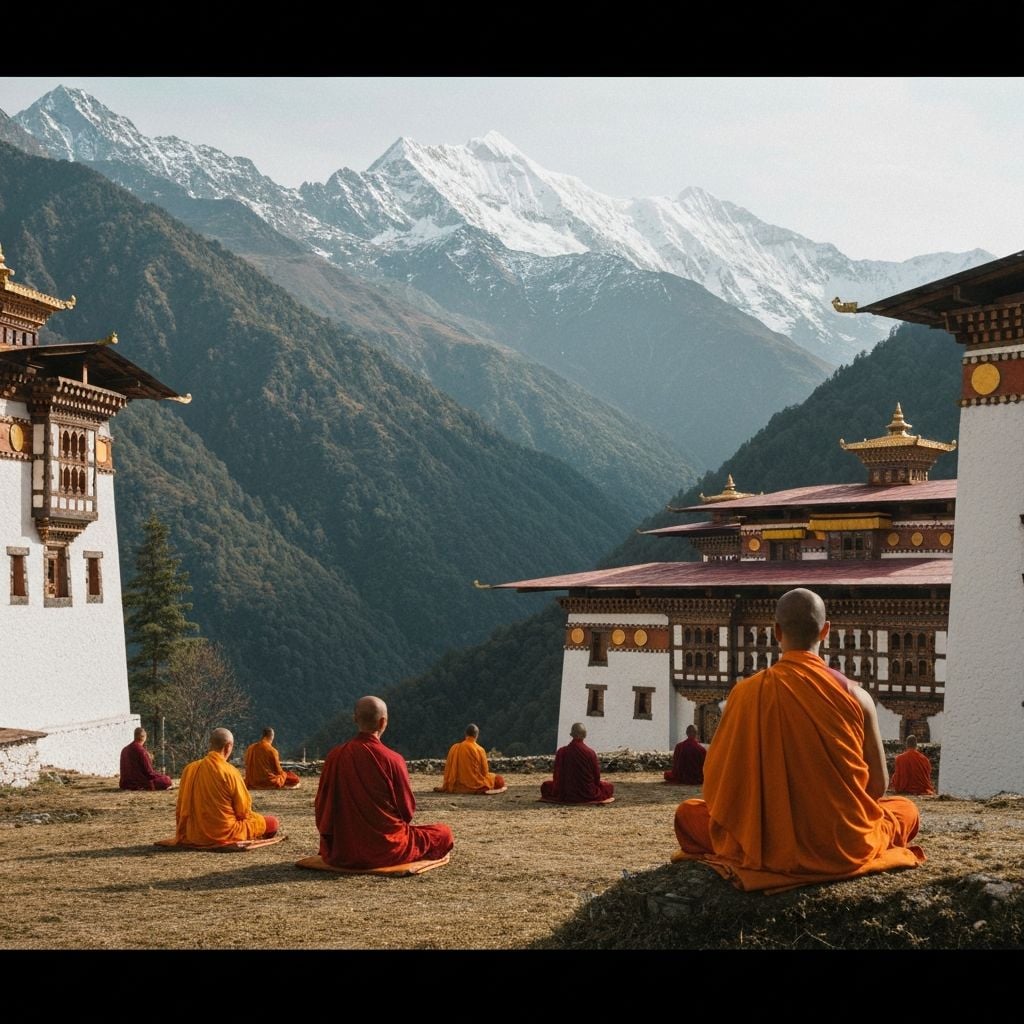
- Participation in daily monastic schedule (rising pre-dawn, prayer sessions, meditation periods)
- Direct instruction from ordained monks or nuns
- Simple accommodation emphasizing practice over comfort
- Silence as default communication mode
- Complete separation from ordinary life rhythms
These experiences require more preparation and commitment but offer corresponding depth. Operators can arrange introductions, though participants should expect minimal luxury amenities.
Meditation Sites: Exceptional Settings
Bhutan's landscape creates natural meditation temples:
Tiger's Nest Approach
The forested path ascending to Taktsang offers walking meditation opportunity. The combination of physical effort, natural beauty, and spiritual destination creates ideal conditions for mindful movement.
Dochula Pass
Amid the 108 chortens commemorating fallen soldiers, early morning practice overlooks the high Himalayan range. The altitude and panorama naturally quiet mental agitation.
Gangtey Monastery Grounds
This remote gompa in Phobjikha Valley offers contemplative atmosphere particularly potent during crane season, when the birds' calls punctuate silence.
Bumthang Valley Temples
The spiritual heartland of Bhutan contains multiple ancient temples ideal for brief practice sessions—Kurjey Lhakhang, Jambay Lhakhang, and numerous smaller gems.
Private Retreat Hermitages
Through specialized operators, arrangements can be made for day visits to operational retreat huts where serious practitioners undertake three-year retreats—brief immersion in truly dedicated practice environments.
Practical Guidance for Beginners
Those new to meditation need not hesitate—Bhutan provides ideal entry conditions:
Start with guided sessions: Luxury lodges offer morning guided meditations requiring no prior experience. Simply follow instructions and observe what arises.
Use walking meditation: The practice of mindful walking translates easily to Bhutan's abundant trekking opportunities. Attention focuses on each step, breath, and sensation.
Keep sessions short: Ten or fifteen minutes of actual meditation beats thirty minutes of frustrated mind-wandering. Quality exceeds quantity.
Expect difficulty: The mind wanders—this is universal. The practice lies in returning, again and again, to present awareness.
Integrate, don't isolate: Meditation enhances other experiences. Practice before temple visits to heighten receptivity. Practice after challenging hikes to process the accomplishment.
Creating Silent Spaces
Full silent retreat may not suit every journey, but incorporating silence enhances any visit:
- Request silent breakfast service before dawn monastery visits
- Communicate intention for quiet periods to guides
- Switch off devices completely for designated hours or days
- Ask lodges about designated quiet spaces
- Use long drives as opportunities for internal practice
What to Expect from Practice in Bhutan
The Himalayan environment affects meditation in particular ways:
Altitude effects: Most visitors find that altitude naturally slows mental activity. The slightly reduced oxygen creates a natural calming effect often described as "dreamlike" quality.
Natural support: Distant peaks, vast valleys, and birdsong provide non-intrusive sensory anchors for attention.
Cultural resonance: The awareness that serious practitioners have meditated in these locations for centuries creates palpable energetic quality—subjective but widely reported.
Reduced stimulation: Bhutan's limited digital connectivity and slower pace removes much mental agitation at its source.
Continuing Practice After Departure
The value of meditation in Bhutan lies partly in establishing portable practices:
- Request instruction in simple techniques requiring no props or special conditions
- Collect mental images to serve as visualization supports
- Purchase meditation aids—malas (prayer beads), singing bowls, or recommended texts
- Photograph practice sites as memory anchors for home sessions
The retreat isn't truly ended until regular practice is established at home—Bhutan provides the launch, but the journey continues wherever life unfolds.
The Deepest Retreat
Ultimately, meditation teachers of all traditions emphasize that the deepest retreat takes place within one's own mind. Bhutan's mountains and monasteries don't create stillness—they reveal the stillness already present beneath mental noise.
The privilege of practicing in such an environment lies in this clarity. Removed from habitual distraction, the mind's natural luminosity becomes more obvious. This recognition—that peace was always available—is the genuine gift of meditation in the Thunder Dragon Kingdom.
Ready to experience Bhutan?
Our concierge team crafts private, all-inclusive journeys tailored to your interests.
Written by
Bhutan & Co. Editorial Team