The Five Valleys: A Multi-Lodge Journey Through Bhutan
Experience Bhutan through its five defining valleys—Paro, Thimphu, Punakha, Phobjikha, and Bumthang. Discover how multi-lodge itineraries unveil distinct landscapes, cultures, and elevations while maintaining consistent luxury and seamless logistics.
TLDR
Multi-lodge journeys through Paro (gateway), Thimphu (capital), Punakha (sub-tropical), Gangtey/Phobjikha (cranes and glacial valley), and Bumthang (spiritual heartland) provide comprehensive Bhutan immersion. Both Amankora and Six Senses operate five properties enabling luggage-free valley-hopping.
A Kingdom Contained in Valleys
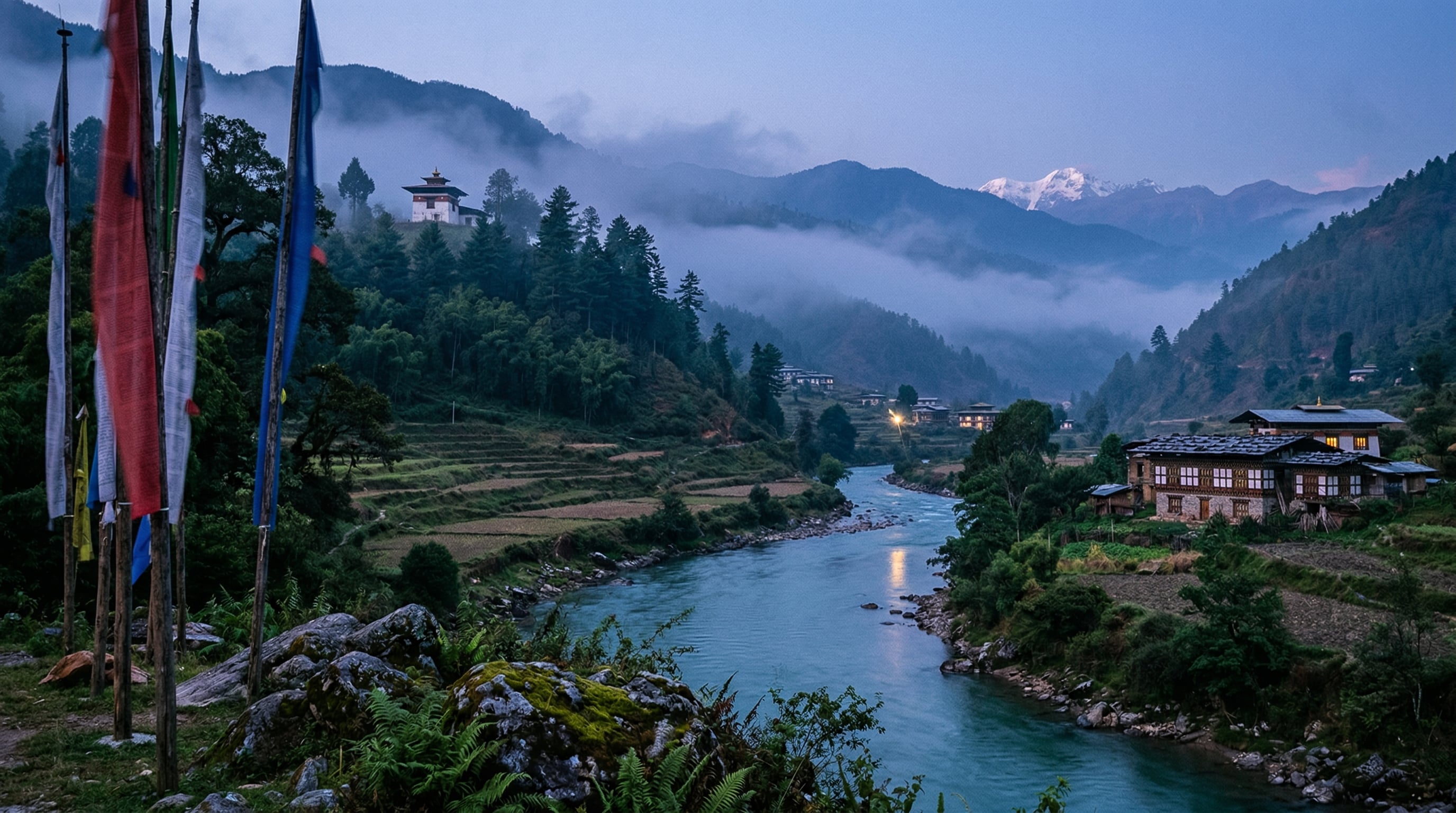
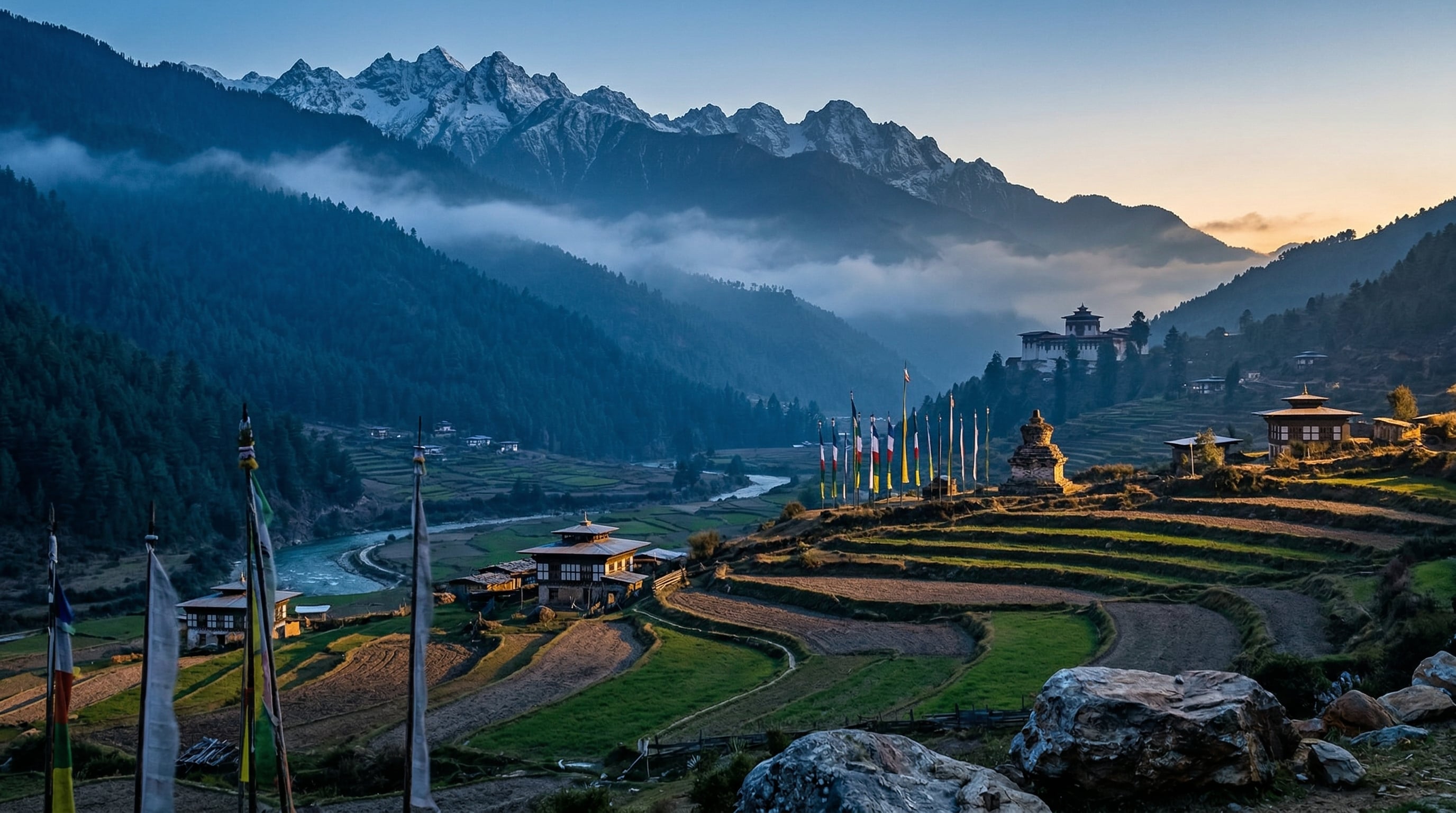
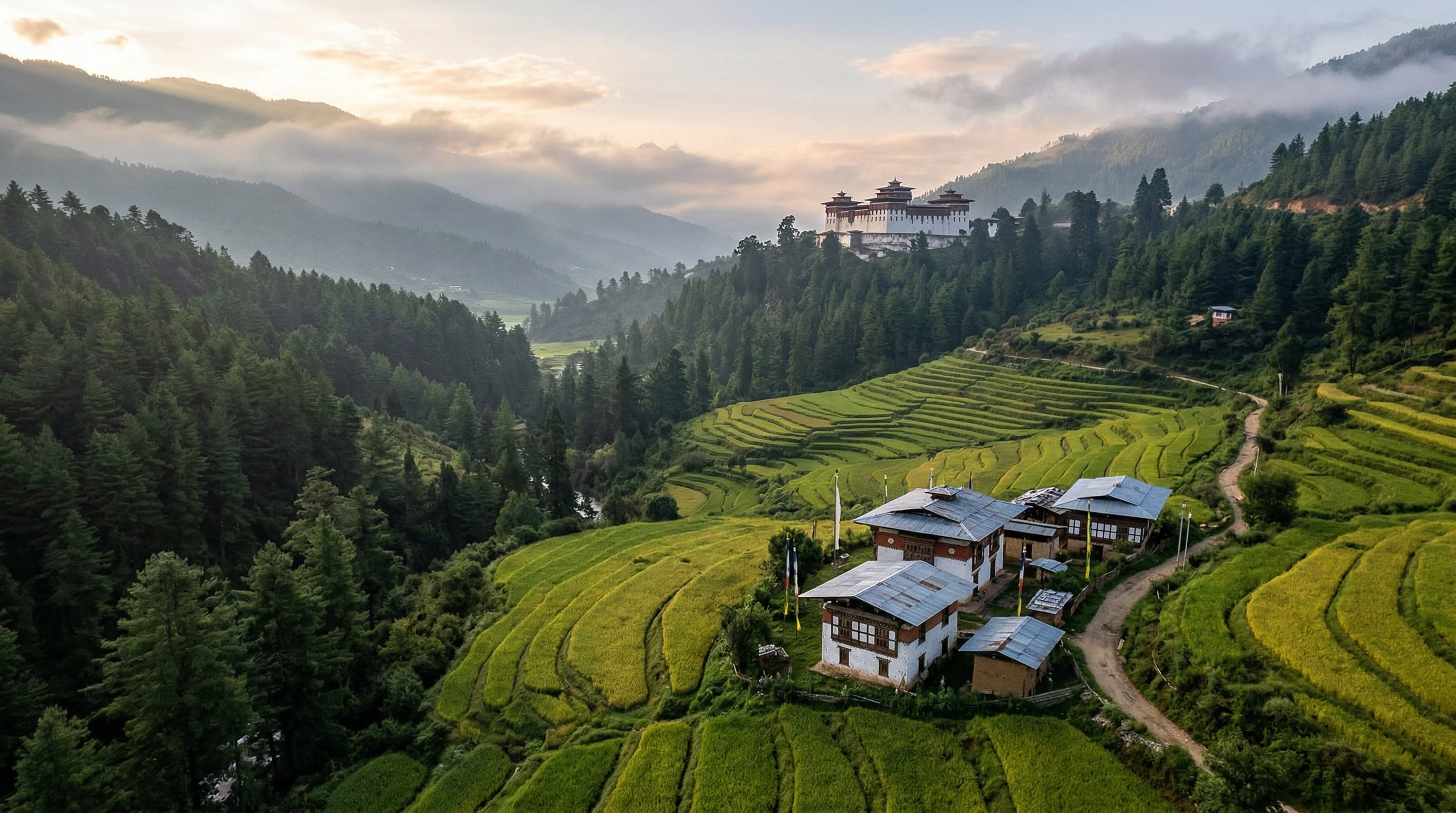
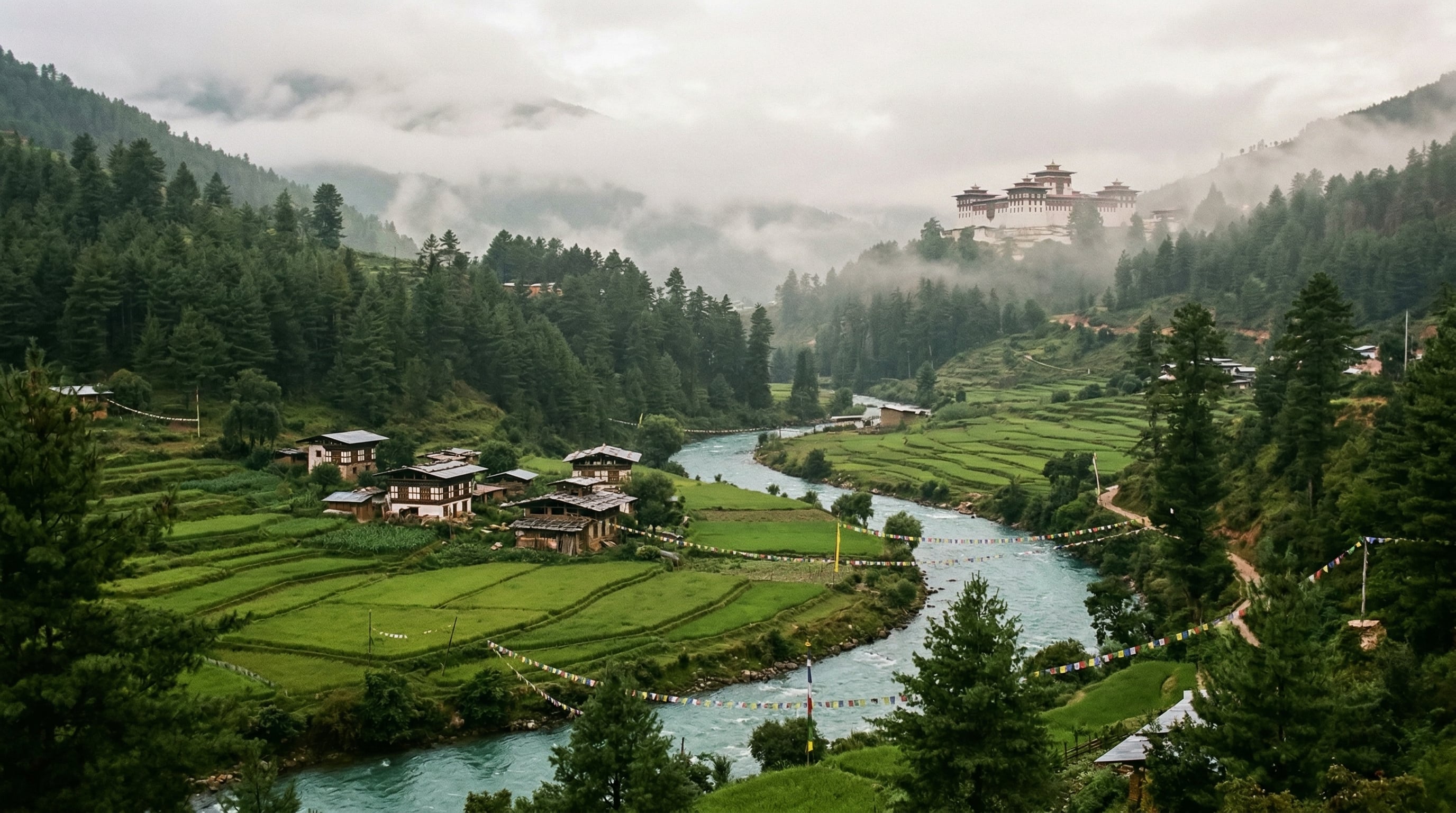
Bhutan's geography conspires against uniformity. Mountain ranges fragment the kingdom into isolated valleys, each developing distinct traditions, architectures, even microclimates. This geographic fact becomes experiential opportunity: traveling through Bhutan's five primary valleys isn't simply changing locations but experiencing multiple worlds within a single small kingdom.
The multi-lodge journey—moving between connected properties across different valleys—has become the signature luxury Bhutan experience. Both Amankora and Six Senses operate five lodges precisely positioned to capture each valley's distinct character. The result: comprehensive national exploration with consistent quality and logistical ease.
Valley One: Paro — The Gateway
Elevation: 2,200 meters
Character: Gateway valley, historically significant
Highlights: Tiger's Nest, Paro Dzong, National Museum, Drukgyel Dzong
Almost every international visitor enters Bhutan through Paro, making this valley the introduction point. Yet it deserves exploration in its own right. The Paro Chhu river valley combines broad agricultural floors with steep forested hillsides, crowned by the legendary Tiger's Nest perched on impossible cliffs.
Strategically, Paro divides well into arrival and departure segments. Initial nights allow recovery from travel and altitude adjustment before demanding activities. Final nights provide decompression before departure and opportunity for any missed Tiger's Nest attempts.
The valley supports extensive trekking beyond the famous monastery—day hikes to Drukgyel Dzong ruins, through ancient farmlands, to lesser-known temples that predate tourism.
Valley Two: Thimphu — The Capital
Elevation: 2,320 meters
Character: Urban center, modernizing
Highlights: Tashichho Dzong, Memorial Chorten, Buddha Dordenma, craft markets
Bhutan's only significant urban area, Thimphu presents the kingdom in transition. Traditional dress mingles with contemporary fashion; ancient dzong administration operates alongside modern governance; traffic (managed famously without signals) suggests a tempo faster than elsewhere in the kingdom.
For cultural infrastructure, Thimphu offers what other valleys cannot: the National Textile Museum, National Institute for Zorig Chusum (traditional arts school), paper-making workshops, and craft markets with comprehensive artisan representation.
The Memorial Chorten and Buddha Dordenma statue provide architectural contrasts—the former a white stupa dedicated to the Third King, the latter a massive gilded Buddha statue containing 125,000 smaller Buddhas.
Valley Three: Punakha — The Subtropical
Elevation: 1,200 meters
Character: Warmer climate, agricultural
Highlights: Punakha Dzong, Chimi Lhakhang, rice terraces
Descending from Dochula Pass (3,100 meters) to Punakha drops through multiple climate zones, arriving in Bhutan's warmest major valley. The transition feels dramatic—suddenly oranges and bananas grow alongside rice paddies.
Punakha Dzong, perhaps Bhutan's most majestic fortress, marks the confluence of two rivers with white walls and golden roofs. Still headquarters for the winter monk body migration, the dzong represents living administrative and spiritual tradition.
Chimi Lhakhang, the "fertility temple" associated with the Divine Madman Drukpa Kunley, draws pilgrims seeking blessings for conception. The walk through rice paddies to reach the temple offers pastoral immersion.
Valley Four: Phobjikha (Gangtey) — The Glacial
Elevation: 2,900 meters
Character: Glacial valley, wildlife sanctuary
Highlights: Black-Necked Cranes, Gangtey Goempa, nature walks
This U-shaped glacial valley hosts Bhutan's most distinctive wildlife phenomenon: the winter migration of endangered Black-Necked Cranes from Tibet. From late October through February, several hundred cranes occupy the valley floor, their calls echoing against surrounding hills.
Gangtey Goempa, the valley's spiritual center, commands views across the entire bowl-shaped landscape. Legend holds that arriving cranes circle this monastery three times—a natural kora mirroring human pilgrimage.
Beyond crane season, Phobjikha offers nature walks through protected wetlands, visits to the RSPN conservation center, and genuine remoteness that more accessible valleys cannot provide.
Valley Five: Bumthang — The Spiritual Heartland
Elevation: 2,800 meters
Character: Spiritual center, traditional heartland
Highlights: Kurjey Lhakhang, Jambay Lhakhang, cheese and honey
The composite Bumthang region—comprising four sub-valleys—represents Bhutan's spiritual core. Here Guru Rinpoche first introduced Buddhism to the kingdom. Here the oldest temples still host annual festivals. Here traditional lifestyle persists most authentically.
Temple density exceeds anywhere else in Bhutan. Kurjey Lhakhang enshrines Guru Rinpoche's meditation caves. Jambay Lhakhang, among Bhutan's oldest structures, hosts the famous naked fire festival. Smaller temples dot every hillside.
Culturally, Bumthang produces distinctive products: buckwheat pancakes, Swiss-style cheese introduced by development workers, local honey, and strong ara (traditional alcohol). The valley represents not just spiritual heritage but living traditional economy.
Designing the Journey
Common Sequence
Most multi-lodge journeys flow west to east:
- Paro: Arrival, acclimatization, Tiger's Nest (2-3 nights)
- Thimphu: Cultural infrastructure, urban exploration (1-2 nights)
- Punakha: Dzong visit, warmer-climate activities (2 nights)
- Gangtey: Cranes (seasonal), nature, remoteness (1-2 nights)
- Bumthang: Spiritual immersion, temple circuit (2-3 nights)
- Return to Paro: Departure preparation (1 night)
Total minimum: 10-12 nights for comprehensive multi-valley exploration. Shorter journeys focus on western valleys (Paro, Thimphu, Punakha).
Logistics
Multi-lodge journeys through either Amankora or Six Senses properties include:
- Luggage transfers between properties (guests travel light)
- Dedicated guide accompanying entire journey
- Private vehicle appropriate for mountain roads
- Coordinated experiences across properties
Seasonal Considerations
Spring (March-May): Rhododendron blooms, clear skies, moderate temperatures. Optimal for Tiger's Nest and high-pass crossings.
Summer (June-August): Monsoon affects travel; green landscapes but demanding conditions. Lower visitor numbers for those tolerating rain.
Autumn (September-November): Ideal weather, festival season, crane arrival in Phobjikha. Peak demand requires advance booking.
Winter (December-February): Cold but clear; reduced visitors; best crane viewing; some high passes may challenge.
The Transformation Arc
Well-designed multi-valley journeys create psychological arcs:
Entry (Paro): Transition from ordinary life, physical adjustment, iconic first experiences
Expansion (Thimphu, Punakha): Broadening cultural understanding, diverse activities, building context
Deepening (Gangtey, Bumthang): Remote immersion, spiritual focus, accumulated understanding
Integration (Return to Paro): Synthesis of experience, preparation for departure, carrying lessons forward
This arc, whether conscious or implicit, distinguishes truly memorable journeys from disconnected sightseeing.
Ready to experience Bhutan?
Our concierge team crafts private, all-inclusive journeys tailored to your interests.
Written by
Bhutan & Co. Editorial Team