Experiencing a Bhutan Tshechu: An Insider's Guide to Sacred Mask Dances
What actually happens at a Bhutanese tshechu? From the spiritual significance of cham dances to practical tips for luxury travelers, this insider guide prepares you for one of Asia's most extraordinary cultural experiences.
TLDR
Bhutanese tshechus are sacred masked dance festivals held in dzong courtyards across the kingdom. The best for luxury travelers in 2026 include Paro (March/April), Thimphu (September/October), and the intimate Jambay Lhakhang Drup fire festival in Bumthang (October/November).
More Than a Festival: Understanding Tshechu
The word "tshechu" literally means "tenth day" — these festivals are held on the tenth day of a month in the Bhutanese lunar calendar, commemorating the birth of Guru Rinpoche, who brought Buddhism to the Himalayan region in the 8th century. But reducing a tshechu to a mere religious observance misses its essence entirely. These are community celebrations where the sacred and the secular dissolve into each other, where centuries-old masked dances convey Buddhist teachings to audiences who have been watching the same performances for generations.
For the luxury traveler, a tshechu offers something no five-star hotel or private guide can manufacture: an encounter with living tradition that is simultaneously entertainment, spiritual practice, and community gathering. It is Bhutan at its most unguarded.
The Sacred Masked Dances: Cham
The centerpiece of every tshechu is the cham — elaborate masked dances performed by monks and trained laymen wearing silk brocade costumes and wooden or papier-mâché masks representing deities, demons, animals, and legendary figures. Each dance tells a specific Buddhist narrative, and understanding even the basics transforms your experience from spectacle to meaning.
Key Dances to Watch For
Sha Na Cham (Black Hat Dance): Perhaps the most visually dramatic cham, performed by dancers in wide-brimmed black hats and flowing dark robes. This dance reenacts the assassination of the anti-Buddhist Tibetan king Langdarma by a monk in the 9th century — a foundational narrative in Himalayan Buddhism. The slow, deliberate movements contrast with sudden explosive turns, creating a hypnotic visual rhythm.
Raksha Mangcham (Dance of the Judgment of the Dead): This dance dramatizes the judgment of souls after death by the Lord of the Underworld, Shinje Choeki Gyalpo. Demons in vivid masks weigh the good and evil deeds of the recently deceased. It's simultaneously terrifying and humorous — and it conveys core Buddhist teachings about karma in a way that resonates across cultural boundaries.
Guru Tshengye (Eight Manifestations of Guru Rinpoche): Eight dancers portray the different forms of Guru Rinpoche, each representing a different aspect of his teaching and power. This is the spiritual heart of the tshechu, directly connecting the celebration to its raison d'être.
The 2027 Festival Calendar: Strategic Choices
Not all tshechus are created equal. The experience varies dramatically based on location, timing, and crowd levels. Here are the strategic picks for 2027:
Paro Tshechu (March 2027)
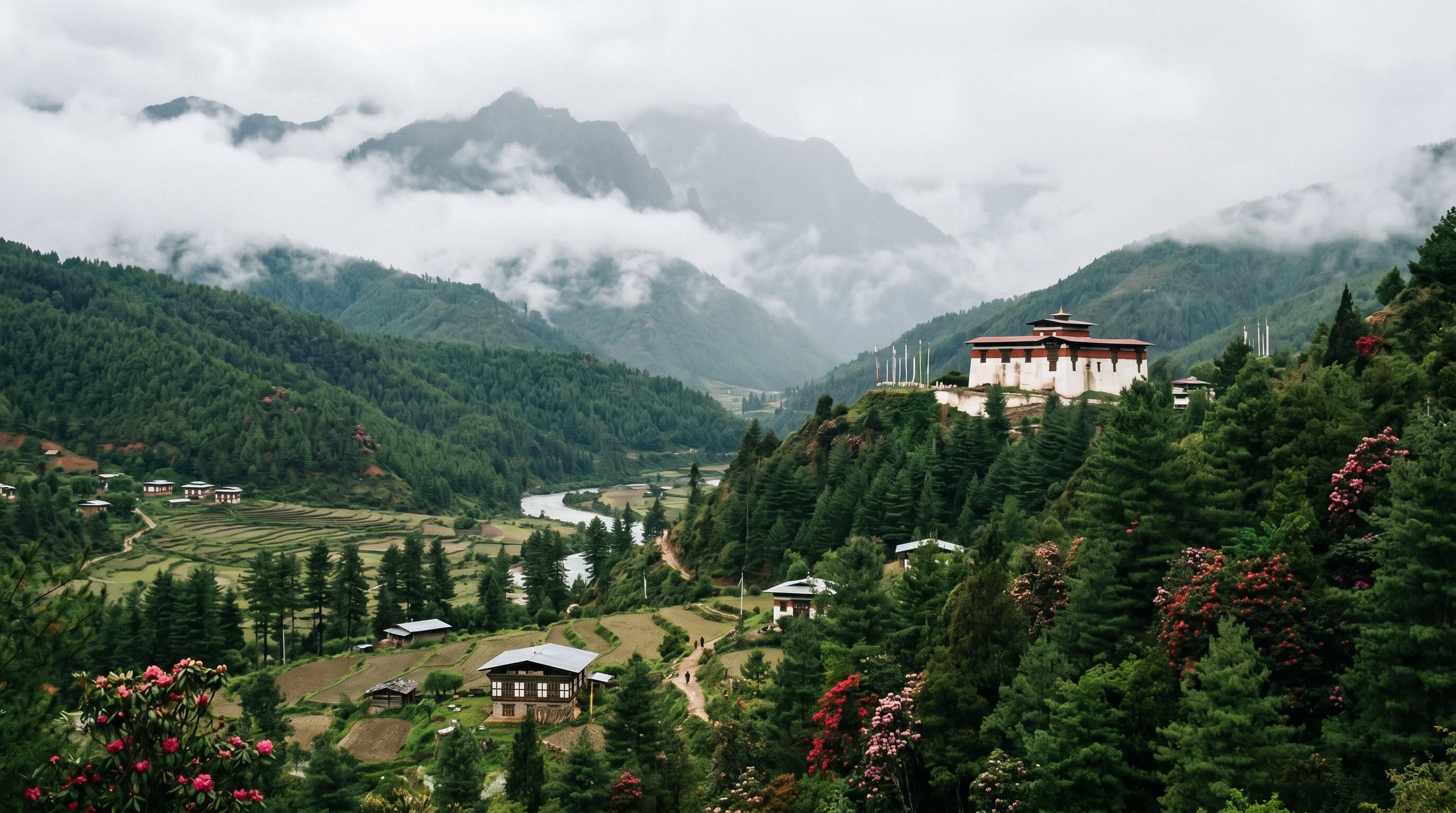
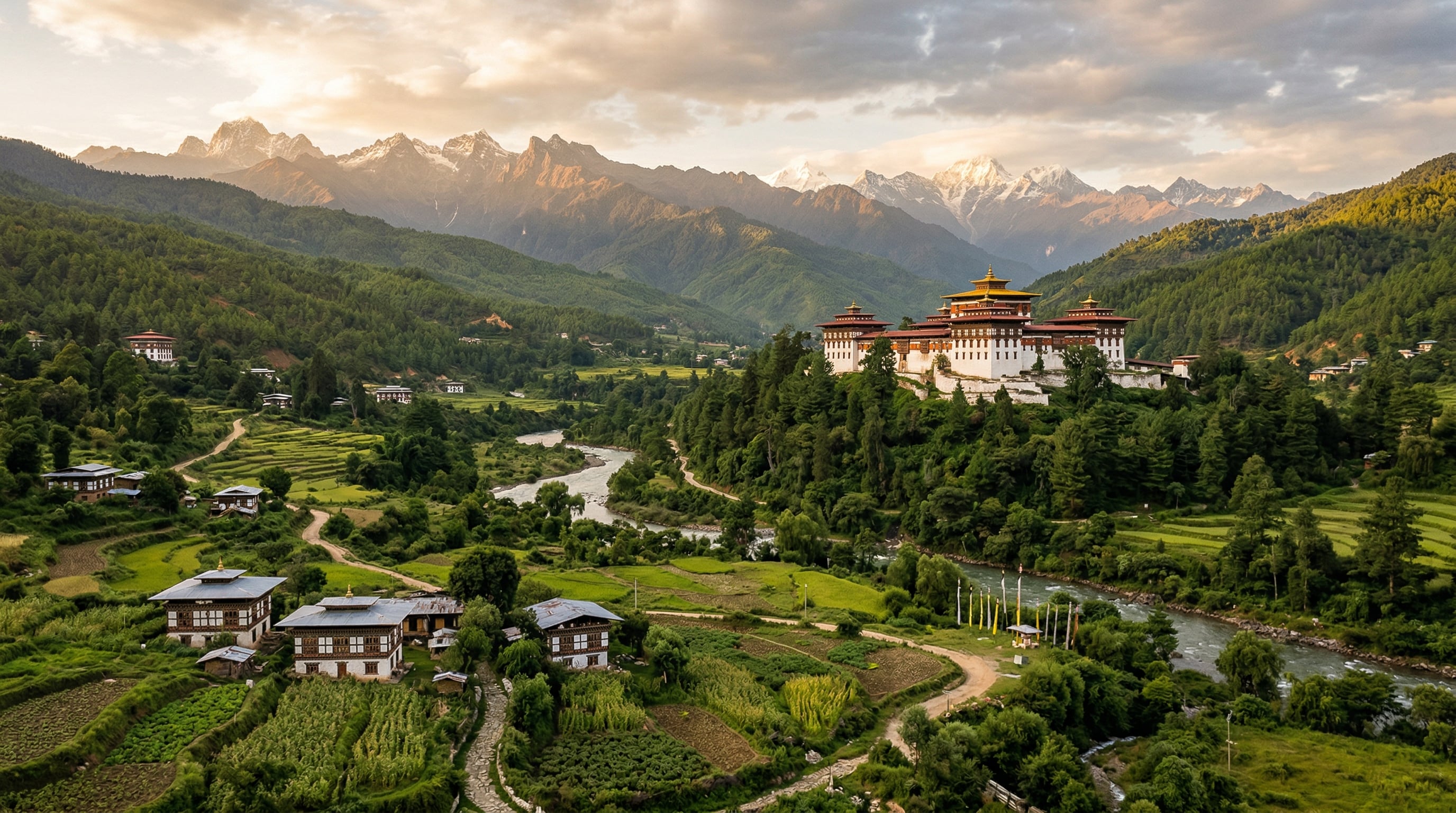
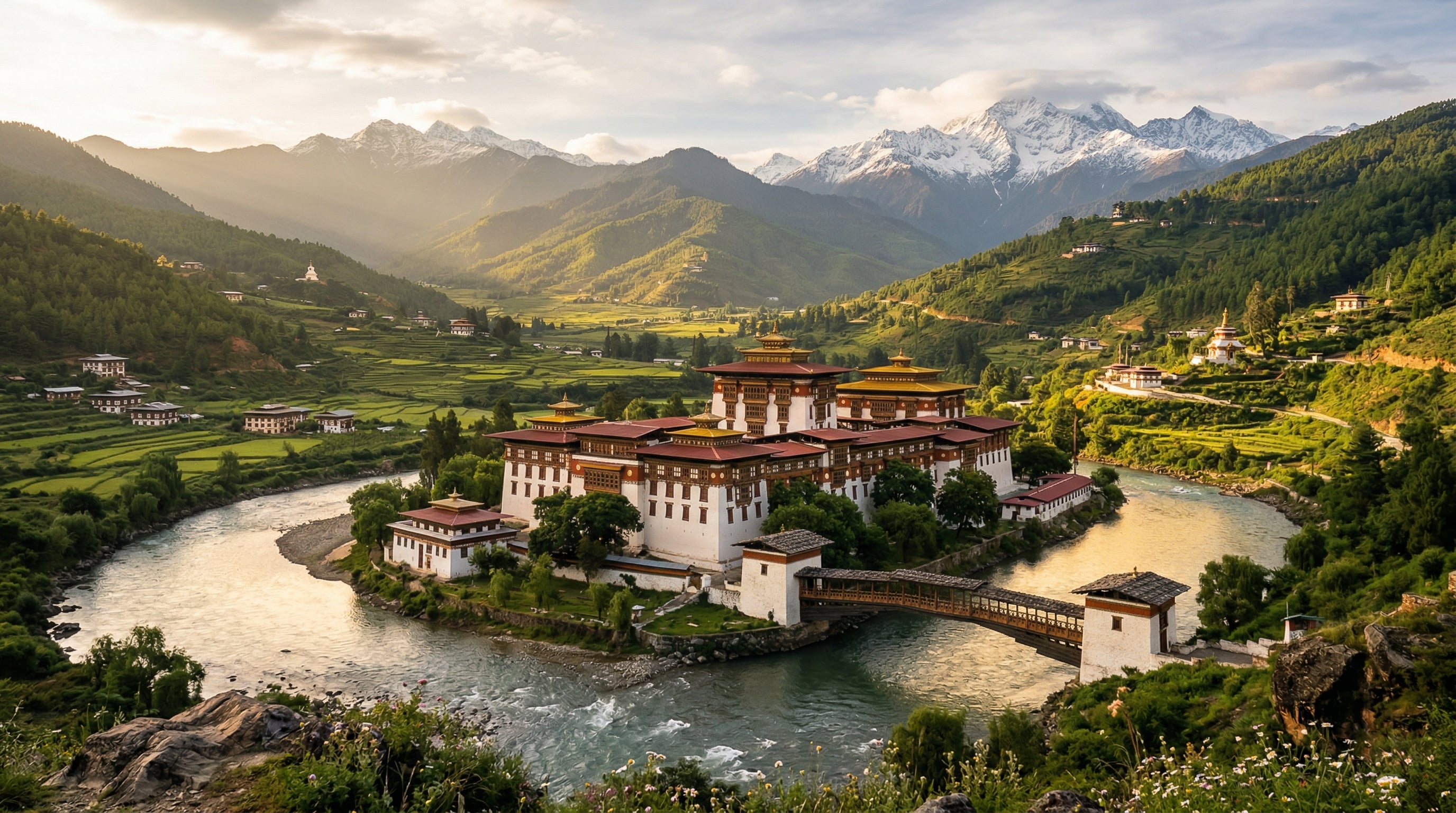
Held in the courtyard of Rinpung Dzong, the Paro Tshechu is Bhutan's most famous festival and one of the largest. The setting is spectacular — masked dances performed against the backdrop of the 17th-century fortress with snow-capped peaks beyond. The climax is the unfurling of a massive silk thongdrel (religious painting) at dawn on the final day, which is believed to grant liberation through sight alone.
Luxury consideration: Paro has the best accommodation options for festival visitors, including Amankora Paro and COMO Uma Paro. Book 90 days ahead — festival periods sell out completely at top properties.
Thimphu Tshechu (October 2027)
The capital's three-day tshechu at Tashichho Dzong draws the largest crowds of any Bhutanese festival. The advantage: Thimphu offers the widest range of luxury dining and accommodation, and the festival can be combined with visits to the weekend market, the National Memorial Chorten, and the National Institute for Zorig Chusum.
Jambay Lhakhang Drup (November 2027)
For those seeking an intimate, deeply authentic experience, the fire festival at Jambay Lhakhang in Bumthang is unmatched. The Mewang (fire ceremony) features monks dancing through blazing bonfires in the temple courtyard — a spectacular ritual that has been performed annually since the 7th century. The Tercham (naked dance) performed at midnight is one of Bhutan's most sacred and rarely witnessed rituals.
Luxury consideration: Bumthang is more remote, requiring either a long drive or a helicopter charter. Accommodation is limited but characterful — Amankora Bumthang provides the luxury standard, while the setting's intimacy more than compensates for the journey.
Practical Guide for Luxury Festival-Goers
What to Wear
Tshechus are attended by locals in their finest traditional dress — kira for women, gho for men. As a foreign visitor, smart casual attire is appropriate. Layers are essential: mornings in dzong courtyards can be cold, while afternoon sun at altitude is intense. Comfortable shoes are non-negotiable as you'll be standing and walking on stone courtyards for hours.
Photography Etiquette
Photography is generally welcomed at tshechus, but discretion is valued. Ask before photographing individuals closely, particularly monks and elderly attendees. The most powerful images come from the dances themselves and the reactions of the crowd — the weathered face of an elderly man lost in prayer, a child's wide-eyed wonder at the mask dances, monks adjusting their costumes in backstage moments.
The Viewing Experience
VIP seating areas near the dance courtyard can be arranged through operators with established relationships. This provides closer views of the masked dances and better photography positions. However, don't spend the entire festival in one spot — some of the most memorable moments happen at the margins: in the food stalls, the gambling corners, the spontaneous conversations with local families who have traveled days to attend.
Beyond the Tshechu: Complementary Experiences
A festival-timed journey should include experiences that deepen your understanding of the cultural context. Consider pairing your tshechu attendance with:
- A private monastery blessing ceremony to understand the spiritual practices that underpin the festival
- A traditional arts workshop to see how the masks and costumes are created
- A traditional hot stone bath after a long day of festival attendance
The tshechu is not a performance put on for tourists. It is a living, breathing expression of a culture that has maintained its traditions with remarkable fidelity across centuries. Your presence as a respectful observer is not merely tolerated — it is welcomed as part of the shared experience of community and devotion that gives these festivals their power.
Ready to experience Bhutan?
Our concierge team crafts private, all-inclusive journeys tailored to your interests.
Written by
Bhutan & Co. Editorial Team