Trans Bhutan Trail: Curated Segments for Luxury Adventurers
The Trans Bhutan Trail's 403 kilometers need not mean weeks of demanding trekking. Discover how luxury operators curate the most scenic, historically significant segments for comfort-focused adventurers—complemented by world-class lodges and seamless logistics.
TLDR
The 403km Trans Bhutan Trail, restored in 2022, best serves luxury travelers through curated day-hike segments: Divine Madman Trail from Dochula, Punakha valley sections, and Gangtey routes. Private logistics, gourmet picnics, and evening Dotsho recovery complete the experience.
An Ancient Path Renewed
For centuries, the Trans Bhutan Trail served as the kingdom's primary transportation corridor—a 403-kilometer network of footpaths connecting Haa in the west to Trashigang in the east. Kings processed along it; traders carried goods; pilgrims walked for weeks to reach distant temples. Then roads arrived, and the old way fell into disuse.
In 2022, after years of restoration, the Trans Bhutan Trail reopened as a continuous hiking route. The full traverse requires roughly 30 days of dedicated walking—an adventure for the seriously committed. But for luxury travelers, the TBT offers something equally valuable: access to curated segments that deliver the trail's historical richness and natural beauty within comfortable day-hike packages.
Understanding the Trail
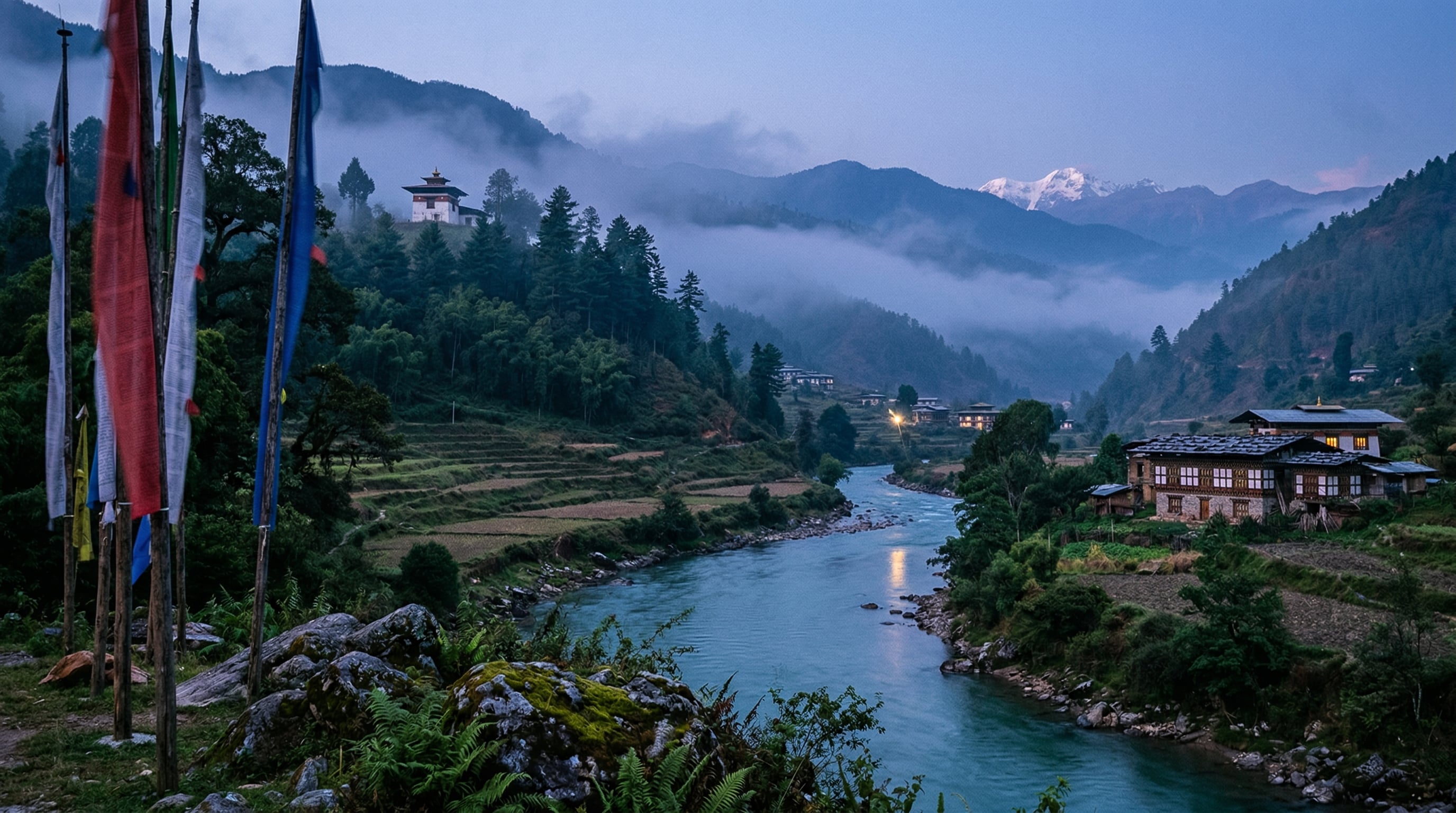
The TBT isn't a wilderness trail through uninhabited backcountry. It winds through villages, past temples, alongside farms—a cultural corridor as much as a walking route. Its value lies not in isolation but in immersion: seeing Bhutan at foot-pace, encountering communities too small for tour-bus stops, walking paths that generations of Bhutanese walked before.
Key characteristics:
- Total distance: 403 kilometers
- Total ascent: Approximately 10,000 meters
- Elevation range: 200-4,800 meters
- Route: West to east through every major valley
- Segments: 28 official sections of varying difficulty
Luxury-Curated Segments
The full TBT demands expedition commitment. These curated segments deliver the trail's essence within luxury itinerary frameworks:
The Divine Madman Trail: Dochula to Toeb Chandana
Distance: Approximately 12 kilometers
Duration: 5-6 hours
Difficulty: Moderate (mainly descent)
Beginning at Dochula Pass (3,100m) amid the 108 memorial chortens, this segment descends through rhododendron and oak forests toward the Punakha Valley. The route passes sites associated with Drukpa Kunley, the Divine Madman, and transitions from high-altitude environment to the warmer Punakha climate.
Highlights include:
- Panoramic Himalayan views from Dochula on clear mornings
- Forest environments rich with birdlife
- Historic temples connected to the Divine Madman
- Dramatic climate transition through elevation loss
Punakha Valley Sections
Distance: Variable 8-15km segments
Duration: 4-7 hours
Difficulty: Easy to moderate
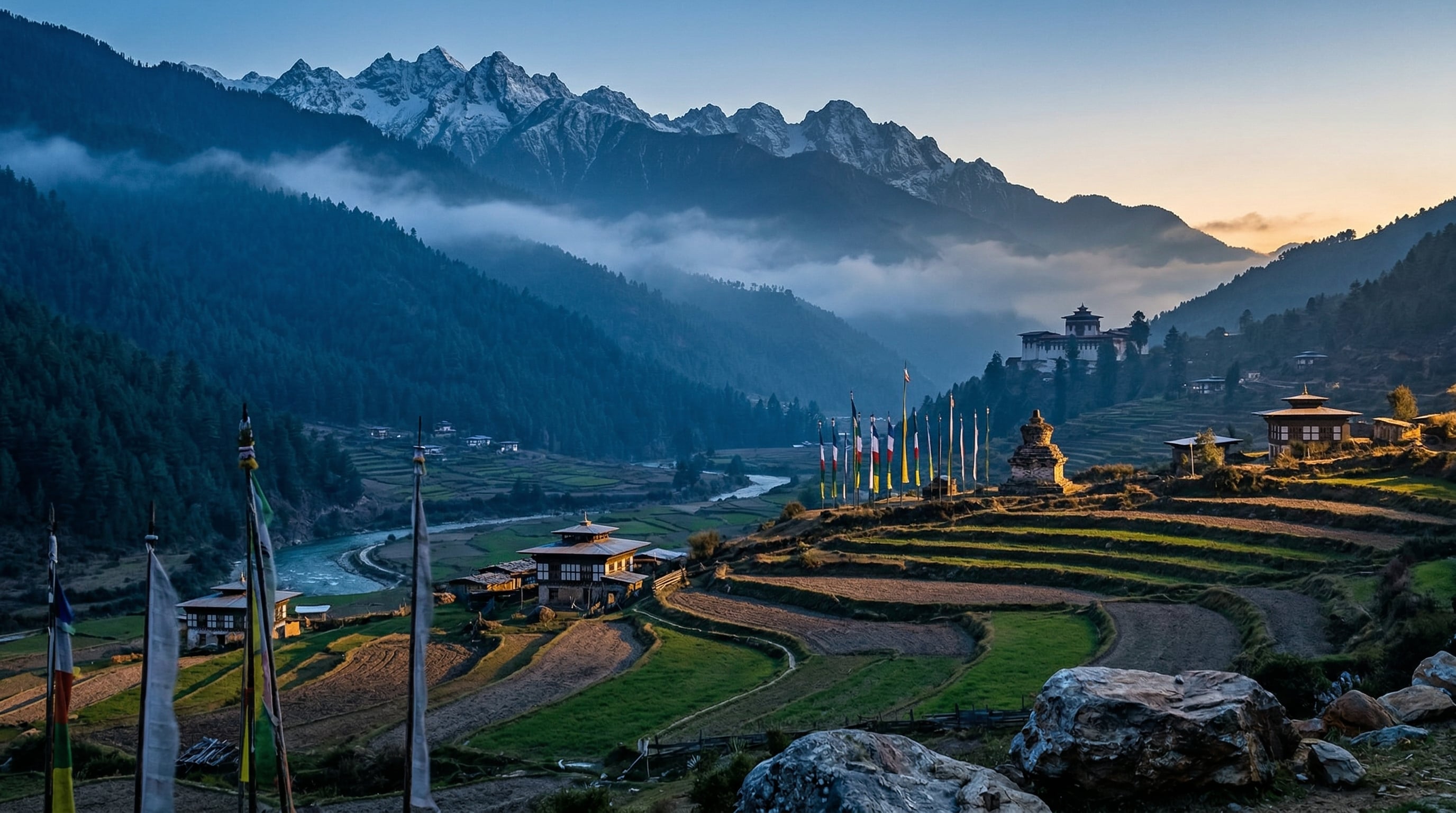
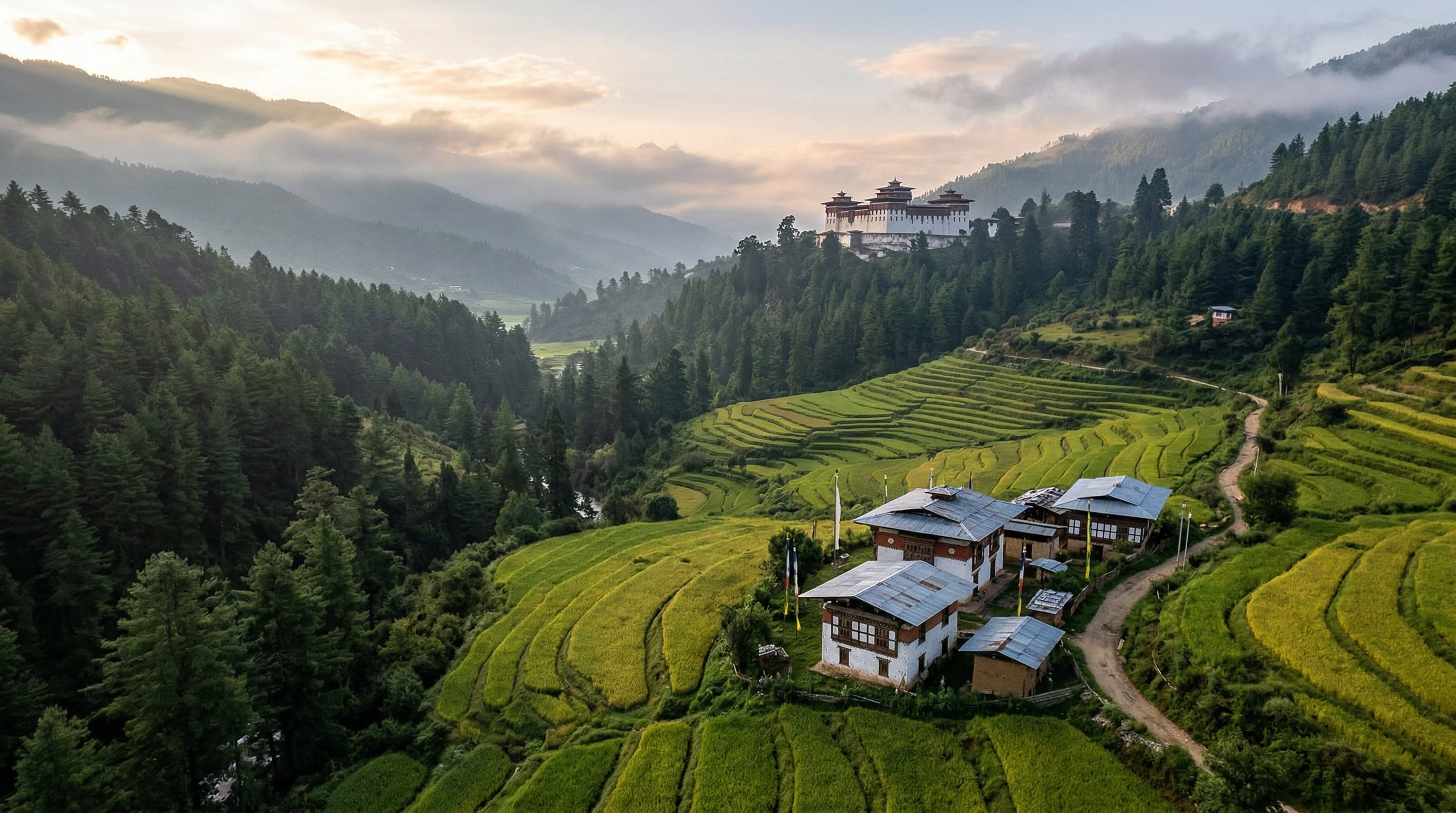
The TBT passes through the Punakha Valley floor, connecting villages near the famous dzong with agricultural communities upstream and downstream. Walking here reveals a different Bhutan from mountain trails—rice paddies, subtropical vegetation, communities oriented toward river and field.
Strategic segments include routes connecting:
- Punakha Dzong vicinity to Nalanda Monastery
- Agricultural villages with traditional farming practices
- River crossings on traditional cantilever bridges
Gangtey Valley Circuit
Distance: 8-12 kilometers
Duration: 4-5 hours
Difficulty: Easy
The TBT traverses Phobjikha Valley, offering gentle walking through the glacial landscape that hosts wintering cranes. Trail sections here can incorporate crane viewing (in season) with walking, combining wildlife and cultural heritage.
Bumthang Temple Trail
Distance: Variable 6-15km options
Duration: 3-6 hours
Difficulty: Easy to moderate
Segments connecting Bumthang's remarkable temple concentration allow walking pilgrimage between Guru Rinpoche's sacred sites—Kurjey, Jambay, Tamshing—on ancient paths rather than modern roads.
The Logistics of Comfort
Luxury TBT experiences require sophisticated logistics:
Private transfers: Vehicles position at segment ends, eliminating out-and-back hiking. Walk one direction; depart by car.
Guide excellence: TBT guides require specific training. Quality operators deploy guides with deep historical knowledge and safety certification.
Gourmet support: Picnic lunches delivered to scenic midpoints. Some operators establish full camp-style setups with chairs, tables, and multi-course meals.
Timing flexibility: Quality itineraries build in flexible days allowing weather-dependent scheduling. Rain forecasts? Substitute temple visits. Clear skies? Seize the TBT segment.
Combining Trail and Lodge
The TBT structure supports lodge-to-lodge walking without camping:
Day 1: Arrive Dochula by vehicle, walk the Divine Madman Trail, arrive Punakha Valley, transfer to Amankora/Six Senses Punakha
Day 2: Morning Punakha segment, afternoon dzong visit, evening Dotsho recovery
Day 3: Transfer to Gangtey, afternoon valley circuit, evening crane viewing (seasonal)
This pattern—walk by morning, culture by afternoon, luxury by evening—delivers TBT access without sacrificing accommodation quality.
What Walking Reveals
The TBT's true gift isn't physical accomplishment but perceptual shift. Walking pace reveals what vehicles cannot access:
- Village children waving from schoolyards
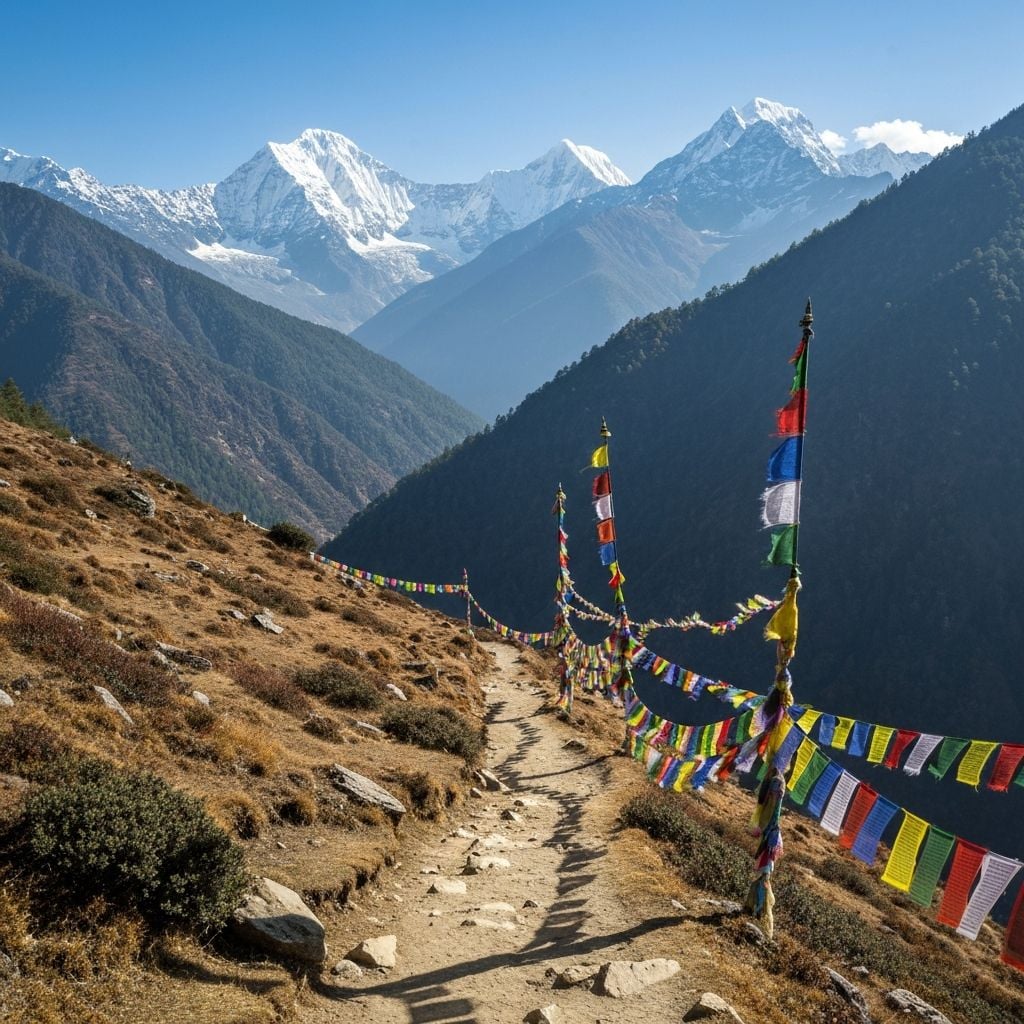
- Prayer flags on ridges overlooked by roads
- Small temples too minor for tour itineraries but potent with devotion
- Bird calls, water sounds, and wind through forest
- The rhythm of Bhutan as experienced for centuries
An hour walking replaces hours of scheduled sightseeing. The TBT provides not another item checked but genuine immersion.
Physical Preparation
Curated segments suit reasonably fit travelers without requiring expedition conditioning:
- Pre-trip walking helps—build to 2-hour hikes in the months before departure
- Altitude affects everyone—allow acclimatization days before demanding segments
- Poles aid descent sections significantly
- Quality hiking footwear essential—break in boots before travel
Best Seasons
Spring (March-May): Rhododendron displays along elevation-transitioning trails; comfortable temperatures; pre-monsoon clarity.
Autumn (September-November): Post-monsoon freshness; harvest-time agricultural beauty; best overall weather conditions.
Winter (December-February): Cold but clear; fewer other walkers; combine with crane viewing in Gangtey.
Summer (June-August): Generally avoided due to monsoon; leeches on forest trails; but viable for the most dedicated.
The Walking Philosophy
Bhutan's kings once walked these routes, accompanied by hundreds. Pilgrims walked for weeks to see Tiger's Nest before roads shortened the journey to hours. The Trans Bhutan Trail preserves not just pathways but the walking culture that defined Bhutan before modernity's acceleration.
For today's traveler, TBT segments offer participation in this heritage. However brief the walk, the kinetic experience—muscles working, breath deepening, landscape unfolding at human pace—creates understanding impossible from vehicle windows.
The trail awaits those willing to walk it.
Ready to experience Bhutan?
Our concierge team crafts private, all-inclusive journeys tailored to your interests.
Written by
Bhutan & Co. Editorial Team